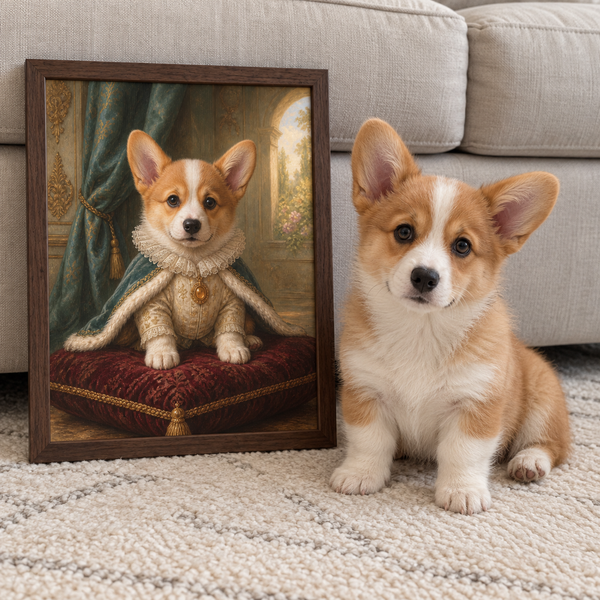
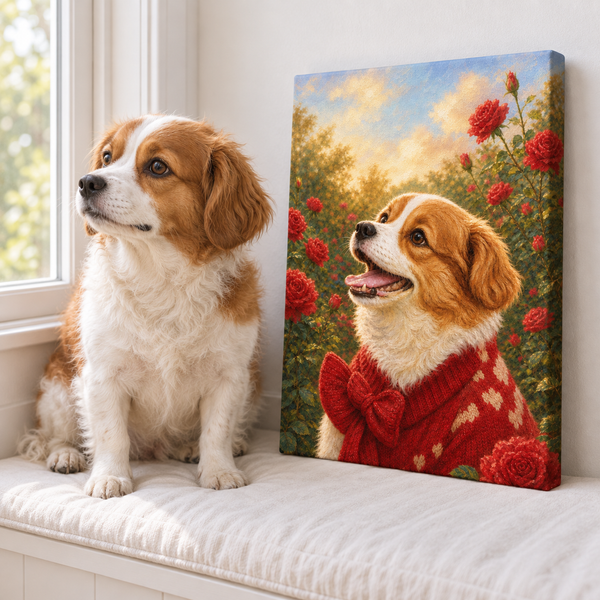
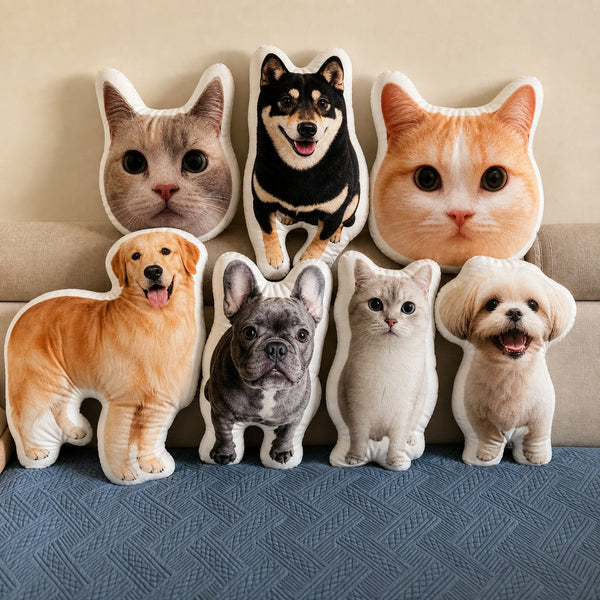

The most personal dog portrait idea may be the moment you barely think to photograph: a chin on the couch arm, a serious inspection of every grocery bag, or the proud return with a battered tennis ball. Those small habits tell you more about a particular dog than a generic pose ever could.
This guide starts with that familiar behavior and works outward. You will choose what the viewer needs to see, which details give the scene its meaning, and what can be left out. You do not need a perfect studio image or an elaborate costume. You need one honest answer to a simpler question: “What would make someone who knows my dog say, ‘That is exactly them’?”
Notice the habit before choosing the style
Think of three scenes that recur without anyone arranging them. Your dog may wait at a particular window, carry a toy to every room, or sit beside the person cooking dinner. Pick the one you could describe without looking at a photograph. If you have to explain why it matters, that explanation is useful too: it might be a tiny routine that belongs only to your household.
Now separate the action from the feeling it gives you. “She sits by the door” describes an action. “She plants herself there whenever she hears the car, ears forward, ready to greet us” gives an artist a posture, an expression, and a mood. The second description still leaves room for artistic interpretation, but it keeps the dog at the center.
Funny dog portraits can be especially personal when the humor comes from a real habit rather than an invented costume. A dog who steals the warm spot on the sofa needs no crown to look self-important. Likewise, a quiet dog does not need to be turned into an action hero to make a compelling image. Choose the version you would recognize on an ordinary Tuesday.
Choose a crop that tells the same story
A close crop works when the expression carries the moment: the tilted head, uneven ears, or thoughtful eyes above the couch cushion. A half-body view gives room for paws, a favorite blanket, or the particular way your dog leans into someone. A full-body view makes sense when the stance or movement is the point, such as a dog arriving at the door with a toy.
Do not ask one image to show everything. If the best dog portrait photo catches the face but cuts off the paws, use it as a reference for identity, not as a command to invent an entire pose from nothing. A second image can clarify markings or body shape. Pawfolio’s dog portrait photography guide goes deeper on capturing usable images; here, the decision is what the final composition must communicate.
If you take new references, let the dog do something comfortable instead of repeatedly repositioning them for the camera. The American Kennel Club’s photography guidance recommends familiar, comfortable settings and stopping when a dog shows stress or fatigue. One relaxed image of a real habit is worth more than a dozen forced poses. It is fine to work from photos you already have.
Let one place cue carry the setting
The scene does not need a fully illustrated room. A strip of windowsill can suggest the waiting spot; a corner of a patterned rug can place the dog at home; a band of morning light can recall a favorite nap. Choose one element that would be missed if removed, then let the rest stay quiet. That gives the dog space to remain the first thing you see.
Try describing the place in five words: “under the kitchen table at breakfast” or “on the porch after a walk.” Next, remove any detail that is merely decorative. A plant, lamp, and bookshelf might all be in the source photo, but none may matter to the memory. The useful cue is the one that explains the habit, not the one that fills an empty corner.
You can also decide that the place should not appear at all. If a clean background makes the posture easier to read, keep it simple. Our separate pet portrait background ideas guide compares those visual choices in more detail. The point here is to make the setting serve the story rather than become a second subject.
Keep a prop only if it belongs to this dog
A familiar toy, collar, or blanket can act like a visual signature. Ask whether the object is part of the routine you chose. The worn ball makes sense beside a dog who brings it to every visitor. It is less useful next to a portrait about the way that same dog sleeps in a patch of sunlight. A prop should clarify the memory, not announce that the picture is about a pet.
The same test applies to a person. A hand resting on the dog’s back may say more than a full family scene when the story is about quiet companionship. If you want everyone in the artwork, that becomes a different composition; our family portrait with dog ideas guide covers that decision. There is no need to squeeze a whole household into a portrait built around one small dog habit.
Keep identifying details precise. Note the collar color, the shape of an ear, or a patch of fur only when they help the dog look like themselves. If the prop hides the face or takes more attention than the expression, reduce it or leave it out. The strongest detail is often the one that seems unremarkable to everyone except the person who lives with the dog.
Choose a mood without changing who they are
Style is a way to interpret the moment, not a substitute for it. Soft color may suit a sleepy window scene; sharper contrast may bring energy to an alert, toy-carrying pose. Start by naming the mood in ordinary language—calm, playful, dignified, curious—before you choose a palette or visual treatment. This keeps the decision connected to the dog instead of the latest design trend.
When you compare examples, check what happens to the features you care about. Does the expression remain readable? Are the markings easy to recognize? Does the framing leave enough room for the familiar posture? A striking treatment is not automatically the right one if it erases what makes the subject specific. If you are moving from several snapshots to one finished piece, how to turn a pet photo into art covers the broader selection and ordering decisions.
Think about the final display, too. Pawfolio’s Art Print vs Canvas guide explains the practical difference between a flat print and a gallery-wrapped canvas, including framed and unframed options. Choose the presentation you want to live with; it should support the image, not dictate which dog habit deserves to be remembered.
Turn the idea into a brief someone can use
Write a short brief in this order: the habit, the expression, the important physical details, the one meaningful setting cue, and anything to omit. For example: “Our dog waits on the couch arm when the family comes home. Keep her relaxed chin-on-paw pose and the white patch above her left eye. A hint of the green couch is enough; please leave out the clutter behind her.” That is more actionable than “make it cute” and less restrictive than specifying every brushstroke.
Pair the brief with a few photographs that have distinct jobs. One can show the face, another the body posture, and a third the relevant object or place. Label what each image is for so a poor-quality but meaningful photo is not mistaken for your only visual reference. If you are working with someone else, say which detail is nonnegotiable and which can be simplified.
Then stop adding elements. A portrait does not have to summarize a dog’s entire life. One well-chosen habit is enough to make an image feel intimate and unmistakable. If you want to explore formats after the idea is clear, see the custom pet portrait art at Pawfolio Art and match the available design to the scene you actually want to remember.