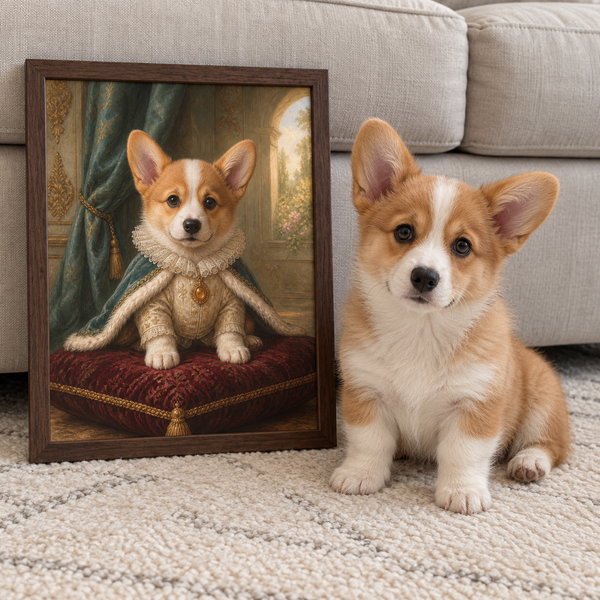
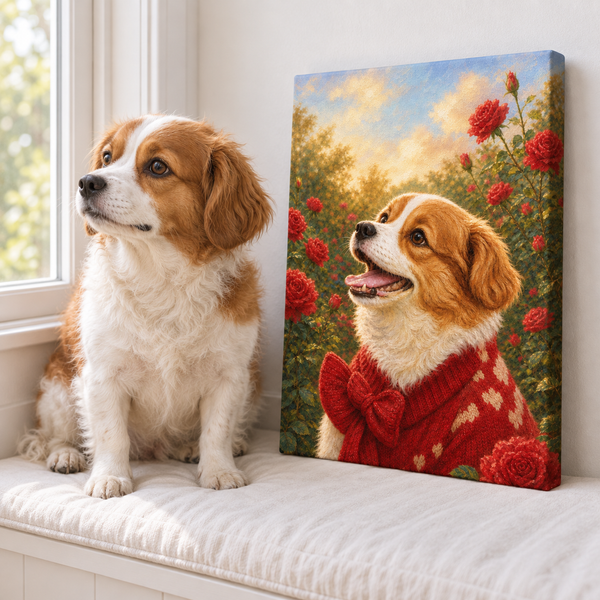
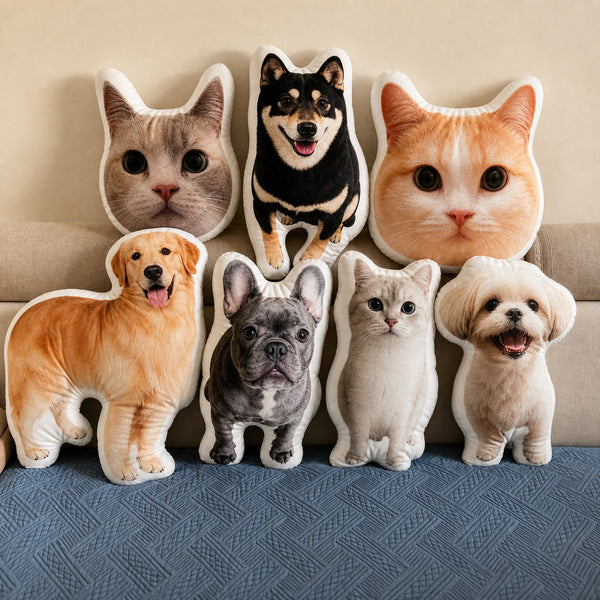

A background can quietly support a pet portrait—or compete with the very face you want to remember. The best choice is not always the prettiest room, the most dramatic landscape, or the exact setting in the source photo. It is the setting that helps your pet remain recognizable while giving the finished artwork the right emotional tone.
Most pet portrait background ideas fall into three useful groups: simple, personal, and scenic. Understanding what each one contributes makes the decision much easier.
First, separate the photo background from the art background
Your reference photo may show a laundry basket, a car seat, or the edge of a kitchen table. That does not mean those objects need to appear in the finished portrait. For custom artwork, the source photo's main job is to show your pet clearly.
Begin with the face. Pawfolio's Photo Tips recommend a sharp, close image taken near eye level in natural daylight, with the ears and distinctive markings visible. A clean source photo helps, but an ordinary background is rarely a reason to reject an otherwise wonderful expression.
The final background is a separate creative choice. Ask what you want the artwork to emphasize: likeness, memory, or story.
Choose a simple background when the face is the story
Soft neutrals, muted color fields, and lightly textured backgrounds keep attention on the pet. They are especially useful for head-and-shoulders portraits, multiple-pet compositions, and images with detailed fur or markings.
A simple background can also make the artwork easier to display. Warm cream, dusty blue, soft sage, charcoal, or a subdued version of a room color can connect the portrait to your home without making it look designed for only one wall.
Simple does not have to mean blank. Gentle tonal variation, a faint painterly wash, or a quiet shadow can give the subject depth while preserving a calm composition.
Consider this route when:
- the pet's eyes and expression are the emotional center;
- the coat has intricate markings that already create visual detail;
- two or more pets need to share the frame;
- the artwork will move between rooms or homes;
- you want a timeless rather than location-specific look.
Choose a personal setting when a place carries the memory
Some pets are inseparable from a particular spot: the chair by the window, a garden path, the end of the dock, or the blanket where every afternoon nap happened. A meaningful setting can turn a likeness into a fuller memory.
The key is editing. You rarely need every object from the real location. One or two cues may be enough: the shape of the chair, the window light, a familiar cushion color, or a suggestion of wildflowers. Selective details let the viewer recognize the place without making the pet compete with it.
This option works well when the setting answers a personal sentence: “This is where I always picture her.” If the location is merely attractive but has no connection to the pet, a simpler background may feel more authentic.
Choose a scenic background when the environment is part of the story
A beach, mountain trail, meadow, or city street can express an adventurous pet's life. Scenic backgrounds work best when they have a clear reason to be there and when the composition still gives the pet a strong focal position.
The American Kennel Club's photography guide notes that landscapes can become meaningful wall art when combined thoughtfully with a dog's portrait. That same idea applies to custom artwork: the scenery should add context, not turn the pet into a small afterthought.
Use a scenic direction when:
- the location represents a shared routine or milestone;
- a full-body pose matters to the memory;
- the intended artwork is large enough to hold environmental detail;
- the pet's silhouette remains easy to read against the setting.
If the artwork will be small, simplify the scene. A wash of coastal color may communicate “beach” more clearly than tiny waves, rocks, chairs, and footprints competing for space.
Use coat color to guide contrast—not to dictate it
Background color can help define ears, whiskers, and the outline of the face. A black dog may disappear into deep charcoal, while a white cat can lose edge detail against bright cream. The solution is often moderate contrast rather than an opposite color.
For dark coats, consider a softly lighter or warmer background. For pale coats, a mid-tone backdrop can preserve the silhouette without feeling harsh. Patterned coats may benefit from quieter fields that do not repeat the same visual frequency.
Still, color is only one factor. Direction of light, edge detail, and the artist's rendering choices also affect separation. Treat coat contrast as a useful preference, not a rigid formula.
Match the background to the room without copying the room
If the portrait is intended for a specific wall, look at the room's permanent elements: flooring, wood tone, major upholstery, wall color, and frame finishes. Small accessories change; the background does not need to match this season's pillow.
Choose one relationship:
- Blend: use neighboring tones for a quiet, integrated look.
- Echo: repeat one existing accent color in a softer form.
- Contrast: use a controlled difference so the artwork becomes a focal point.
The material changes how color feels too. An Art Print can have the crisp presence of framed paper, while a gallery-wrapped Canvas carries the image around the edges and reads as a more dimensional object. Think about both the picture and the finished format.
Take a better background reference with your phone
If a specific setting matters, photograph it separately instead of trying to force your pet to pose perfectly within it. Capture one clear pet photo and one or two images of the place. This gives the artist more usable information.
For the pet photo:
- Move near a window or into open shade.
- Get down to the pet's eye level.
- Tap the nearest eye to set focus.
- Leave the ears and important markings in frame.
- Take several images without using a heavy filter.
Adobe's phone photography guide recommends soft natural light and an eye-level view for pets. Those simple choices usually matter more than staging a perfect backdrop.
For the location reference, step back and photograph the broader scene, then take a closer image of any detail you care about. Label the files so the artist knows which image supplies the pet and which supplies the setting.
Decide how much detail the artwork can carry
Every portrait has a visual budget. Fur texture, clothing, multiple subjects, decorative elements, and scenery all use part of it. When too many details demand equal attention, the pet's expression can become harder to read.
A useful hierarchy is:
- recognizable face and markings;
- pose and personality;
- relationship between subjects;
- meaningful background cues;
- decorative detail.
This does not make the background unimportant. It simply protects the reason the portrait exists.
Questions to answer before choosing
Use these prompts to narrow the options:
- Do I remember my pet most strongly in one place?
- Is the face or the full scene more important?
- Will the artwork hang in one room or move over time?
- Does the pet's coat need more separation from the background?
- Are multiple pets already making the composition visually busy?
- Which details would I miss if they were removed?
If you are still undecided, create two short directions: one simple and one personal. For example, “soft sage with no objects” versus “the sunny window chair, simplified.” Comparing concrete choices is easier than asking for a background that is simply “beautiful.”
Let the background support recognition
The most successful background does not call attention to how much work it is doing. It creates enough contrast, mood, and context for the pet to feel present.
Start with a clear reference, decide whether likeness, memory, or story leads the piece, and keep only the details that serve that goal. If you are still selecting the source image, the guide on turning a pet photo into art walks through the other decisions that shape the final portrait.
Whether you choose a soft field of color, a favorite chair, or an open landscape, the background should help you notice the face you know by heart first.