
You might want a few lines beside a photograph, something to read with family, or words that stay in a notebook. A tribute does not have to account for a dog's whole life. It can begin with one small thing you do not want to lose: the way they examined a new object, settled into the car, or answered a name only your household used.
The three dog memorial poems below were written for this article. They are imagined examples, not customer stories or quotations from established poets. Use them as starting points, change what does not fit, or let them lead you toward entirely different words of your own.
Choose the voice before choosing the words
Decide who is speaking. “I” can make a poem feel private; “we” can include a family; “you” lets the speaker address the dog directly. None is more appropriate than another. Pick the voice that sounds natural when you say your dog's name aloud.
Then choose the emotional distance. You may want to name the loss directly, or you may prefer to describe a remembered afternoon without explaining what happened afterward. You do not need a cheerful ending, a spiritual image, or a statement that you are ready to move on.
Cornell's pet loss resources emphasize that people respond differently and that grief does not follow a prescribed timetable. Writing is an option, not a deadline or a measure of how well you are coping. You can leave a page unfinished or return to it much later.
These examples use free verse. The Academy of American Poets describes free verse as poetry without a prescribed form or meter, often shaped by speech rhythms. That gives you room to keep an ordinary phrase instead of replacing it with an awkward word just to make a rhyme.
Poem one: The Inspection
You gave each new thing
the courtesy of your nose:
a parcel, a fallen mitten,
the rain carried in on my shoes.
I hurried past so much.
You stopped to consider it.
Now, when I pause,
I remember your careful attention.
This short dog memorial poem remembers a way of moving through the world. Its objects are deliberately ordinary. If your dog was an enthusiastic investigator, replace the parcel or mitten with something they actually examined. If that does not describe them, choose another example rather than forcing the memory to fit.
You could also change the speaker's observation. Perhaps your dog made you laugh rather than slow down. The ending might become a memory of how seriously they approached an unimportant task. Keep the observation modest and specific; it does not have to turn into a lesson about life.
Read the revised version once without looking at the page. Notice the detail you remember afterward. That is often the part worth keeping when the rest still feels uncertain. A poem can hold a small, recognizable gesture without trying to explain everything that dog meant to you.
Poem two: The Ride Back
After the trail,
the car held the scent of wet leaves.
You settled for the ride home,
still carrying the woods in your fur.
I remember that quiet part:
the outing already over,
our ordinary road ahead,
and you coming home with me.
Here, the memory belongs to the space after an event rather than the event itself. You might adapt it to the return from a park, a visit to someone familiar, or another outing that suited your dog. Use a real place if you want to, but a place name is not necessary.
If your dog disliked car rides, this is not the right memory to borrow. You could instead write about coming through the apartment door after a walk. The useful idea is the moment you remember, not the vehicle or setting in this example.
Let the poem stay within that one scene. You do not need to add the dog's adoption story, every favorite activity, and the circumstances of the loss. Those memories deserve room elsewhere if you want to record them. A brief pet memorial poem can feel complete because it makes one moment clear, not because it includes every important fact.
Poem three: The Name We Added
Your proper name was on the forms.
At home, we made a dozen more:
one for your serious expression,
one for the way you claimed a towel.
We still know who we mean
when that small, foolish name is said.
It carries the room we shared
and the dog who answered to it.
This example leaves room for affection and a little humor. If your family used a nickname, you could put it directly into the poem. If the dog never answered to it, change that last detail. Accuracy matters more than preserving the wording of an example.
You can also replace “we” with “I.” A private nickname does not need an explanation for an audience that will never see the page. If you plan to share the poem, one short sentence underneath can explain its meaning without making the poem itself longer.
Pet memorial poems do not have to use solemn language throughout. A familiar, slightly ridiculous name may be closer to your relationship than a formal tribute. Ask the people who shared the dog whether the wording feels right to them, while allowing everyone to remember in their own way.
Turn a starting point into your own tribute
Set the examples aside for a moment and write three plain sentences: one thing your dog did, one place you remember, and one thing you would say to them now. Use the words you would use in conversation. This gives you material from your own life before you start arranging lines.
Choose one sentence to develop. Add a detail that makes the scene easier to picture, then remove any phrase that sounds like something you would never say. You can replace an abstract description such as “wonderful companion” with an action, but you do not have to remove direct words like “love” or “miss.”
Break the sentence where you want a pause or a small change in attention. Read it aloud. If the line break makes you stumble, move it. If a word is there only for rhyme, try the sentence without it. Keep a separate copy of the first draft so revision feels less final.
You may decide that a list of memories works better than a poem. Our pet remembrance ideas include other ways to keep those details. Choosing a different form does not make the tribute less personal.
Decide where the poem belongs, if anywhere
Keep the first version somewhere easy to change. You might place a printout inside an album, save a document beside your photos, or read it quietly to one person. There is no requirement to publish it or turn it into a permanent object.
If you want to share it online, think about the audience and the other people included in the memory. Our guide to creating a pet memorial website covers that decision separately. A family member may welcome a private copy while preferring not to have a shared story posted publicly.
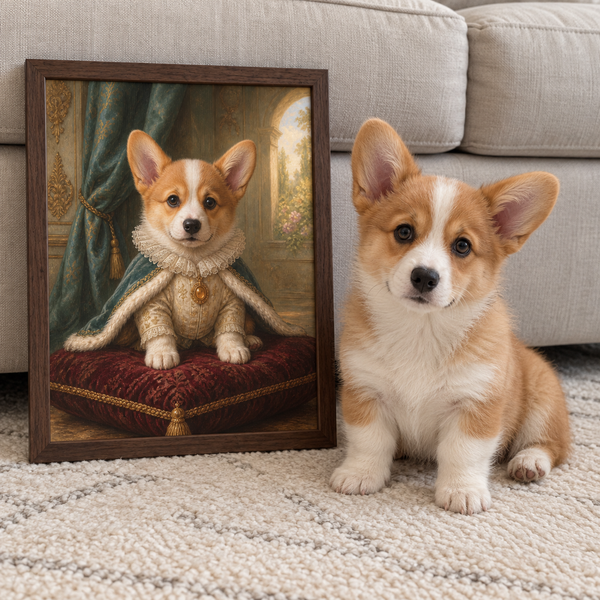
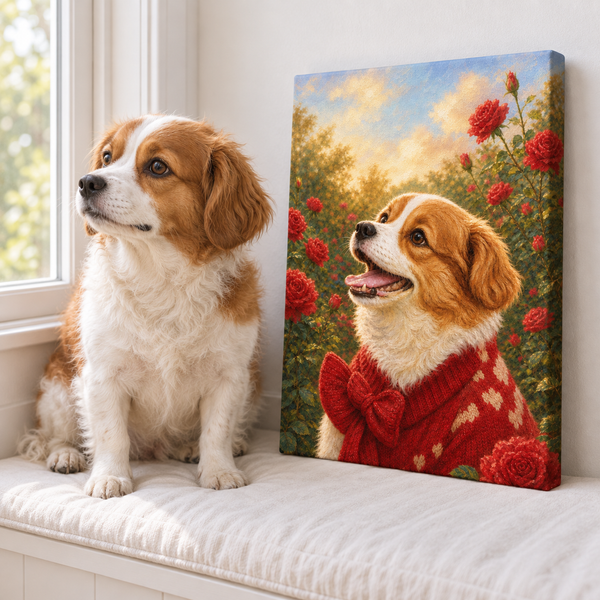
For a display at home, writing and a picture can remain separate pieces. Our memorial portrait planning guide can help you choose a photo, while Pawfolio’s custom pet Canvas portraits offer an optional portrait format. You do not need to purchase anything to make space for the poem.
Before putting it aside, check the name, the memory, and the voice. Does it sound like something you mean? That is a useful stopping point. The poem can be small, imperfect, private, and still worth keeping.