
A pet memorial portrait can hold a very specific kind of memory: the expression that greeted you at the door, the ears that lifted at a familiar word, or the quiet presence that once occupied a favorite corner of the room.
Creating the portrait may feel comforting, difficult, or both. There is no single correct way to approach it, and there is no deadline for deciding what belongs in the artwork.
The most meaningful tributes are often restrained. They begin with one true memory, preserve the pet's recognizable features, and find a place in the home that feels natural rather than ceremonial.
Begin with one memory, not an entire life story
Trying to represent every year, adventure, and relationship in one image can make the process overwhelming. Start smaller.
Think of a moment that captures the pet's everyday presence. It might be a dog resting after a walk, a cat watching birds from the same window each morning, or a senior pet looking up with a familiar calm expression.
That memory can guide the choices that follow:
- A peaceful memory may call for a quiet background and soft color.
- A joyful outdoor memory may suit open space and brighter light.
- A dignified expression may work with a formal, centered composition.
- A playful habit may be represented through posture or one meaningful object.
You do not need to place every favorite toy, location, or symbol into the portrait. One carefully chosen detail can carry more emotional weight than a crowded scene.
Choose the photo that feels most recognizable
The best memorial photo is not necessarily the last photograph or the most professionally composed one. It is the image that feels most like the pet you remember.
Look for clear eyes, visible markings, and an expression that your family recognizes. If the favorite image is slightly soft or poorly lit, search for a second photo that shows the same features more clearly. One image can establish the expression while another confirms coat color, ear shape, or chest markings.
Pawfolio's Pet Portrait Photo Tips can help you evaluate focus, lighting, cropping, and visible features. Take your time with this step. It is reasonable to pause and return to the photo selection later.
If several family members shared the pet, invite each person to identify the image that feels most familiar. The goal is not a vote on the “best” photograph. It is a way to notice which expressions and memories are shared.
Decide how closely the setting should follow the photo
Some people want the original setting preserved: the yard, favorite chair, or familiar blanket. Others want the background simplified so the face becomes the clear focus.
Keeping the original setting can anchor the portrait in a real place. This works well when the location is part of the memory and the photograph is visually calm.
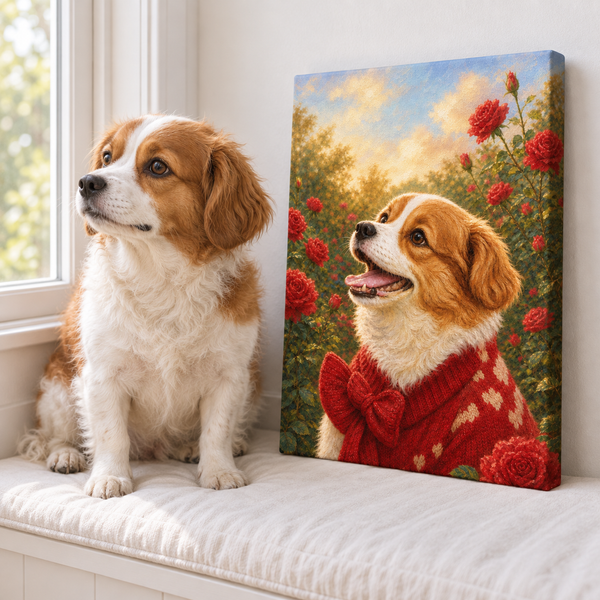
Changing the setting can help when the source photo contains clutter, harsh lighting, or objects that distract from the pet. A soft field, neutral interior, floral background, or understated historical room can preserve the mood without pretending the source photograph was perfect.
The background should support recognition. If the pet had dark fur, choose enough contrast to preserve the silhouette. If the coat was light, avoid a field so pale that the ears and shoulders disappear.
Include symbols only when they are truly personal
A collar, name tag, favorite flower, worn tennis ball, or small bandana can belong in a memorial portrait when it is tied to a real memory.
Symbols become less effective when they are added simply because memorial art is expected to look a certain way. There is no requirement to include wings, halos, dates, or text. A direct portrait can be complete on its own.
If you do add an object, keep it secondary to the pet's face. One item placed quietly in the composition can provide context without turning the image into an inventory of belongings.
Text is also optional. A name or short date can be meaningful, but it changes the portrait from visual remembrance to a more explicit memorial. Consider whether you want the piece to communicate privately to people who knew the pet or explain itself to every viewer.
Choose a style that matches the memory
Style should clarify the feeling you want to preserve.
A natural portrait keeps attention on the face and familiar markings. It can feel quiet, direct, and easy to live with over time.
A soft painterly direction can gently reduce distracting detail while maintaining recognition. This may suit a calm household display or a photograph with an imperfect background.
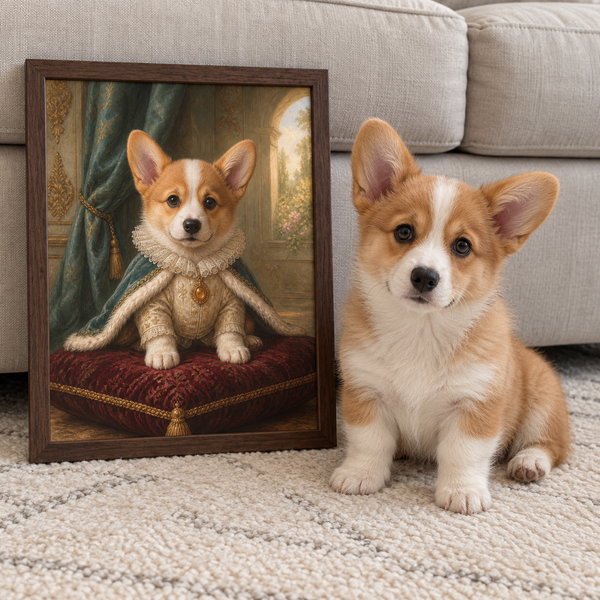
A historical or royal composition can be appropriate when humor and ceremony were part of the pet's personality. Memorial art does not have to be somber. If the pet was famously dramatic or commanding, a formal themed portrait may honor that relationship more honestly than a muted tribute.
Pawfolio creates custom pet portraits from photos in several directions. Choose the approach that feels truthful to the pet rather than the one that seems most conventionally memorial.
Select Art Print or Canvas based on where it will live
The display format affects the emotional presence of the portrait.
A framed Art Print can sit naturally among family photographs, letters, or other meaningful pieces. The frame can connect it to an existing gallery wall or a small remembrance shelf.
A Canvas portrait has visible depth and wrapped edges. It can work well as a self-contained focal point when you want one image to hold a clear place in the room.
The Art Print vs Canvas guide compares the two formats in more detail. Think first about the wall, viewing distance, and whether the portrait will stand alone or join other objects.
Create a place that feels part of the home
A memorial portrait does not need to be separated from daily life. It can live in the hallway you pass every morning, beside books in the office, or among family photographs in the living room.
Choose a place where the artwork feels welcome but not exposed to harsh direct sunlight, moisture, or heat. If you want to create a small remembrance area, allow empty space around the portrait. A collar, flower, or one photograph may be enough.
You can also move the portrait over time. The right location immediately after a loss may not be the location that feels right a year later.
The American Veterinary Medical Association's pet-loss resources recognize that people grieve differently and suggest remembrance activities as one possible way of coping. A portrait is an option, not an obligation. Make it when the process feels supportive to you.
Let the portrait preserve what was familiar
A meaningful pet memorial portrait does not need a complicated concept. It needs a recognizable expression, the details that mattered, and a setting that supports the memory.
Begin with one moment. Choose the clearest photograph that still feels true. Add only the symbols that carry real personal meaning. Then select a style and format that can live comfortably in your home.
When you are ready to understand the ordering steps, visit How It Works. There is no need to rush the decision. The portrait should be created at the pace the memory allows.