
You look up from your laptop and find your dog watching you. The same eyes follow you toward the kitchen, the leash, and sometimes the bathroom. It can feel loving, demanding, funny, or a little unsettling depending on the moment.
So, why does my dog stare at me? Usually, your dog is gathering information or trying to communicate. The gaze might mean “Is dinner next?”, “I need to go outside,” “What do you want me to do?”, or simply “I like being near you.” The useful clue is not the eyes alone. Read the setting, the rest of the body, and what happens immediately before and after the stare.
Start with context, not a single meaning
There is no universal translation for a stare. A dog watching you beside the back door is giving you different information from a dog standing stiffly over a favorite chew.
Before deciding what the look means, check four things:
- Location: Is your dog near the door, food bowl, toy basket, or bed?
- Timing: Is it close to a familiar walk, meal, training session, or departure?
- Body language: Does the body look loose and curved, or still and rigid?
- What follows: Does your dog walk toward an object, offer a play bow, paw at you, or remain frozen?
The American Kennel Club's explanation of dog staring emphasizes that dogs often watch people to collect information about what will happen next. Over time, they learn that small human actions—putting on shoes, picking up keys, or opening a cabinet—predict events that matter to them.
1. Your dog is waiting for the next cue
Dogs are excellent students of routine. Your dog may stare because you have reached the part of the evening when the leash usually appears, or because your hand moved toward the shelf that holds treats.
This kind of gaze often comes with an alert but comfortable posture. The ears may turn toward you, the mouth stays neutral or softly open, and the dog is ready to move when you do. During training, the same attention can be useful: a dog looking at you is available to notice the next cue.
If your dog seems confused, make your signal simpler rather than repeating it more loudly. Check whether your words and body are asking for the same thing. A clear hand cue, familiar position, and timely reward can resolve a long, questioning look.
2. Your dog is asking for something practical
Sometimes the message is straightforward. Your dog may need a bathroom break, fresh water, access to a resting place, or help retrieving a toy that rolled under furniture.
Look for a short sequence rather than waiting for a dramatic signal. A dog might stare, glance toward the door, then look back at you. Another might make eye contact and walk toward an empty water bowl. That back-and-forth movement gives the gaze context.
Respond to genuine needs, but avoid teaching that staring is the only way to make things happen. You can reinforce a clearer alternative, such as sitting by the door, touching a bell, or settling on a mat while meals are prepared.
3. Staring has worked before
If a long look has repeatedly earned food, play, or immediate attention, your dog has learned an effective strategy. The behavior is not calculated in a human sense; it is simply reinforced.
Dinner-table staring is a common example. One bite passed under the table can make the next attempt more persistent. Instead of scolding the dog for using a behavior that worked, decide what you want instead. Set up a comfortable place away from the table, offer an appropriate activity there, and reward calm settling.
Consistency matters. If five people ignore the stare but one person shares food, the behavior still pays sometimes—and intermittent rewards can make a habit surprisingly durable.
4. A soft gaze can be social and affectionate
A relaxed dog may look at you because being connected feels good. Soft eyes, a loose face, a wiggly or resting body, and the ability to look away are reassuring signs. Your dog may be checking in during a quiet moment or inviting gentle interaction.
Affection is one possible meaning, not the automatic answer to every stare. It is more useful to notice the whole relationship: does your dog choose to rest nearby, approach comfortably, bring toys, or seek contact and then leave when satisfied? Pawfolio's guide to everyday ways to show your dog love focuses on predictable care, play, choice, and attention rather than relying on one signal.
You do not need to hold an intense gaze to return affection. A soft glance, calm voice, or invitation to approach is enough. Let the dog decide whether to continue the interaction.
5. Your dog may be checking your reaction
In an unfamiliar setting, dogs often look toward a trusted person for information. A dog may watch you when a delivery arrives, a new object appears, or another dog passes across the street. Your expression, movement, and leash handling can become part of how the situation feels.
Stay steady and avoid forcing the dog closer to whatever caused uncertainty. Give enough distance for the body to relax, then reinforce calm observation or an easy cue the dog already knows. If the dog repeatedly looks back at you during a walk, that check-in can be rewarded without turning every glance into a formal exercise.
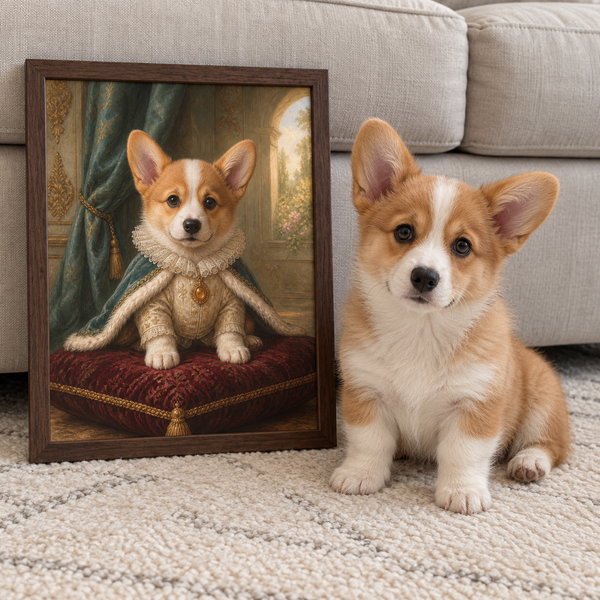
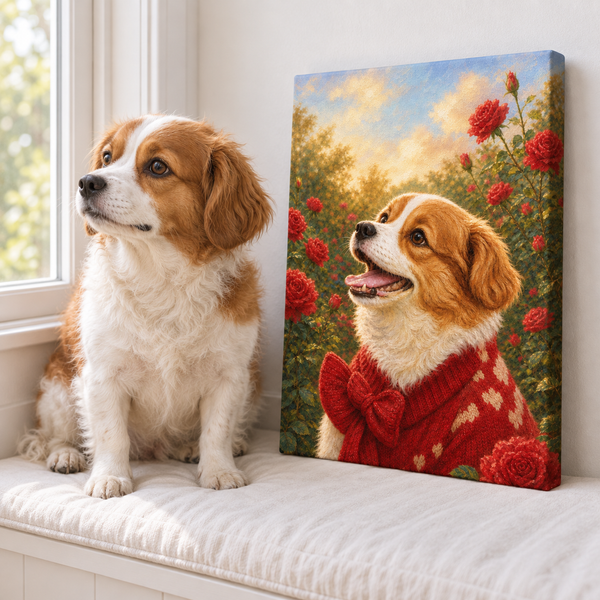
These small expressions can also make a photograph feel recognizable. If you want to include that familiar attentive look in a family portrait with your dog, use a comfortable setup and a helper near the camera instead of restraining the dog's head.
6. A hard stare is a request for space
Not all eye contact is friendly. A hard, fixed stare paired with stillness, a closed mouth, a lowered head, stiff posture, or guarding of an object can be a warning. Do not stare back, reach toward the item, punish the warning, or test how close you can get.
The American Veterinary Society of Animal Behavior notes the importance of distinguishing a soft gaze from a hard stare and reading the face together with overall body position. Body stillness is especially easy to miss.
Create distance calmly. If this happens around food, toys, resting places, or handling, consult your veterinarian and a qualified behavior professional. Management and a carefully designed behavior plan are safer than confrontation.
Be equally cautious with an unfamiliar dog. Direct eye contact can feel threatening, and a dog that looks away, freezes, or leans away may already be asking for the interaction to stop.
7. A sudden or vacant stare can signal a problem
Most everyday staring is normal communication. A new pattern deserves more attention when it appears with confusion, pain, reduced activity, changes in sleep, loss of responsiveness, circling, unusual clinginess, or staring at walls or empty space.
PetMD's veterinarian-reviewed guidance recommends considering the dog's complete posture and the situation, not just the eyes. If the behavior is sudden, frequent, or paired with other changes, record when it happens and contact your veterinarian.
A short video can be useful if it can be taken safely. Note the time, duration, trigger, response to the dog's name, and any other physical or behavioral signs. Do not delay urgent care when your dog seems distressed, disoriented, unresponsive, or at risk of injury.
What should you do when your dog stares?
Use a simple sequence:
- Pause and scan the whole body. Loose and responsive is different from rigid and fixed.
- Check the immediate need. Look at the door, water, timing, environment, and recent events.
- Respond without rewarding unwanted habits. Meet real needs, then teach a clearer request when appropriate.
- Give space to tension. Do not challenge a hard stare or guarding posture.
- Track meaningful changes. A sudden pattern plus other symptoms belongs in a veterinary conversation.
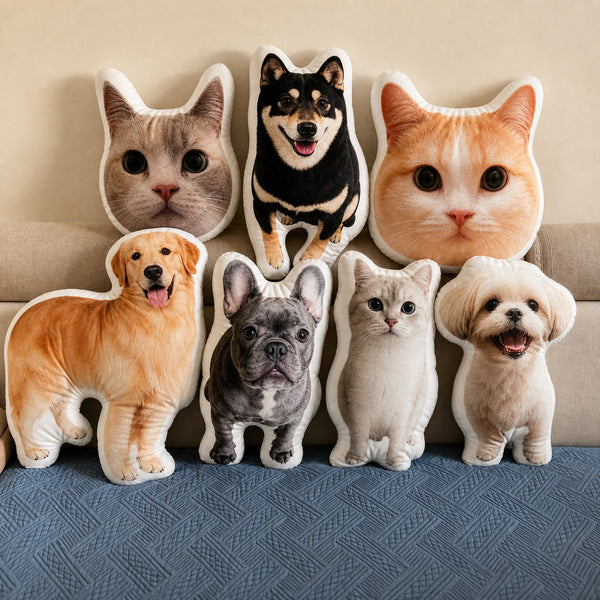
The longer you live together, the more familiar your dog's personal signals become. That recognition is part of what makes a custom pet portrait feel personal: the memorable detail is often not a perfect pose, but the particular look your dog gives only in a familiar moment.
A stare is an invitation to observe before you interpret. Read the room, read the body, and respond to the dog in front of you. Most of the time, those watching eyes are waiting for information or offering it—and careful context tells you which.