
You turn a cushion over and find a damp patch. Your dog is relaxed beside it, and nothing else seems unusual. On another evening, though, the licking continues through dinner and starts again whenever you look away. Those two situations deserve different responses.
If you are wondering, “Why does my dog lick the pillow?” the useful starting point is the pattern. A little licking may be connected with interesting tastes or exploration. Persistent licking can have behavioral or medical causes that a pillow alone cannot reveal. Notice what happens before, during, and after the behavior, while making sure fabric and stuffing stay out of your dog's mouth.
Start with the pillow, then look at the pattern
A cushion is part of a busy household. Someone rests their head on it, another person eats a snack nearby, and the dog investigates it later. In a veterinary-authored guide, PetMD explains that sweat, food residue, and exploration can attract dogs to furniture. The same guide notes that excessive licking may also have health or behavioral causes. An interesting surface is one possible explanation, not a diagnosis.
Look for a simple description before deciding what the behavior means. Is your dog interested in one corner of one cushion, or every soft surface? Does it happen after someone has been eating, around bedtime, or at unrelated times? A note such as “licked the same blue cushion after the sofa snack” is more useful than “being weird again.”
Also distinguish licking from mouthing or pulling threads. Our article about dogs nibbling on blankets discusses a related habit, but the movements are different. Describe what you actually see, especially if you need to explain it to your veterinarian.
Keep a short record without turning it into a test
If the behavior is occasional and your dog otherwise seems well, jot down a few ordinary observations. Record the time, the object, roughly how long it lasted, and what else was happening. Include changes in appetite, energy, stool, or normal routines. You do not need a spreadsheet; a few clear phone notes can preserve details you might otherwise forget.
- What happened immediately before the licking?
- Was your dog licking, chewing, or swallowing anything?
- Could your dog comfortably leave the pillow for a familiar activity?
- Did the behavior return immediately or stop for the evening?
These questions organize information; they do not create a home diagnostic score. There is no universal number of licks that separates a harmless habit from a medical problem. Do not keep offering the pillow to see whether you can reproduce the behavior, and do not delay veterinary advice while collecting a perfect record.
If a household change coincided with the habit, include that context without assuming it explains everything. For example, a recent trip may matter to the history. Our guide to preparing a dog for an owner's vacation focuses on maintaining care and routine, rather than treating one behavior as proof of a particular emotion.
Make the immediate response calm and practical
For a brief episode, use an activity your dog already understands to invite them away from the cushion. That might mean moving to their usual resting spot or joining you for a quiet, familiar interaction. The aim is to make the next step easy, not to stage a confrontation over the pillow. If your dog guards the object or reacts aggressively when approached, stop trying to take it and seek professional guidance.
Then look at the setup. Remove food crumbs, follow the pillow's care label, and put the cleaned item away until it is fully dry. If the cover is splitting or the dog has started pulling at a seam, remove access. Avoid experimenting with household substances as taste deterrents; a product intended for cleaning or scenting a room is not automatically suitable for something a dog may lick.
Choose a response you can repeat consistently. One person allowing unrestricted access while another scolds the dog creates a confusing household routine. Agree on where decorative cushions belong, which resting area the dog can use, and who will watch for changes. Practical dog-room planning ideas can help you separate a resting space from storage and household items.
Persistent licking deserves more than a guess
When licking is new, escalating, difficult to interrupt, or interfering with normal rest and activities, arrange a veterinary assessment. Describe the behavior and any other changes rather than arriving with a fixed explanation. “My dog keeps returning to this pillow” leaves room to investigate; “my dog definitely has anxiety” may overlook another cause.
VCA's veterinary behavior specialists describe surface licking among possible repetitive behaviors. They explain that conditions involving pain, skin disease, or the nervous system can produce similar signs and need evaluation. Treatment may involve both medical and behavioral care. They also advise against punishment, which can add fear and frustration.
Bring the short record you kept, and a video if you captured one safely. Tell the clinic whether the licking happens on other surfaces or alongside changes in eating, drinking, movement, or sleep. Mention new medications or household products as part of the history, without changing prescribed treatment yourself.
It is fine if you cannot identify a trigger. “I have not found a pattern” is useful information too. The purpose of observation is to give the professional a clearer picture, not to make you responsible for solving the cause before the appointment.
Swallowing fabric changes the priority
A wet pillow and missing stuffing are different problems. If you think your dog swallowed part of a cushion, contact your veterinarian promptly for advice, even if you are unsure how much is missing. Keep the item available to describe its material and the approximate amount involved, but out of the dog's reach.
VCA's guide to swallowed foreign objects explains that objects including clothing can cause an intestinal obstruction. Signs can include vomiting, reduced appetite, abdominal discomfort, and lethargy. Some objects pass, while others require treatment; that difference cannot be determined by looking at the damaged pillow.
If your dog seems ill after suspected ingestion, seek urgent veterinary care. Do not wait for a scheduled behavior appointment or try to make the dog vomit unless a veterinary professional specifically directs you. Let the clinic decide what information and examination are needed.
For the household record, photograph the damage and note when the cushion was last intact. This is a practical way to report what happened without guessing. It also helps distinguish a surface-licking episode from an event that involves missing material.
Keep decorative pillows separate from your dog's care plan
Once you have addressed the behavior and any health concerns, you can decide how cushions fit into your home. A washable cover, a closed bedroom door, or a dedicated shelf may be more useful than replacing one attractive pillow with another. Choose the arrangement based on how your dog actually uses the room.
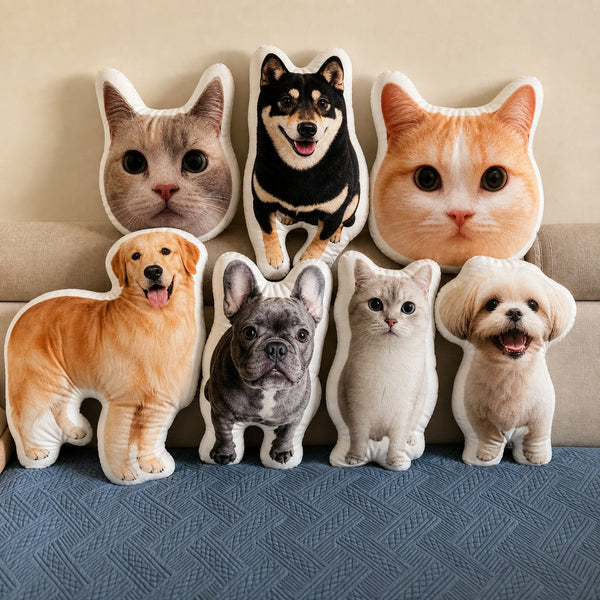
If you enjoy displaying your dog's portrait on personalized pet pillows, treat them as home decor. A pillow featuring a pet's photo is not a treatment for licking, an enrichment prescription, or a substitute for an appropriate pet toy. Keep decorative items inaccessible if your dog mouths seams or pulls out filling.
The next useful step is usually small: put the damaged cushion away, write down the pattern, or call the veterinarian about a change. You do not need to interpret every lick as a message. Pay attention to the whole dog, protect them from swallowing material, and let persistent or unusual behavior guide you toward professional advice.