
The most useful dog room ideas are not really about giving a pet a miniature house. They are about solving everyday problems: where a dog can rest undisturbed, where the leash belongs, how muddy supplies stay contained, and which objects must remain out of reach. That may require a spare room, but it can also fit into one calm corner of a living room or mudroom.
Begin with your dog's habits and the home's traffic pattern. Then plan rest, movement, storage, and cleaning before choosing colors or art. A modest zone that the dog actually uses is more successful than an elaborate built-in designed mainly for photographs.
Define the Room's One Main Job
Decide what problem the space should solve. Is it primarily a quiet resting area, an entry station for walks, a place to store supplies, or a washable landing zone after outdoor time? A room can support more than one task, but choosing a main job prevents incompatible features from competing for the same floor space.
Observe your dog for several days. Note where the dog chooses to sleep, whether they seek an enclosed or open area, which household sounds interrupt rest, and how they move from the door to water and bedding. Do not assume an unused closet is ideal just because it is available. A dog who prefers to see the family may ignore an isolated room; a noise-sensitive dog may avoid the laundry area when machines run.
Write a one-sentence brief such as “a quiet resting corner with closed storage for walk supplies.” That sentence becomes a filter. A wash station, feeding cabinet, themed wallpaper, and toy display may all be attractive, but they do not belong unless they support the brief and fit the dog.
Choose a Location With an Easy Exit
Look for a dry, ventilated place away from direct heat, cold drafts, and constant foot traffic. The dog should be able to enter and leave without squeezing past furniture, bowls, or people. Avoid placing the bed behind a door that can swing into it or in a dead-end where a child or another pet could block the exit.
The RSPCA's guidance on creating a good home for a dog calls for a comfortable, clean, quiet, dry, draught-free resting place and constant access to somewhere the dog can retreat from frightening things. It also stresses a secure, hazard-free environment. Those needs matter more than whether the space looks like a complete room.
Test the location before buying furniture. Place the existing bed there for a week and see whether your dog chooses it. Notice temperature at different times of day and listen for appliances, street noise, or slamming doors. If the dog consistently rests elsewhere, reconsider the site instead of trying to lure the dog into a design that does not work.
Build the Rest Zone Around the Dog
Use a bed large enough for the dog's normal sleeping posture. Some dogs curl tightly; others stretch on their sides and need more length. Choose a washable cover and keep a spare if accidents, mud, or frequent laundering are likely. A nonslip layer underneath can keep the bed stable on smooth floors.
If your dog already enjoys an open crate, it can be one resting option rather than the visual centerpiece of the room. The RSPCA's crate and playpen guidance says a crate should be large enough for the dog to stand, turn, lie down, and stretch, and should function as a safe haven rather than punishment. Introduce it gradually and positively; do not close a dog into a new decorative setup and assume they will adapt.
In a multi-dog home, provide separate beds and enough space for each dog to leave without crossing another dog's resting area. Shared decor does not require shared resources. If one dog guards beds, food, toys, or doorways, seek qualified behavior help instead of using room layout as the only solution.
Separate Daily-Use Items From Locked Storage
Divide supplies by who should access them. A low, open basket can hold a few safe toys the dog may choose. Leashes and harnesses can hang near the exit but above chewing height. Food, treats, medications, cleaning products, grooming tools, waste bags, batteries, and spare parts belong in closed storage the dog cannot open.
Keep the water bowl easy to reach and place it on a washable, nonslip mat. A feeding station may fit the room if meals are calm there, but do not force food into a cramped rest area. In multi-dog homes, separate feeding arrangements may be safer and less stressful. Store food in its original packaging inside a secure container so you retain its label and lot information.
Use labels for people, not for visual clutter. Group walk supplies, cleaning supplies, and health records in different shelves or bins. The goal is that someone else caring for the dog can find the correct leash or towel without opening every container.
Dog-Proof the Room and Make Cleaning Easy
Knowing how to dog proof a room starts at floor level. Get down and scan for electrical cords, blind cords, sharp hardware, loose fasteners, small objects, unstable lamps, accessible trash, and gaps behind furniture. Secure tall storage to the wall where appropriate, keep windows safely screened, and confirm that doors and gates latch reliably.
Choose surfaces based on the dog's movement and your cleaning routine. A washable rug or nonslip mat can add traction on slick flooring. Removable bed covers and wipeable mats reduce the need for complicated built-ins. Keep an uncluttered path wide enough for the dog to turn comfortably, especially for a senior dog or one using mobility support.
Create a five-minute maintenance test: can you pick up toys, wipe the water area, shake out or vacuum the bed zone, and inspect the floor without moving heavy furniture? If not, simplify. Check toys and bedding regularly for torn seams, exposed filling, splinters, or pieces small enough to swallow. A room is not automatically safe when the dog is alone, so match access and supervision to the individual dog's behavior.
Add Personal Decor Only After the Layout Works
Once the dog uses the space comfortably, add the visual layer. Repeat colors already present in the room so the dog zone feels intentional rather than themed. One washable blanket, a painted hook rail, or a framed photograph may be enough. Keep frames and shelves securely mounted above tail, nose, and jumping height, and avoid fragile objects on low surfaces.
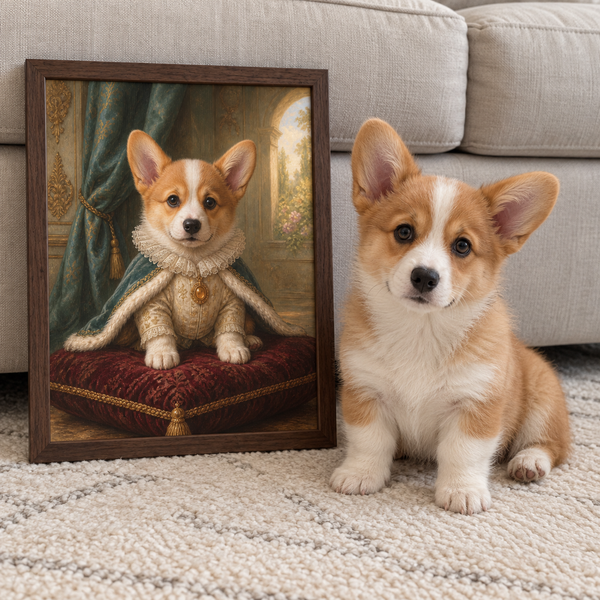
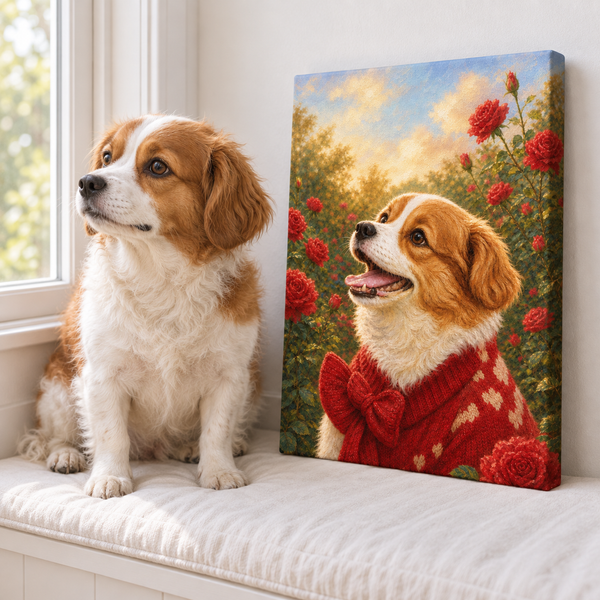
Wall art can make the area personal without taking floor space. A favorite photo, an older snapshot from a first day home, or one of Pawfolio Art's custom pet portraits can mark whose corner it is. Our guide to dog wall art ideas explains how to choose a size and placement that work with the surrounding furniture rather than overwhelming it.
Take a final photograph from the dog's eye level. It often reveals a blocked path, dangling cord, crowded bowl, or sharp corner that is easy to miss while standing. Make those corrections before adding anything else.
A successful dog room is not measured by the number of custom features. It works when the dog can rest, move, drink, and leave easily; when people can find supplies and clean the area; and when the decor reflects the dog without creating new hazards. Plan those practical parts first, and even a small corner can feel thoughtful and complete.