
Your cat looks across the room, slowly closes their eyes, and opens them again. It is a small moment that can feel wonderfully personal. But why do cats slow blink, and how much meaning should you attach to one movement?
Research suggests slow blinking can play a role in positive communication between cats and people. It does not give us a word-for-word translation of a cat's feelings. The useful approach is to notice the whole situation, respond gently if your cat seems comfortable, and recognize when narrowed eyes could need medical attention. You can enjoy the moment without turning it into a test your pet has to pass.
What the research actually tells us
A 2020 study of cat–human slow-blink communication examined two situations. In one experiment, cats showed more half-blinks and eye narrowing when their owners slow-blinked at them than during a no-interaction condition. In another, cats were more likely to approach an unfamiliar researcher after a slow-blink interaction than after a neutral facial expression.
Those findings support the possibility of positive communication through this exchange. They do not establish that every slow blink means affection, or that a cat who does not respond dislikes the person. A research comparison also cannot tell you exactly what one cat feels during one evening on your sofa.
Think of the study as a reason to pay attention, rather than a script to follow. You might notice a familiar eye movement during a quiet moment together. That observation can matter to you even if you cannot give it a precise emotional label. Leave room for uncertainty instead of treating an appealing interpretation as a fact.
Watch the scene around the blink
Cats Protection's explanation of slow blinking emphasizes context: slow blinks can occur when a cat is comfortable, but also in stressful situations. Eye movement alone is not a reliable translation of mood. Consider the rest of the cat's body language and what is happening nearby.
For an everyday observation, write a description before reaching a conclusion. “Miso was resting on the chair while I read” tells you more about the setting than “Miso said she loves me.” You can still feel touched by the exchange; the description simply keeps the observation separate from your interpretation.
Here are a few useful questions to ask yourself:
- What was my cat doing before I noticed the blink?
- Did I just approach, reach toward them, or interrupt something?
- Is this a familiar expression in this setting, or a change?
- What happened afterward: staying, approaching, turning away, or leaving?
Consider two hypothetical moments. A cat narrows their eyes while resting across the room. Later, the same cat does so as a visitor leans over their chair. The eye movement may look similar, but those are different situations. Avoid using the first interpretation automatically in the second.
Offer a quiet response, with room to leave
If your cat appears relaxed, Cats Protection suggests you can try a slow blink back. If they seem frightened or unhappy, give them space instead of moving closer or holding an intense stare. Keep any eye contact brief and gentle; an invitation does not need a response.
For a simple home version, stay where you are, soften your expression, and slowly close and reopen your eyes. Then return your attention to what you were doing. This is an optional interaction, not a training assignment. There is no need to repeat it until you get a matching movement.
Keep your own choices modest. You do not need to lift your cat, turn their head toward you, follow them to another room, or bring your face close to theirs. If your cat walks away, let that end the exchange. A quiet shared room can be enough for that moment.
Treat touching as a separate decision. A blink does not answer the question of whether your cat wants a hand reaching toward them. If you are deciding what to do next, our guide to petting a cat with attention to their response focuses on that interaction. You can also choose to keep enjoying the company from your seat.
Skip the trust test and the running score
Not every cat slow-blinks, and a missing response does not prove a lack of trust. That is an important limit in the Cats Protection guidance, especially when a charming behavior becomes a social-media challenge.
Avoid keeping a tally of which person gets more blinks. A list such as “three for me, one for my partner” cannot establish whose relationship is stronger. Likewise, a short clip cannot show everything that happened before or after the camera started recording. Comparing pets through those snippets asks more of the behavior than the evidence supports.
You could keep a different kind of note if you enjoy noticing routines: where the cat chose to rest, what you were doing, and whether they stayed nearby. This is a personal record of ordinary life, not a scorecard or a behavioral diagnosis. A sentence like “Tuesday: shared the window seat while it rained” preserves the memory without claiming to measure affection.
It is also fine to stop observing and simply share the room. You do not need to document every friendly-looking gesture. Leaving an interaction unfinished can be a thoughtful choice when the alternative is repeatedly asking your cat to perform it again.
Separate a familiar expression from an eye problem
Do not explain away a new or persistent eye change as a slow blink. PDSA's guidance on eye problems in cats advises contacting a vet promptly about eye changes and immediately if a cat appears to be in pain. Signs include redness, swelling, discharge, cloudiness, or an eye being held closed.
If something seems wrong, focus on getting veterinary advice rather than identifying an emotion. Tell the clinic what you have actually seen: which eye is affected, when the change started, and whether there are other visible changes. Let the veterinary team advise you about the next step.
You do not need to solve the distinction through an internet checklist before making that call. “I thought it was a sleepy expression, but now one eye stays closed” is enough to explain your concern. A familiar-looking gesture should not delay help when its pattern changes.
This is also where wording matters. Describe a visible change as a visible change, rather than deciding at home that it is harmless, an infection, or a particular injury. The goal is a clear account for the professional assessing your cat.
Save the familiar expression without staging it
A relaxed expression may become one of the details you love remembering: the little pause on the windowsill, the cheek markings, or the way your cat settles beside an open book. If you want a photo, make taking one optional. Let the moment pass if reaching for the camera would mean moving or interrupting your pet.
Our guide to photographing a shy cat offers a separate route for planning that session. You can also explore cat portrait ideas that capture personality if you already have several images and want to decide which expression feels familiar.
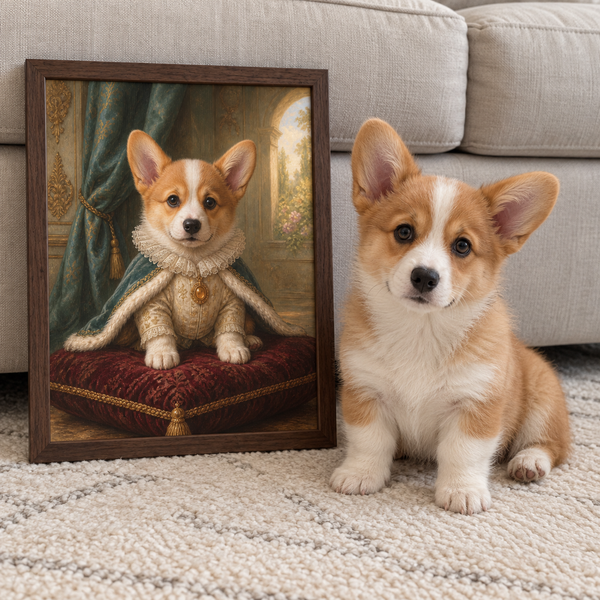
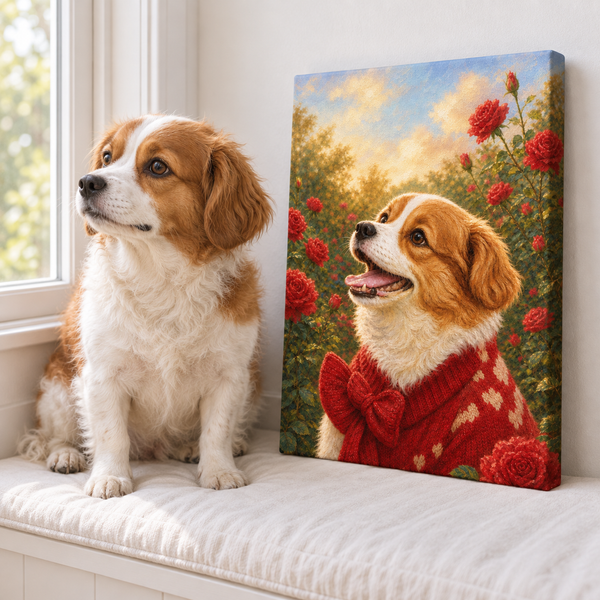
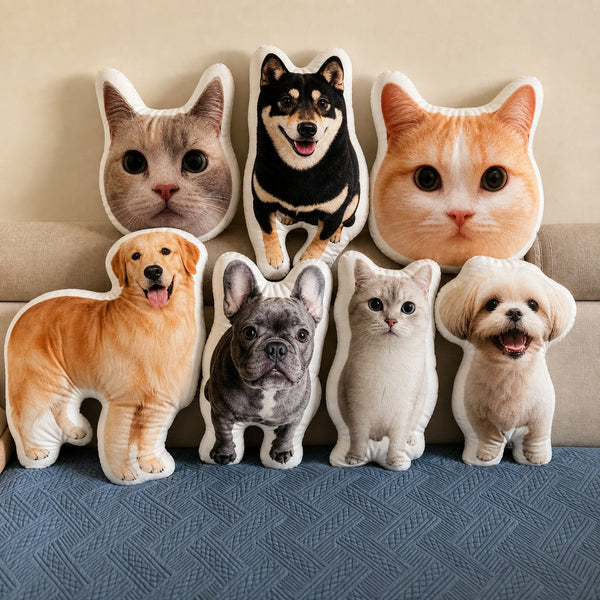
For a keepsake, Pawfolio's custom pet portraits give those personal details a place in your home. Choose an image because it reminds you of your own cat, without needing to claim that a particular eye position proves a particular feeling.
The next time you notice a slow blink, pause, take in the setting, and leave your cat a choice about what happens next. Enjoy the connection you experience while staying curious about the animal sharing it.