
Cats rarely perform on command. The expression you love may appear for half a second: an alert look toward the window, a slow blink from the sofa, or the upright posture your cat adopts just before investigating a new box.
That unpredictability is exactly what can make a cat portrait feel personal. The goal is not to force every cat into the same “regal,” “funny,” or “sweet” template. It is to recognize the details that already make your cat familiar and choose a photo and portrait direction that preserve them.
Whether you want a quiet natural portrait or a playful themed piece, the following decisions will help a custom pet portrait feel more like your cat and less like a generic image.
Start with posture, not a personality label
It is tempting to begin with a word: elegant, mischievous, shy, dramatic. A better starting point is something you can actually see.
Look at the ears, eyes, whiskers, tail, and weight distribution. An inquisitive cat may lean forward with the ears upright. A deeply relaxed cat may settle into a loose loaf with soft eyes. A cautious cat may prefer a lower position or keep more distance from the camera.
Body language needs context. Cornell's Feline Health Center notes that facial cues and body posture work together when people interpret feline behavior. Its guide to feline behavior cues describes how pupils, ears, whiskers, tail, and posture can signal fear or tension. International Cat Care similarly emphasizes that flattened ears, a tense body, and a lowered posture may indicate discomfort.
For portrait photography, the practical lesson is simple: do not keep pushing when your cat looks tense. Let the cat leave, change the setting, and try again later. A comfortable expression will look more recognizable than a pose obtained through pressure.
Choose a photo that contains a familiar moment
A technically clean image matters, but familiarity matters too. Review your photos and ask which one makes you immediately say, “That is exactly them.”
The best choice may show:
- the head tilt your cat uses when hearing a cupboard open;
- the direct gaze reserved for meal time;
- the calm window pose that appears every afternoon;
- the slightly unimpressed expression everyone in the family recognizes;
- the soft, sleepy face seen only in a favorite blanket.
Then check the practical details. The eyes should be reasonably sharp, the face should not be hidden in deep shadow, and important markings should be visible. Avoid images in which one ear is accidentally cut off or a bright background overwhelms the face.
Use Pawfolio's Pet Portrait Photo Tips to review focus, lighting, eye level, and cropping. If no single photograph is perfect, prioritize the image that preserves expression and markings most clearly.
Let coat pattern guide the background
The background should support the cat's face rather than compete with it.
A black cat often benefits from a lighter or warmer background that separates the ears and shoulders from the surrounding space. A white cat needs enough tonal contrast to keep the edges from disappearing. A tabby already carries visual pattern, so a quieter field can make the eyes and stripes easier to read.
Color contrast does not have to be harsh. Soft sage, dusty blue, warm beige, muted rose, and deep brown can all provide separation without turning the portrait into a graphic poster.
Look for a color already present in the room where the portrait will hang. A background that echoes a rug, chair, curtain, or piece of pottery helps the final artwork feel integrated without matching everything exactly.
Decide how imaginative the portrait should be
There is a wide range between a natural portrait and a fully themed character.
A natural direction keeps attention on the face, fur, and expression. It suits people who want the portrait to feel calm, timeless, and easy to place in several rooms.
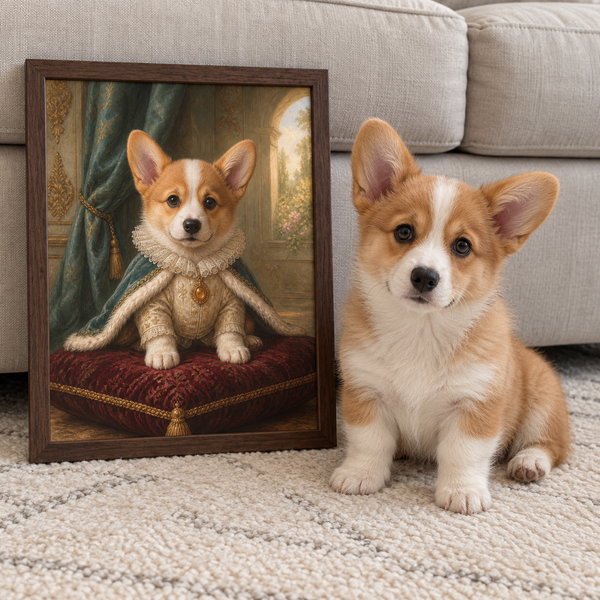
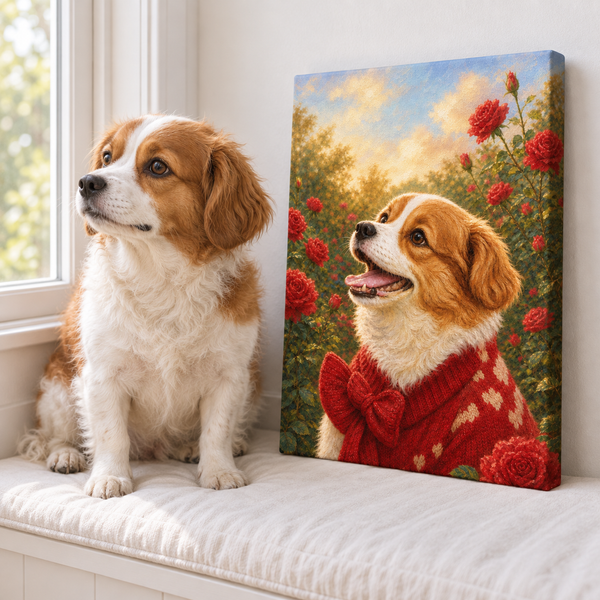
A subtle concept adds atmosphere without changing the cat's identity. Think of a garden field, a soft window scene, or an understated historical interior. The setting tells a story, but the face remains the emotional center.
A strongly themed portrait can be joyful when it connects to something real: a commanding cat in a royal composition, a curious cat in an explorer setting, or an unusually dignified senior cat in formal attire. The theme works best when it amplifies a recognizable trait rather than replacing the cat with a costume idea.
If you are unsure, choose the quieter direction. You can create personality through color, pose, and composition without adding many props.
Include the details people recognize first
Small markings often carry more identity than a broad breed label.
Notice the asymmetrical blaze across the nose, the white tip on one paw, a clipped ear, a freckled lip, different eye colors, or the exact shape of the chest patch. Make sure these features are visible in the source image or mentioned clearly when you submit the order.
For long-haired cats, the silhouette matters too. The mane around the neck, ear tufts, fluffy tail, and cheek shape help distinguish one cat from another. A photo with the coat flattened by an unusual angle may be less useful than a slightly imperfect image that shows the normal outline.
If the portrait will include more than one cat, choose images with compatible angles and lighting when possible. A straight-on face and an extreme side profile can be difficult to balance in one composition unless that contrast is intentional.
Choose a display that fits the portrait's mood
Once the artwork direction is clear, think about format.
A framed Art Print can feel refined and flexible. It works well in a gallery wall, reading nook, hallway, or office where the frame can coordinate with other pieces.
Canvas creates more physical presence through its wrapped edges and visible depth. It can suit a bold themed portrait or a single large image intended to anchor a room.
Pawfolio's Art Print vs Canvas guide compares the two formats directly. Make the choice after you know the wall, approximate size, and whether the portrait will stand alone or join other artwork.
Keep the process centered on recognition
A memorable cat portrait does not need to explain every part of a cat's personality. One clear expression, a few accurate markings, and a setting that supports the face can say enough.
Begin with a comfortable moment. Preserve the details your family notices first. Choose a background that lets the coat and eyes remain clear. Then select the format that fits the room.
When you are ready, review How It Works and choose the portrait direction that feels closest to the cat you know at home.