

Whiskers may look like a few stray hairs around a pet's nose, but they are built for a different job. Cats and dogs use them to collect close-range information—especially where their eyes cannot get a clear view. They can help an animal notice an object near the face, move through dim spaces, protect the eyes, and add detail to facial communication.
That is the short answer to why animals need whiskers. The more useful answer is found in how these specialized hairs work, where they grow, and what their position can—and cannot—tell you about your pet.
Whiskers Are Specialized Sensory Hairs
The technical name for whiskers is vibrissae. They are made of keratin like ordinary hair, but they tend to be longer, stiffer, and rooted more deeply. The important sensory work happens at the follicle under the skin. When the whisker bends, nerve-rich tissue around its base detects that movement and sends information to the brain.
That distinction matters: the hair shaft does not “feel” in the same way skin does, but moving or pulling it affects a highly sensitive structure. The veterinarian-written VCA explanation of dog whiskers describes follicles supplied with nerves and blood vessels, while its cat whisker guide explains the same basic system in felines.
Whiskers also grow in purposeful locations. Both cats and dogs have prominent whiskers around the muzzle, over the eyes, and beneath the chin. Cats additionally have tactile hairs on the backs of their front legs. Exact patterns differ between animals. That helps answer a common version of the question—why do dogs and cats have whiskers if ordinary fur already covers the face? The two types of hair are built for different work.
How Whiskers Turn Movement Into Information
Imagine walking through a dark room with your hands held slightly in front of you. Your fingertips would provide information before your body reached a chair or wall. Whiskers perform a comparable close-range role for a pet's face.
They respond when they contact a surface, and their movement may also pick up subtle changes in air around a nearby object. This does not give a cat or dog a picture of the room. It adds another stream of sensory information about what is close, where it may be, and whether the animal should slow down, blink, or change direction.
Whiskers above the eyes are especially easy to understand. When one is disturbed, a pet may blink or move the head away, helping protect a sensitive eye from grass, dust, or another object. Muzzle and chin whiskers can provide information about things directly in front of or below the nose—areas that can be difficult to inspect while moving.
The popular comparison to radar is memorable but imperfect. Whiskers do not remotely scan a room, and they should not be treated as a substitute for vision, smell, or hearing. They are one part of a combined sensory system.
What Cats Use Their Whiskers For
Cats depend heavily on precise close-range movement. A cat may bring its face near a toy, opening, water surface, or hiding place while hunting, climbing, and exploring. Facial and leg whiskers add tactile information during those moments.
They also move with the muscles of the face. Whiskers resting neutrally, drawing back toward the cheeks, or shifting forward can contribute to the larger picture of a cat's state. But whiskers should never be interpreted alone. Ear position, eyes, tail, posture, muscle tension, and the immediate situation matter too.
For example, whiskers drawn close to the face while the ears turn sideways and the body leans away may support the conclusion that a cat wants distance. Forward whiskers during focused play may simply reflect interest. Our consent-first guide to petting a cat explains how to pause and read the whole body instead of relying on one signal.
You may also hear that a cat uses whiskers as a perfect ruler for deciding whether its body will fit through an opening. That is too absolute. Whisker span can provide useful nearby information, but body condition, fur, whisker shape, and the cat's own judgment all vary. Treat the “built-in ruler” idea as a rough illustration, not a guaranteed measuring system.
What Are Whiskers For on a Dog?
Dog whiskers do many of the same basic jobs, even though they often receive less attention. What do dogs use their whiskers for in everyday life? The long hairs on the muzzle, cheeks, chin, and above the eyes help a dog gather information around the face. That can be useful when investigating the ground, approaching a bowl, moving through vegetation, or locating something just below the muzzle.
Dogs also move facial whiskers as part of an expression. A curious dog may carry parts of the face forward; a worried or defensive dog may hold the muzzle differently. Again, context comes first. A still photograph cannot tell you a complete emotional story, and whisker position should be considered with the dog's mouth, eyes, ears, weight distribution, tail, and behavior.
If your dog keeps looking at you, whiskers are only a small part of what you see. Our guide to why dogs stare at their people offers a broader way to separate a request, learned behavior, attention, and possible discomfort.
Can You Touch, Trim, or Pull Whiskers?
Gentle contact is normally different from tugging. If your pet welcomes facial touch, move slowly and stroke with the direction of the whiskers rather than bending them backward. Stop when the animal turns away, stiffens, flinches, or otherwise asks for space.
Never pull or pluck a whisker. The follicle is sensitive, so plucking can be painful. Veterinary guidance also recommends avoiding cosmetic trimming because shortening the hairs removes sensory input until they regrow. A veterinarian may occasionally need to clip hair around a wound or procedure, but that is a medical decision rather than a grooming preference. The practical rule is simple: leave healthy whiskers intact.
One shed whisker is not automatically a problem; whiskers can fall and regrow as part of a normal cycle. Contact your veterinarian if you notice sudden widespread loss, repeated breakage, irritated skin, swelling, pain, discharge, or another change around the face. The pattern and accompanying symptoms are more informative than a single hair on the floor.
Keep Whiskers Visible in Everyday Photos
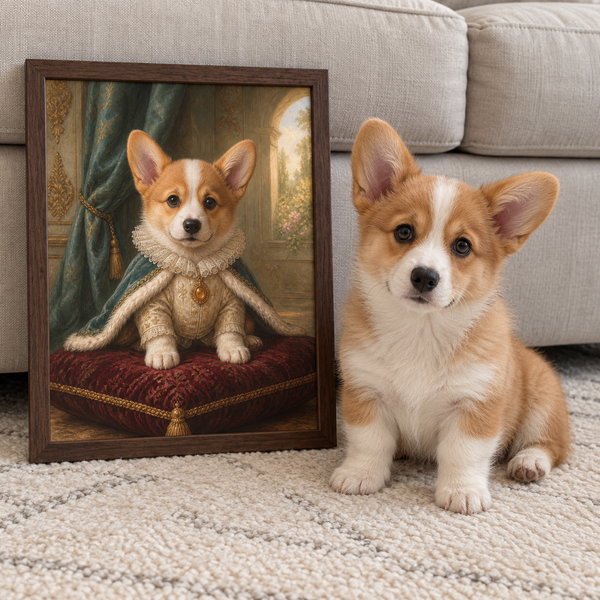
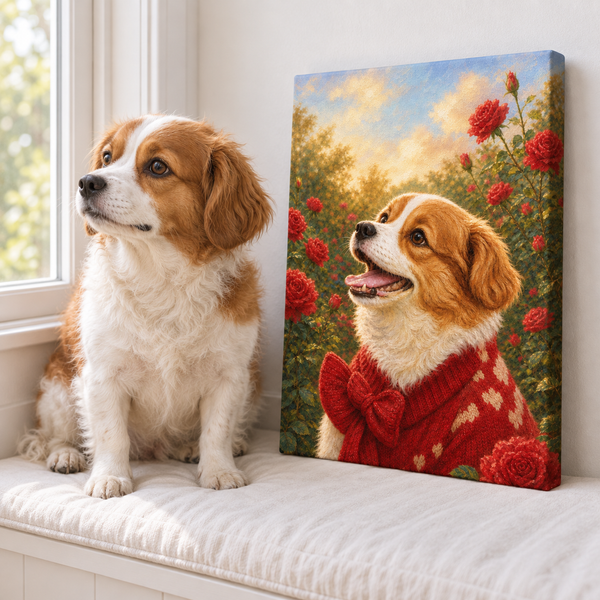
Whiskers are both functional and visually expressive. In a close portrait, they show the direction of the muzzle, the softness of a cat's cheek, or the alert shape of a dog's face. If you want a photo that preserves those details, avoid an overly tight crop around the nose and ears. Use soft, even light and focus on the eyes while keeping the whole face sharp enough for individual markings to remain clear.
Our pet portrait photo guide covers lighting, focus, eye level, and visible facial details. It can help whether you are saving a favorite everyday picture or choosing a source image for artwork. The same principle appears in our cat portrait ideas: the most recognizable image is often the one that keeps the small features you know by heart.
Whiskers do not work alone, and they are not magic measuring tapes. They are sensitive, movable extensions of a cat's or dog's touch system. Protect them from pulling and unnecessary trimming, read them as one part of the whole animal, and leave enough room for them in the photos you want to remember.