
A pet memorial shadow box can hold the ordinary objects that suddenly feel irreplaceable: a collar worn soft at the edges, a scratched tag, a favorite photograph, or a note about a daily habit. The goal is not to fit every memory behind glass. It is to choose a few pieces that tell one clear story and protect them well enough to be handled gently in the future.
These pet memorial shadow box ideas begin with preservation rather than decoration. You will plan the story, decide which items should be displayed as originals or copies, test the layout, use reversible mounting where possible, and choose a place in the home that feels supportive rather than demanding.
Choose the story before the objects
Emptying every keepsake onto a table can make the project feel heavier and the final display feel crowded. Begin with one sentence about what you want the box to remember.
Examples might be:
- “Our quiet morning walks.”
- “The toy she carried into every room.”
- “His enormous personality in a small body.”
- “The years we grew up together.”
Let that sentence guide the selection. A walking story might include a collar, tag, trail photo, and a tiny written map. A comfort story might use a favorite sleeping photo, a small fabric piece, and a note about the place your pet always chose.
You do not have to make the box immediately after a loss. Secure fragile or time-sensitive keepsakes, make digital copies of photos, and give yourself permission to plan later. AAHA's discussion of pet memorializing includes shadow boxes, paw prints, locks of hair, photographs, cards, and other personal forms of remembrance; there is no single correct combination.
Decide what belongs inside—and what should remain safe elsewhere
A balanced box usually needs one focal object, one supporting object, one image, and a small amount of text. More items can work in a large box, but each should contribute something different.
Possible components include:
- a collar or harness tag;
- a printed photograph;
- an ink or clay paw print;
- a small, clean piece of a bandana or blanket;
- a lightweight toy or toy tag;
- an adoption card, license, or handwritten memory;
- a name and dates, if those details feel right for you.
Separate emotional importance from display suitability. An irreplaceable original photo may be safer in archival storage while a high-quality copy goes in the box. A fragile collar may be photographed rather than pinned. A heavy object may need a shelf or separate keepsake box instead of hanging from the backing.
If you want a paw impression but do not already have one, use a method that does not force handling or expose a pet to unsafe craft material. Pawfolio's guide to getting a dog's paw print safely explains inkless, digital, and carefully managed contact options.
Do not seal damp fur, fabric, flowers, food, or an unclean toy inside a closed display. Moisture and organic residue can create odor, staining, or mold. If an item cannot be cleaned and dried without changing what matters about it, store it separately in an appropriate container and use a photograph in the display.
Protect the photograph and fragile paper
Original photographs deserve special care. The Library of Congress photograph-care guidance recommends clean, dry handling; avoiding the image surface; limiting light; and not placing self-adhesive tape, glue, or sticky notes directly on photographs. It also recommends photo-safe housing materials and avoiding unstable storage environments such as attics and basements.
For a shadow box, that translates into a few practical choices:
- Scan the photograph before mounting it.
- Consider displaying a copy and storing the original separately.
- Use photo corners or another reversible edge-holding method instead of household tape.
- Choose a photo-safe, acid-free backing or mat from a reputable framing supplier.
- Keep the photograph from touching the glazing by using the box depth, a window mat, or spacers.
The U.S. National Archives framing guidance similarly recommends pH-neutral or acid-free mat board, Photograph Activity Test-rated materials for photographs, spacers between the original and glazing, and non-adhesive corner mounts. It also recommends displaying copies when possible because all light exposure can cause change over time.
“Archival” is used loosely in craft marketing, so look for specific material information instead of relying only on the label. If an object is extremely rare, damaged, or historically valuable to your family, consult a professional conservator or experienced preservation framer before mounting it.
Build the layout without making permanent changes
Remove the backing and place the empty frame flat on a clean surface. Cut scrap paper to the size of each planned item, then arrange the paper shapes first. This protects the keepsakes while you test balance.
A simple composition often works well:
- Put the largest or most expressive item slightly off center.
- Use the collar or fabric to create a gentle line rather than a tight border.
- Keep the written note short enough to read without leaning close.
- Leave open background around the focal object.
- Place metal tags so they cannot swing against the glazing.
Take a phone photo of each layout before changing it. Compare the versions from normal viewing distance, not only from directly above. The strongest arrangement is usually the one where your eye knows what to notice first.
Use reversible support whenever possible. Photo corners can hold a print; sewing pins can support light fabric through the backing rather than through the keepsake; soft thread or clear line can cradle a collar without cutting it. For a heavy tag, use a purpose-built support attached to the backing—not glue on the original object.
If you are unsure how a mounting method will age, attach it to a replaceable duplicate or backing element, not to the keepsake. Preservation means leaving room for a future person to remove the object without discovering that it has been permanently bonded in place.
Add depth without adding clutter
The advantage of a shadow box is its depth. Use that depth to separate layers rather than to add more things.
Place the photograph or portrait toward the back, a collar or fabric in the middle, and a tag or small label toward the front. Check that nothing presses against the glazing when the frame closes. A neutral backing can make worn leather, metal, and fur colors easier to see; a darker backing can help a pale collar or paw print stand out.
Text should add information that the objects cannot. Instead of a generic quote, consider one specific line: a nickname, the sound of a routine, the route of a walk, or a phrase your family used. Handwriting can be scanned and reproduced so the original note remains safe.
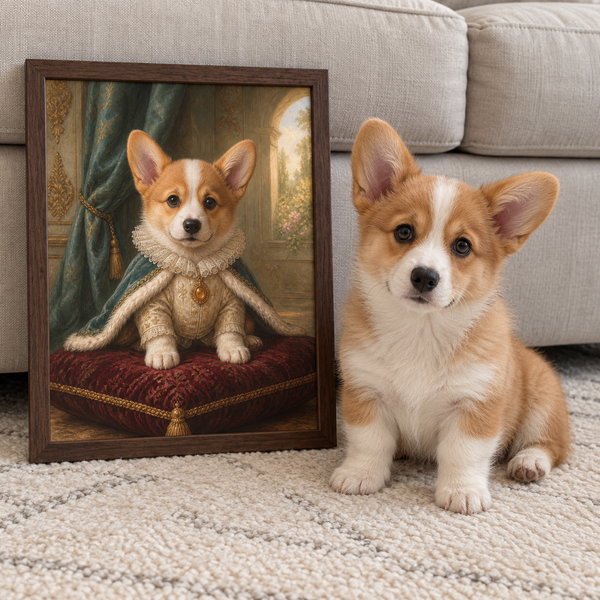
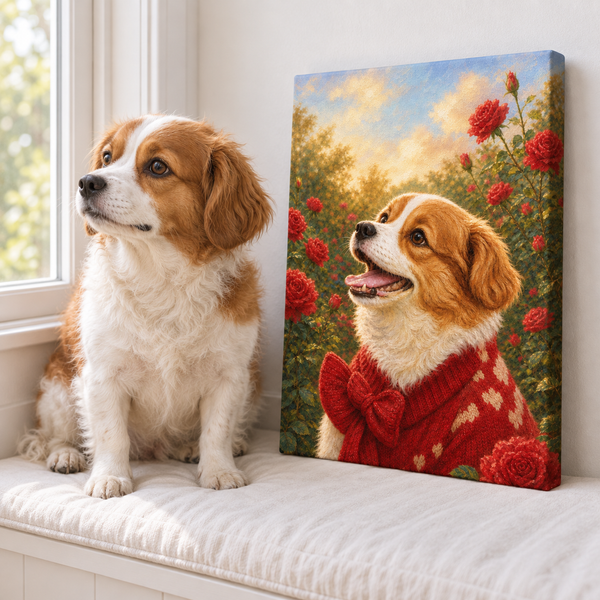
A portrait can serve as the visual anchor when the available photograph is meaningful but visually busy. Pawfolio's pet memorial portrait guide explains how pose, background, and family preferences shape a tribute. If you use artwork in the shadow box, confirm the physical size first and avoid trimming the only copy.
Choose a calm, stable place to display it
Before closing the box, clean the inside of the glazing and remove loose dust from the backing. Confirm that every object is supported when the frame is upright. Lift the frame slowly over a padded surface for the first test.
Choose a stable interior location away from direct sun, moisture, heat vents, fireplaces, and areas where the frame is likely to be knocked. A hallway shelf, bookcase, bedroom corner, or quiet wall can work depending on how often you want to see it. UV-filtering glazing can reduce exposure, but it does not make strong light harmless.
Also consider the emotional placement. Some people want the memorial in a shared living space; others prefer a more private room. If several family members are grieving differently, talk about location before mounting the box permanently. It can begin on a shelf and move later.
Make the box editable
Grief and memory change. A display that feels right this month may feel too intense, too hidden, or incomplete later. A preservation-first design allows you to revise it.
Keep the digital scans, unused photos, and a short inventory of the objects in a separate folder. Note which pieces are originals and how each is mounted. Store extra keepsakes in photo-safe or otherwise suitable containers rather than forcing them into the frame.
A pet memorial shadow box succeeds when it protects the objects, tells a recognizable story, and feels honest to the relationship. It does not need to look like a retail display or include every possible symbol. If a photo-based artwork would help create one clear focal point, Pawfolio's custom pet Art Prints offer a format that can be planned around the dimensions of your display.