
A pet caricature can give a familiar face an oversized expression without turning it into a different animal. The interest comes from choosing what to emphasize: a terrier's uneven ears, a rabbit's long profile, or the sweep of a cat's whiskers. Adding a costume or making every feature bigger is not the whole idea.
If you are considering this kind of artwork, start with two questions: what makes the animal unmistakably yours, and how much visual exaggeration would you enjoy? Understanding that balance helps you recognize a successful example, choose useful photographs, and explain what you want before commissioning a piece.
What makes a portrait a caricature?
A caricature deliberately pushes selected features beyond their ordinary proportions. In its discussion of human subjects, the Library of Congress describes caricature as exaggerating or distorting features to express character. Applying that idea to a pet means interpreting recognizable details rather than reproducing a photograph precisely.
Imagine a dog whose left ear stands up while the right folds forward. A caricature might enlarge that contrast, giving the upright ear a more prominent shape while keeping the folded ear clearly different. The change has a reason: it draws attention to something already distinctive about the dog.
Now imagine a drawing that simply enlarges both ears, both eyes, the nose, and the tongue equally. It may still be enjoyable, but the exaggeration tells you less about that particular animal. When judging a piece, ask what observation seems to have guided the change.
Caricature does not have to be harsh or mocking. You can ask for gentle humor, a more theatrical expression, or almost natural proportions with one emphasized feature. The preferred degree is a matter of taste, not a measure of how much you love your pet.
A cartoon, a costume, and a caricature can overlap
These labels describe different choices, and artists may use them differently. Cartoon pet pictures often simplify shapes, outlines, or shading. That simplification can happen without greatly changing the animal's proportions. A caricature places more emphasis on intentional exaggeration.
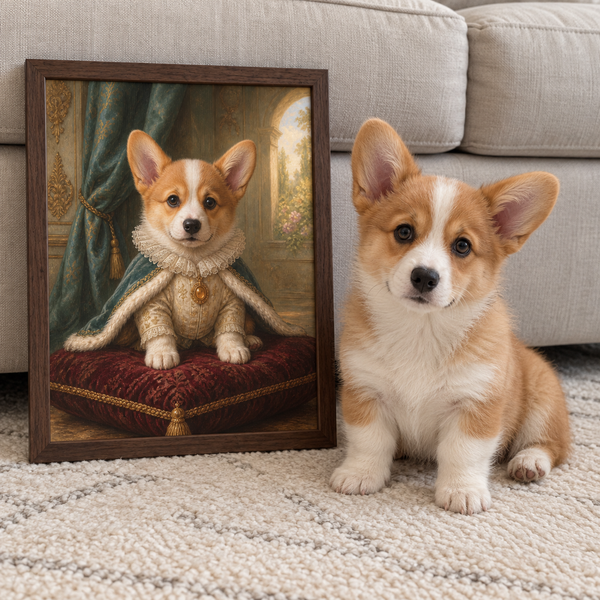
A costume portrait changes the animal's imagined role or setting. A cat shown in a velvet jacket may retain a fairly realistic face. The humor can come from the scene rather than altered facial features. It is also possible to combine a costume with a caricature, but neither requires the other.
Color is another separate decision. Bright colors do not automatically make a drawing a caricature, and a monochrome pencil drawing can be strongly exaggerated. The same is true of how the image is made: a style label alone does not tell you whether you will receive an original drawing, a digital file, or a printed object.
When comparing examples, describe what you see instead of relying on the category name. “Larger ears, simple shading, and no costume” is more informative than “something funny.” If you are still deciding between broader treatments, our guide to choosing a pet portrait style can help you narrow the direction first.
Decide where the exaggeration should stop
Consider three possible approaches to the same hypothetical dog with a long muzzle and a small white forehead patch. These are discussion examples, not standardized industry levels.
- Mild: keep the head close to its natural proportions and make the lifted eyebrow slightly more expressive.
- Moderate: lengthen the muzzle somewhat and simplify the fur, while preserving the forehead patch and familiar ear positions.
- Strong: make the muzzle a dominant shape and reduce the body, producing a much more theatrical drawing.
None is automatically better. A strong treatment may be exactly what one person wants and too much for another. If the artwork is a gift, the recipient's sense of humor matters more than the giver's enthusiasm for the biggest transformation.
Choose a few boundaries as well as a preference. You might welcome larger ears but want the eyes close to their real size. You might enjoy a more prominent nose but dislike an invented toothy grin. Mention a scar, missing eye, or other distinctive feature sensitively and say how you want it represented; do not assume the artist should hide or emphasize it.
Clear boundaries leave room for interpretation while preventing avoidable surprises. Save an example of the amount of caricature exaggeration you like, and explain the specific part you mean.
Build the reference around visible details
For a pet caricature from a photo, choose a main image that clearly shows the face and the feature you want emphasized. A playful expression is useful only if the relevant details are visible. A dark, blurred image can leave uncertainty about the shape of an ear or the edge of a marking.
Keep one photo as the guide for the pose. Add a small number of supporting views if they clarify something the main image hides. Label their purpose: “This shows the white patch on the other cheek” is more useful than an unexplained folder of twenty pictures.
Our pet photo tips provide a starting checklist for clear references. You do not need to force a new pose or dress your pet in props for the drawing. Use photographs of familiar, comfortable moments and describe any imagined scene separately.
An observation is also more helpful than a broad personality label. Instead of “she is a diva,” explain that your cat often sits upright with one paw tucked beneath her chest. The examples in our cat portrait ideas guide can help you identify visible details without assigning every animal of a breed the same character.
Review the shapes before the decoration
If the commission includes a sketch or proof, begin with the outline of the head and the relationship between the main features. Getty's guide to the elements of art explains how lines can define edges and how shapes organize a picture. Those basic ideas are useful even when you do not draw yourself.
Look at the ear silhouette, muzzle shape, eye placement, and major coat patches. Which changes are the intentional joke, and which ones feel accidental? The distinction matters. An enlarged nose might fit the agreed treatment, while a misplaced white patch could make the animal less recognizable for no useful reason.
Then consider the expression. Does it resemble an amplified version of something your pet actually does, or an unrelated expression placed on their face? Either can be an artistic choice, but it should fit what you asked for.
Give feedback in small, observable terms. “Keep the long muzzle, but restore the narrow white stripe between the eyes” identifies both the successful decision and the requested correction. “Make it more like him” expresses a real concern, but gives the artist less information to work with.
Confirm the artwork and the finished format
Before paying for a commission, ask how the artist handles references, early review, revisions, and the final deliverable. A preview stage is useful when the amount of exaggeration matters to you, but do not assume that every service includes one or that every change is covered.
Check these points in the specific offer:
- Is the example representative of the artist's caricature work?
- Which features may be exaggerated, and which should remain close to the reference?
- Will you see an intermediate version, and when can you request changes?
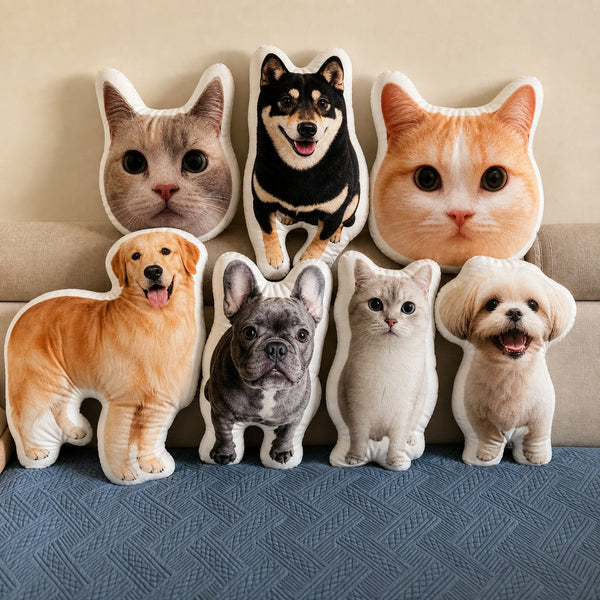
- Are you buying a digital file, an original work, a print, or a framed item?
- What size, background, number of subjects, and usage permissions are included?
If you decide that you prefer a less exaggerated treatment, browse Pawfolio’s current pet portrait designs and compare the actual examples. Confirm that your chosen design supports the effect you want rather than assuming that any portrait service offers every illustration style.
A useful final note might read: “Please emphasize the uneven ears, keep the small forehead patch, and avoid adding a smile that is not in the reference.” That gives an artist something concrete to interpret. The goal is a deliberate visual idea that still feels connected to the animal you know.