
Your dog wanders over while you are reading, settles near your feet, and stays after the room gets quiet. It is an ordinary moment, which may be exactly why you notice it. But how do dogs show affection—and how much can you really conclude from one gesture?
Voluntary closeness, relaxed greetings, and invitations to interact can suggest friendly engagement. None is a literal translation of “I love you,” and the same behavior can have more than one explanation. A more useful approach is to look at the setting, the whole body, and whether your dog chooses to continue. You can enjoy the connection without turning every lick or tail movement into proof of an emotion.
Start with the setting and the whole body
Before naming a gesture, notice what happened just before it. Did you come home, open a snack, move toward the door, or sit down on the couch? Those details change the question. A dog approaching a person who is holding dinner has a different immediate reason to approach than one joining a quiet room with nothing on offer.
The RSPCA's body-language guide describes relaxed posture, natural ear position, and a relaxed face among the signs of a comfortable dog. It also shows contrasting worried postures, including turning away, lowered position, and tucked tails. Read these features together rather than choosing the one detail that fits the story you hoped to see.
Learn what your own dog looks like during an uneventful, comfortable moment. Observe without moving closer or asking for a pose. That gives you a practical comparison when a greeting looks unusually stiff or an interaction changes midway through.
This is not a scoring system. You do not need to count three signs before deciding that a pleasant moment matters. The aim is simply to separate what you can observe—“loose body, chose to approach”—from the larger emotional label you attach to it.
Notice closeness that does not demand touching
Friendly company does not have to involve a lap, a hug, or a face pressed into yours. A dog might choose a nearby rug while you work or sit beside you without leaning against you. That can be a satisfying shared moment even when it contains very little physical contact.
Notice the practical details before calling it affection. Is this the only soft place in the room? Is the dog watching your food? Did they move there after you sat down, or were they already resting? A single scene does not tell you everything about the relationship. Repeated observations in different, ordinary settings are more useful than one carefully staged photo.
When your dog comes close, leave a route away. Let staying nearby remain a choice rather than treating arrival as permission for every kind of contact. If they move to another spot, you do not have to call them back to prove the first moment was genuine.
You may also notice that your dog enjoys brief contact and then returns to resting. There is no need to turn that into a rejection story. For ideas about responding thoughtfully, our guide to showing your dog you love them focuses on your choices rather than decoding theirs.
Read a greeting beyond the wagging tail
A tail is noticeable, so it is easy to make it the whole explanation. Yet VCA's guide to interpreting tail wags explains that wagging can occur with different kinds of arousal, including fear. Tail position also needs to be compared with the dog's normal position, which varies. Movement alone does not mean a dog wants an interaction to continue.
During a greeting, watch the rest of the scene. Does your dog approach with a loose body and have room to turn away? Does the interaction remain relaxed when you stop moving? Or does the dog become still, tense, or evasive as someone reaches closer? You are gathering context, not searching for the fastest wag.
For example, consider two possible greetings: one dog approaches, moves freely, and pauses nearby; another wags while staying rigid as a visitor leans over. Both have moving tails, but it would be a mistake to describe them identically. These are comparison examples, not diagnoses of an individual dog.
Keep your interpretation modest: “interested in this greeting” is often a more defensible description than “loves everyone.” If the interaction changes, change your response. A friendly arrival is not a promise that every later touch will be welcome.
Leave room for more than one explanation
Licking is a good example of why context matters. VCA's explanation of licking people includes affection, attention, and taste among the possible reasons. A lick after you handle food does not carry exactly the same information as one during a quiet interaction. You also do not have to welcome licking to have a close relationship with your dog.
A toy arriving beside your chair is similarly worth observing before labeling. Look at what happens next: does your dog step away, invite movement, or leave the toy and settle? You can describe the sequence without deciding that the object is a gift in the human sense. If it leads to a shared game, enjoy the invitation for what it is.
Eye contact needs its own context, too. Waiting near a food bowl and looking toward a door are different situations from a quiet glance during rest. Our article on why a dog might stare at you explores that narrower question.
When people ask “how do dogs show love?” they often want reassurance about a bond they already feel. You can value a small interaction while leaving its precise explanation open. Uncertainty does not make the moment less personal; it keeps you attentive to the dog actually in front of you.
Compare your dog with their own usual behavior
A dramatic greeting makes a memorable video, but it is not a useful standard for every dog. Avoid using someone else's cuddly dog as a test your own dog has to pass. Focus instead on which interactions your dog chooses, how those moments unfold, and whether their usual pattern has changed.
You can keep a brief observation note if you find yourself second-guessing every gesture. Record the setting, what the dog did, and what happened when the interaction paused. “Came over after dinner, rested nearby, left when the room got noisy” is more informative than a daily affection rating. Keep the record descriptive rather than trying to diagnose the behavior yourself.
If your dog is suddenly reluctant to interact, repeatedly distressed, or showing a concerning change, ask your veterinarian rather than assuming they have stopped caring about you. Excessive licking also deserves professional attention; VCA notes that it can be associated with medical or behavioral problems. A blog cannot determine the cause from that sign alone.
Do not provoke a response to settle the question. Repeatedly calling, approaching, or holding your dog in place will not make your observations clearer. Give yourself permission to notice the ordinary pattern without asking the dog to perform it on demand.
Keep the moment without making it a performance
Learning how dogs show affection can change which pictures you want to keep. The big reunion may be fun, but the familiar sideways glance or the dog settled beside your reading chair might feel more like daily life. Those photos do not have to look impressive to be worth saving.
If you take one, avoid rearranging the dog into a hug or bringing your face close just for the camera. Take the picture from a comfortable distance and stop if the dog moves away. A photograph records a moment; it is not a complete assessment of the dog's feelings, and you do not need a particular expression to validate your relationship.
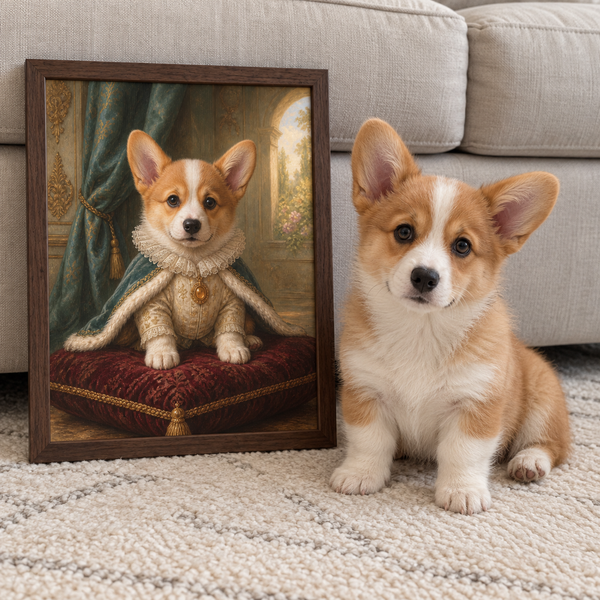
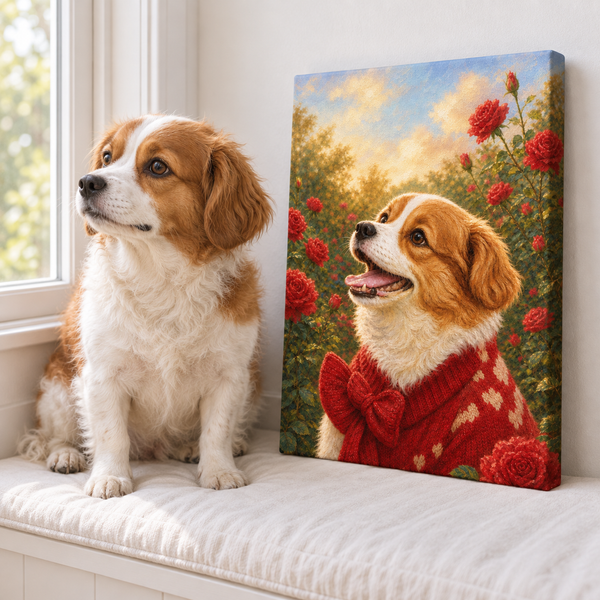
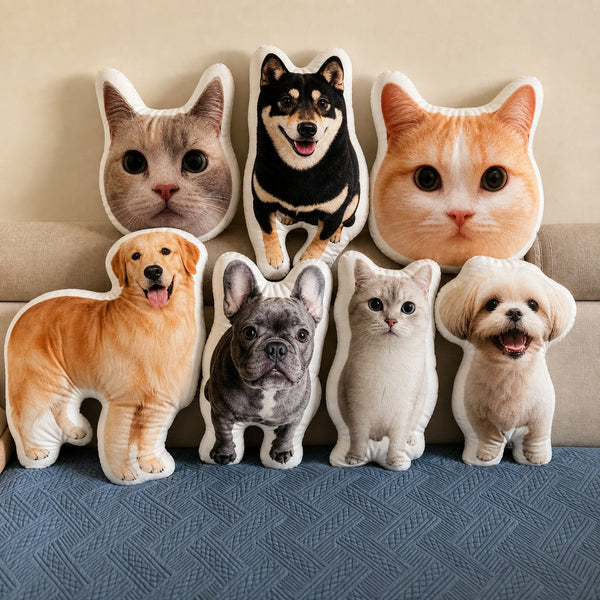
For a portrait reference, separate the emotional meaning of the picture from its technical usefulness. You may love the memory while still needing another image that shows the face and markings clearly. The Pawfolio photo guide helps with that practical choice. A simpler background can make the details easier to see without asking for a different interaction.
If preserving that familiar face appeals to you, you can explore portrait designs at Pawfolio Art. It is an optional way to remember an everyday companion, not a reason to stage affection for a product.
The useful takeaway is small: notice the setting, look beyond a single signal, and leave continuation up to your dog. You can appreciate their company while respecting what they choose next.