
A dog's collar can feel unexpectedly powerful after a loss. It may still hold the shape, wear marks, tag sound, and everyday familiarity of the dog who wore it. You do not have to decide immediately what it should become.
The most thoughtful dog collar memorial ideas protect both the object and your freedom to change your mind. Start with a photograph and safe storage. Later, you can choose a shadow box, memory box, tag display, or portrait pairing without cutting, gluing, flattening, or permanently altering the collar.
Before you make anything, pause and document it
Grief does not follow a production schedule. If every option feels wrong, place the collar somewhere clean and secure and leave the decision for another time. “Keep it as it is” is a complete choice.
Before cleaning or separating any parts, photograph the collar from several angles. Capture the buckle, tag arrangement, worn holes, stitching, and any marks that feel familiar. Write down the dog's name, the dates you want to remember, and one or two details about when the collar was used.
This small record protects information that can be lost accidentally. It also gives you images to use later without repeatedly handling a fragile collar.
Storage-first options that keep the collar intact
1. Store the collar intact in a labeled memory box
The simplest memorial is often the safest. Fasten the collar loosely in its natural shape and place it in a sturdy box with enough room that the buckle and tags do not press into the material. Add a written label outside or on a separate card rather than marking the collar itself.
If the collar is leather, do not automatically wash it or add household oil, polish, or conditioner. Leather finishes and conditions vary, and an unsuitable treatment can darken, stain, soften, or weaken an object. The Canadian Conservation Institute's leather-care guidance emphasizes gentle support, controlled handling, and protection from damaging light, moisture, dust, and pollutants.
For a stable collar with only loose surface dust, a very soft brush may be enough. If it is cracked, sticky, flaking, moldy, heavily soiled, or unusually valuable to you, stop and ask a qualified conservator before treating it.
2. Create a reversible shadow box
A shadow box can display the collar without changing it, provided the mounting method is removable. Use a box deep enough to hold the collar's natural curve. Support it with broad, gentle loops or mounts instead of tight wire, staples, pins through the material, or permanent adhesive.
Place heavier metal tags so they do not pull on old stitching. Keep the collar from touching the glazing, and avoid squeezing it flat. Include only a few supporting elements—perhaps one photograph, a printed name and date, or a small copy of a favorite note.
Our preservation-first pet memorial shadow box guide explains how to plan a layout and test it before attaching anything. Reversibility matters because it lets you remove the collar for safer storage, a different display, or simple private handling later.
3. Display the ID tag separately
If the collar is too fragile or personal to display, the tag can become a smaller memorial. Slip it onto a removable ribbon, place it in a small frame with spacers, or keep it in a labeled archival envelope inside a memory box.
Avoid drilling a new hole, polishing away the original surface, or coating the tag unless you are comfortable with that permanent change. Scratches and worn lettering may be part of the history you want to retain. Make a clear close-up photograph or scan in case the engraving becomes harder to read.
For privacy, do not post a tag image online if it reveals an address or phone number. A digital copy can be cropped or edited for sharing while the original record remains private.
Display and story options you can revise later
4. Pair the collar with a favorite photograph or portrait
The collar does not need to carry the entire story alone. Place it beside a framed photograph, or display it near a portrait that shows the dog's recognizable face and expression. Keeping the objects separate is often easier to revise and safer than attaching the collar directly to artwork.
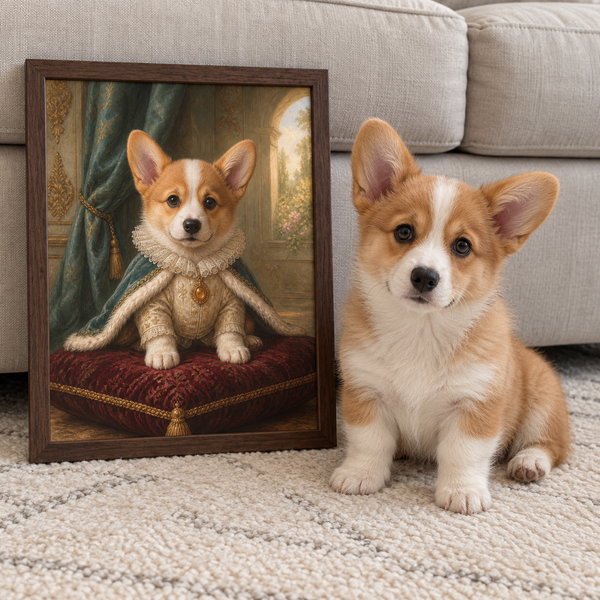
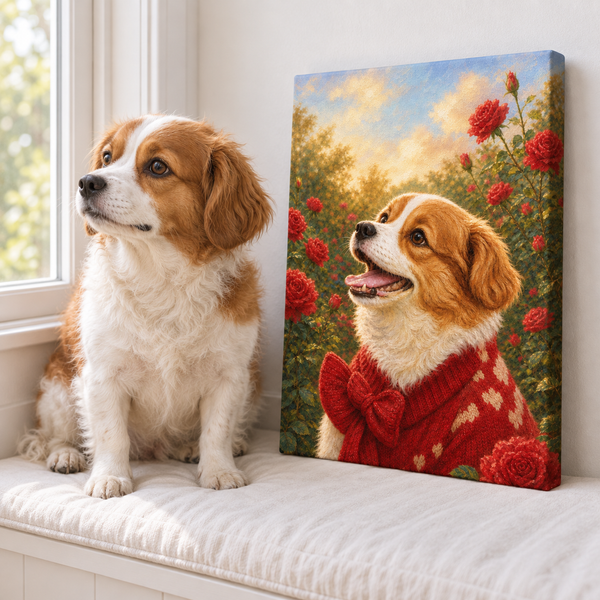
Choose the image by emotional accuracy, not photographic perfection. A slightly imperfect photo may still capture the head tilt, ear position, or look you remember. If you want artwork made from that image, a Pawfolio Art custom pet Art Print can provide a visual companion while the original collar remains intact.
Our guide to creating a pet memorial portrait with care can help you decide which expression, background, and details matter before choosing a format.
5. Build a small, layered memory box
A memory box works well when the collar belongs with other objects: a leash, favorite photograph, vaccination tag, training certificate, written memory, or copy of a paw print. Keep the group selective. More objects do not automatically make the memorial more meaningful, and an overfilled box can create pressure and abrasion.
Separate metal from photographs and textiles so hard edges do not scratch softer surfaces. Use individual folders, sleeves, or tissue layers made from suitable storage materials. The Conservation Center for Art & Historic Artifacts warns that labels such as “archival” or “acid-free” alone do not guarantee that a material is appropriate for long-term use. It recommends known stable materials and avoiding PVC, which can release damaging compounds as it deteriorates.
Store the box away from attics, garages, damp basements, radiators, and direct sunlight. A stable indoor closet or cabinet is usually more predictable than a decorative spot exposed to heat and daily light.
6. Make a digital collar record
A digital memorial is useful even when you keep the physical collar. Photograph it in soft, even light against a plain background. Add a second image of the tag, then record the story in a document or private album.
Useful details might include:
- when your dog began wearing it;
- the walks, trips, or life stage you associate with it;
- why you chose the color or pattern;
- the sound of the tags at the door;
- a short description of the dog's everyday personality.
Save copies in two places you control. Use clear filenames and include the dog's name and approximate date. Digital files are not a replacement for the collar, but they reduce how often the original needs to be handled.
7. Create a quiet remembrance place you can change
You can place the stored or displayed collar near one photograph, a favorite book, or a small object that represents a shared routine. The space does not need to look like a formal memorial, and it does not need to remain visible all year.
Consider a rotating display: keep the collar safely boxed most of the time and bring out a photograph or tag on an anniversary. Another family member may prefer a different object or no physical display at all. There is no requirement for everyone to grieve in the same way.
If an idea involves cutting the collar into jewelry, gluing it into a frame, or removing a section, test the concept first with paper or a substitute strap. Wait until you are certain the permanent change feels right. You can always alter an intact collar later; restoring a cut one is much harder.
A simple preservation checklist
Before closing the box or frame, check that:
- the collar is dry and stable;
- buckles and tags are supported rather than hanging by old stitching;
- no adhesive, staple, or pin passes through the collar;
- metal cannot rub against a photograph or textile;
- the enclosure uses known stable materials and contains no PVC;
- the display is away from direct sunlight, heat, and damp conditions;
- a photograph and written record exist separately.
The right memorial may be a finished shadow box, a portrait beside the collar, or a plain box opened only when you choose. The important decision is not how elaborate it looks. It is whether the collar—and your connection to it—are being handled with patience and care.