
If you are asking, “Why does my cat nurse on my blanket?” you are probably seeing rhythmic sucking, often paired with kneading and purring. For many cats, this is a self-soothing behavior that carries the familiar pattern of nursing into adulthood. The texture, warmth, scent, and quiet routine can all become part of the cue.
The most important question is not whether the behavior looks unusual. It is whether your cat is only suckling or is also chewing and swallowing fabric. Gentle, occasional suckling without damaged fibers or other symptoms may be harmless. Fabric ingestion, sudden new behavior, vomiting, reduced appetite, pain, or a pattern that is hard to interrupt deserves veterinary attention.
Suckling, kneading, chewing, and pica are different
These behaviors can happen together, but they do not carry the same risk.
Suckling is a repetitive mouth movement against fabric, skin, another animal, or an object. The cat may drool slightly, purr, or settle into sleep. No material needs to be removed or swallowed.
Kneading is the alternating push of the front paws against a soft surface. A cat may knead without suckling, suckle without kneading, or combine the two. Pawfolio's article on why cats knead blankets explains the paw movement in more detail.
Chewing means the teeth are biting or shredding material. Pica refers to eating nonfood items. Those behaviors introduce hazards that simple suckling does not, including mouth injury and gastrointestinal obstruction.
VCA Animal Hospitals' guidance on chewing and sucking recommends ruling out medical causes when licking, chewing, or sucking is excessive. It also warns that thread, string, plastic, and other swallowed objects can create serious intestinal problems.
Why do cats nurse on blankets as adults?
There is no single explanation for every cat. Look at timing, body language, the material, and what happens before and after the behavior.
The action is calming
Nursing is one of a kitten's earliest coordinated behaviors. Some adult cats retain part of that motor pattern and use it when settling down. A warm blanket with a familiar scent can become a reliable sleep cue, much like choosing the same bed or perch each night.
The behavior was reinforced by repetition
A habit can continue because it leads to a comfortable state. If a cat suckles, relaxes, and falls asleep, the sequence itself may become rewarding. Attention from a person can also join the pattern, even when the person intended to interrupt it.
Early separation may contribute, but it is not the whole story
Early weaning is often mentioned as an explanation, yet not every early-weaned cat suckles fabric and not every fabric-suckling cat was weaned early. The history may be relevant, but it should not be treated as a proven diagnosis for an individual cat.
Research on orphaned kittens helps explain why sucking can occur even when no milk is available. A UC Davis School of Veterinary Medicine report describes non-nutritive sucking and cross-sucking among kittens without mothers. That work concerns young kittens rather than adult blanket behavior, so it offers biological context, not a complete adult-cat explanation.
Stress or under-stimulation can change the pattern
Some cats suckle more during household changes, conflict with another pet, long periods without activity, or an unpredictable routine. A behavior that was occasional may become more frequent when it works as a coping action. Stress is one possibility, not something you can confirm from the blanket alone.
Individual and breed tendencies may matter
Fabric sucking has been reported more often in Siamese, Burmese, and related Oriental breeds, although it can occur in any cat. An older Cornell report on fabric-eating cats discusses both breed patterns and competing hypotheses. It is most useful as historical background; current veterinary assessment is still needed for a cat who swallows material or develops a new repetitive behavior.
When is blanket nursing harmless?
An occasional routine is less concerning when all of the following are true:
- the cat remains relaxed and easy to redirect;
- the blanket is not being shredded;
- no fibers, threads, or pieces are missing;
- appetite, litter-box habits, activity, and weight are normal;
- there is no vomiting, gagging, mouth pain, or abdominal discomfort;
- the frequency is stable rather than rapidly increasing.
Take a short video if you are unsure what your cat is doing. A veterinarian can often learn more from seeing the mouth movements and the surrounding body language than from a description such as “nursing.” Note the time, fabric, duration, and whether the cat ate, played, or encountered a stressor beforehand.
Warning signs that call for a veterinarian
Contact your veterinarian promptly if your cat swallows fabric or string, repeatedly vomits, stops eating, seems painful, becomes unusually quiet, strains in the litter box, or has a swollen or tender abdomen. Linear objects such as yarn and thread can be especially dangerous. Do not pull a string that is hanging from a cat's mouth or rectum; seek veterinary instructions.
A routine appointment is also appropriate when suckling begins suddenly in an adult, becomes much more frequent, damages the mouth or skin, interrupts normal sleep or play, or is accompanied by other behavior changes. Medical problems, discomfort, anxiety, and compulsive patterns can look similar without an exam.
The PetMD veterinary overview of adult cat suckling likewise distinguishes a calm comfort behavior from sudden onset, stress-related escalation, and ingestion of foreign material. Online information cannot determine which category fits your cat.
How to manage the behavior without punishment
If your cat is healthy and not ingesting fabric, you may not need to stop the behavior. Protect the cat and the household by shaping the environment instead.
- Inspect the chosen blanket. Remove anything with loose loops, fringe, holes, exposed stuffing, or long fibers. Wash or retire damaged fabric before pieces disappear.
- Offer a stable resting area. Place a safe, tightly woven item in a quiet bed or perch. Supervise at first so you can confirm that the cat suckles rather than chews.
- Add predictable activity. Short interactive play, food puzzles, climbing spaces, scratching surfaces, and a consistent feeding rhythm can reduce long empty periods.
- Rotate enrichment. A few toys presented in rotation may hold more interest than a large pile that never changes.
- Redirect calmly. Invite the cat into play or offer another resting place. Avoid spraying, shouting, or physically startling the cat, which can add stress without teaching a safer alternative.
- Limit access when unsupervised. Put risky sweaters, yarn, plush fills, and damaged blankets away. A room-by-room cat-proofing checklist can help you spot other swallowable items.
Do not apply essential oils, bitter products, creams, or other substances to fabric unless your veterinarian confirms that the exact product and use are safe for cats.
Choosing a blanket when your cat loves soft fabric
No blanket is chew-proof. Prioritize a tight weave, intact seams, and a size that will not bunch around the cat. Check it often, especially after washing. If your cat starts pulling threads or biting off pieces, remove the blanket and discuss alternatives with a veterinarian or veterinary behaviorist.
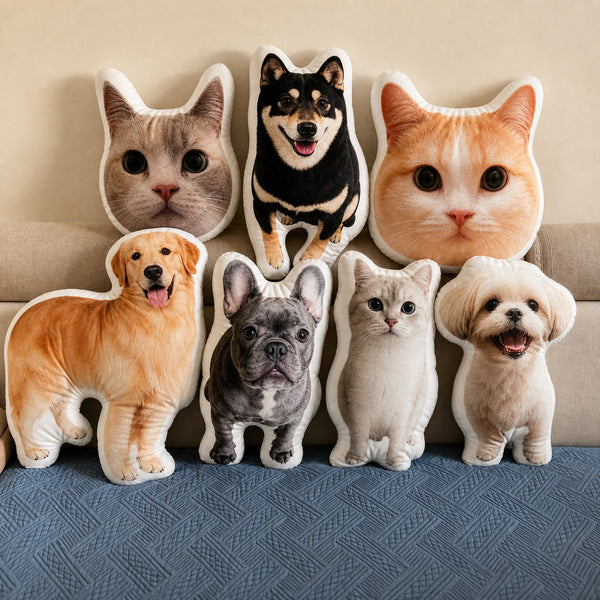
For a household item made from a favorite pet image, a personalized pet blanket from Pawfolio Art can be part of the room, but it should be treated like any other fabric around a cat: inspect it, supervise new interactions, and remove it if chewing or fiber ingestion begins. Personalization does not make a material safer to swallow.
Read the whole pattern, not one cozy moment.
Many cats nurse blankets because the action has become a familiar way to settle. The behavior is not automatically a sign of illness, separation too early, or emotional distress. Its meaning comes from the pattern around it.
Watch what the mouth is doing, check whether material is missing, and notice changes in health and routine. A relaxed cat who suckles briefly and leaves the blanket intact is in a different situation from a cat who tears, swallows, vomits, or cannot disengage. That distinction—not the oddness of the habit—is what should guide your next step.