

A small rolling sound comes from beside your chair. Your cat is looking up, mouth apparently closed, and the noise is over before you can decide whether it was a meow or a purr. If you have been wondering why cats make that little greeting, you may be hearing a trill.
Why do cats trill? They often use this short sound during friendly social contact, including greetings. It can be a familiar part of life with your cat, but it is not a sentence with one reliable translation. Learning the sound, noticing what surrounds it, and responding without rushing into touch will tell you more than trying to assign every noise a human meaning.
Listen for a short sound, not a perfect spelling
Cat trilling is often described as a brief, higher-pitched rolling sound. You might write it as “mrrp,” while someone else hears a little coo. Neither spelling is a test your cat needs to pass. The useful details are how the sound starts and ends, whether the mouth opens, and what your cat is doing at the time.
Great Pet Care's veterinarian-authored explanation of trilling describes short vocal bursts made with the mouth closed. That helps distinguish a trill from a meow, during which the mouth opens and closes, and from a more continuous purr.
Everyday labels can overlap. People may call similar sounds chirps, chirrups, or trills, so a written description alone may not settle what you heard. You do not need to become an expert in cat sounds to be a thoughtful observer.
If you happen to have a recording, listen to the beginning and end rather than just the loudest instant. A short clip that includes your cat's face and body provides more context than an isolated audio snippet. Let the moment happen naturally; there is no need to wake your cat or touch them repeatedly to produce it again.
Start with the greeting, then notice what follows
PetMD's guide to feline vocalizations, written by veterinary behaviorist Alison Gerken, describes trilling as a sound commonly heard when cats greet people. Familiar social contact is a reasonable starting point for understanding it. A precise translation such as “pick me up now” goes further than the sound can tell you.
Imagine your cat making a brief trill as you sit down, then settling on a nearby cushion. In that situation, staying nearby may be the whole interaction. Now imagine a different moment: your cat approaches, makes the sound, and rubs against your leg. You have another piece of information to consider before deciding whether to offer contact.
These are examples to help you observe, not stories about particular customers or rules for all cats. The sound and the next action belong together. Do not decide that the same noise must request the same thing every time.
That distinction also helps at the window. Rapid jaw-clicking while watching birds is a different observation from a short greeting directed toward you. Our article on why cats chatter at birds explores that window-focused behavior. You can leave the naming question open while still noticing who or what has your cat's attention.
Let the whole cat guide your response
Before reaching down, look at your cat's posture, ears, tail, and available space. PDSA's cat body language guidance recommends considering several signals alongside the situation. A loose body and an upright, unpuffed tail during an approach can fit a friendly greeting; tension, flattened ears, or a rapidly swishing tail call for more space.
No single body part should decide the interaction. A raised tail does not erase a tense posture, just as an appealing sound does not make every kind of handling welcome. You can acknowledge your cat softly and pause instead of immediately picking them up.
For a cat who chooses to approach, keep the next step easy to decline. If you offer a familiar brief stroke, pause afterward and see whether your cat remains engaged or moves away. Our guide to petting a cat covers that choice in more detail.
The same approach works when visitors are present. Ask them to let the cat approach rather than gathering around to hear the sound again. An ordinary greeting does not need to become a performance. Leaving a clear route away makes it easier to let the interaction end whenever the cat chooses.
Keep a small record of your cat's own routine
If the sound is familiar and your cat otherwise seems well, a few simple notes can help you describe it without building an elaborate theory. Write what you actually noticed rather than an interpretation such as “she was jealous” or “he demanded dinner.”
- Setting: where you and your cat were, and what had just happened.
- Sound: a brief roll, a longer meow, or several separate noises.
- Movement: approaching, rubbing, walking away, settling, or watching something.
- Your response: speaking, pausing, offering contact, or continuing what you were doing.
For example, “short sound beside the chair; looked up; sat on the rug after I said hello” is a useful observation. “Asked for a cuddle” adds a conclusion that the moment may not support. A note can be affectionate without pretending to know the exact message.
Keep comparisons within your own household routine. Another cat's dramatic online greeting is not a standard your pet must meet. A quiet encounter can be worth noticing too. This record is optional, and it should never delay getting help for a new or concerning change.
Separate a changed voice from a breathing problem
A familiar trill and an unexplained change in vocal behavior deserve different responses. PetMD recommends a veterinary examination when a cat develops unusual sounds or begins vocalizing more than normal. Tell your vet what changed, when it began, and whether it happens in a particular situation. Mention any other changes you have noticed rather than trying to diagnose the voice yourself.
An existing recording can help describe an intermittent sound. If your cat looks uncomfortable, do not repeatedly trigger it by touching them or encouraging activity. Let the veterinary team advise you about the next step.
Breathing difficulty needs urgent attention. The Cornell Feline Health Center's guidance on respiratory distress describes signs that can include visibly difficult breathing and noisy open-mouth breathing, and advises immediate veterinary care when a cat cannot breathe comfortably.
Do not assume a repeated noise is simply trilling if your cat is struggling to breathe. Contact an emergency veterinarian promptly and follow their transport instructions. Do not wait to capture a better video or try a home treatment first. The important question in that moment is whether your cat can breathe comfortably, not which sound label fits.
Remember the ordinary moment without staging it
Once you recognize your cat's greeting, you may start noticing the little setting around it: the chair they visit, the patch of rug where they pause, or the upward glance before they walk on. Those details can be lovely to keep even when you cannot capture the sound itself.
Try saving a natural photo and a brief caption about the moment. Keep the original recording separately if you have one; a still picture preserves an expression, while audio preserves something different. Neither needs a dramatic pose or a claim about exactly what your cat was feeling.
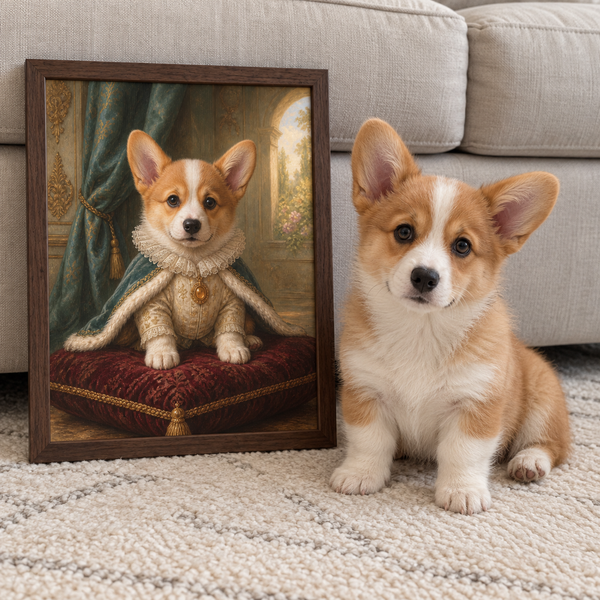
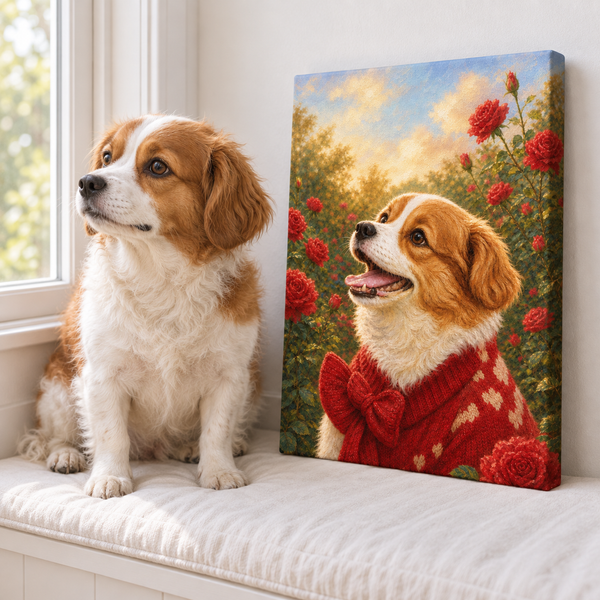
Our cat portrait ideas for capturing personality offer ways to notice familiar expressions. If one photograph becomes a favorite, Pawfolio portraits made from your pet's photo are another way to keep that image in your home.
For the next little trill, start simply: hear it, notice the cat in front of you, and allow a pause. You do not need a perfect translation to respond with care.