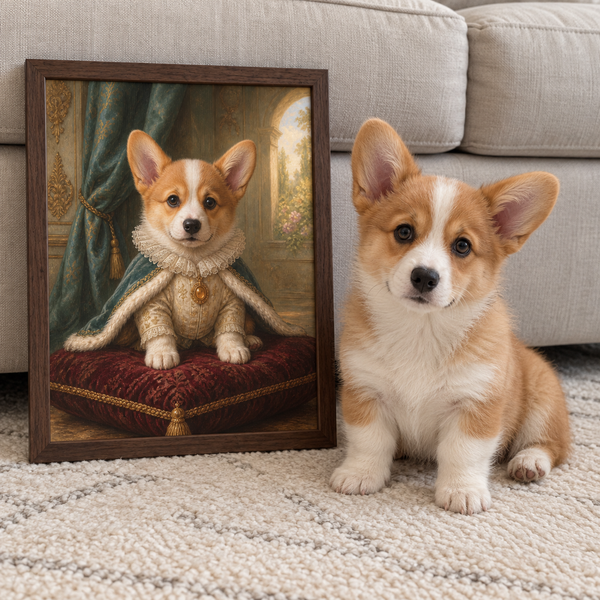
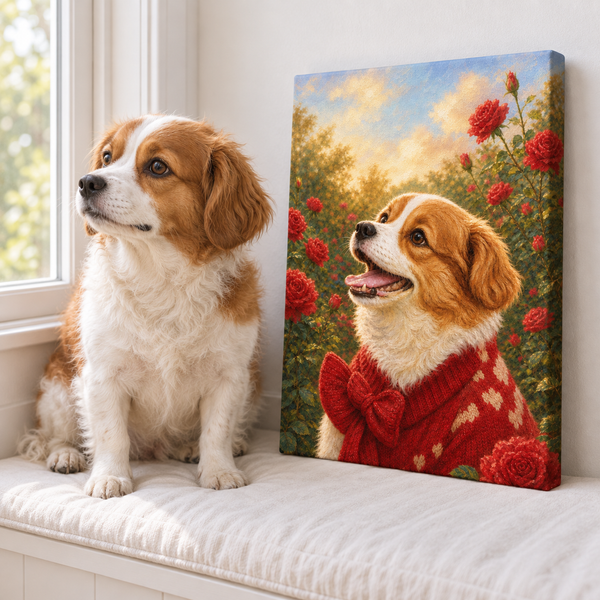
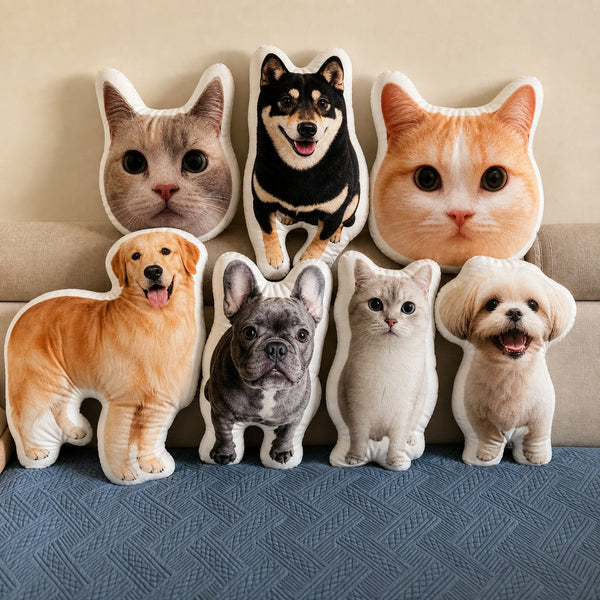

The best office pet wall ideas do more than fill a blank space. They let a familiar face into the workday while keeping the room calm enough for focus, readable on video calls, and practical around monitors, shelves, and task lighting.
The mistake is usually not choosing the “wrong” pet photo. It is treating every favorite image as if it needs equal size, a different frame, and a place on the same wall. A strong office display has a hierarchy: one clear anchor, a small supporting cast, and enough empty space for the eye to rest.
Before ordering prints or making holes, decide what the wall needs to do. The answer will lead you toward a single portrait, a tidy grid, a flexible picture ledge, or a compact gallery that feels personal without becoming a collage of every photo on your phone.
Decide Whether the Wall Is for You, the Camera, or Both
Begin from the desk chair. Which wall do you naturally see while working? Which wall appears behind you on calls? They may not be the same, and they ask for different choices.
A wall in your direct sight line should feel quiet enough to live with for hours. One expressive portrait or a small row of related images can provide warmth without competing with the screen. A wall behind you can carry more visual weight, but its shapes and colors should still read clearly when compressed into a small video window.
Open your usual meeting app and preview the camera before hanging anything. Check where your head and shoulders sit, what the camera crops, and whether a frame appears to grow out of your chair. A perfectly centered wall arrangement can look awkward when the webcam shows only its lower-left corner.
If the office serves several roles—workstation, guest room, craft space—favor a layout that stays coherent from more than one angle. You do not need to decorate every visible wall. One intentional zone usually feels more finished than several scattered pieces.
Size the Display to the Desk and Open Wall
Measure the open display zone, not the entire wall. Subtract the monitor footprint, shelves, doors, switches, lamps, and anything that visually interrupts the arrangement. Then measure the desk or credenza below it, because the furniture becomes the base of the composition.
Use painter’s tape or paper rectangles to test possible sizes. A single portrait can look generous online and strangely small above a wide desk. A cluster that seems modest on the floor may crowd a narrow office once it is vertical. Pawfolio’s pet portrait size guide explains how to compare full-size templates from the seated position and account for the outer frame, not only the printed image.
Eye-level rules are starting points. In an office, monitors may require the art to sit higher, while a low desk and seated viewing angle may bring it down. Center the arrangement as a group, step back to the doorway, then sit at the desk and check again.
Leave breathing room around the display. Empty wall is not wasted space; it is what lets the portrait become a focal point instead of another object competing for attention.
Choose One of Four Layouts and Repeat a Rule
A single statement portrait is the simplest layout. It works well in a small office, above one monitor, or where the pet’s expression is strong enough to carry the wall. The frame can echo the desk finish or contrast cleanly with the wall.
A symmetrical grid suits an office that already uses straight lines, closed storage, and a controlled palette. Choose matching frame sizes, keep the gaps equal, and use images with similar crops. Two pets can become a pair; four images can show the same pet across seasons without looking random.
An organic gallery wall feels warmer and more collected. Give it one anchor image, then place smaller pieces around it. The pieces do not need identical frames, but they should repeat something—finish, mat color, background tone, or portrait treatment. Pawfolio’s custom pet Art Prints can act as the anchor while candid photographs or small mementos provide context.
A picture ledge is useful for renters or anyone who likes to rotate images. It reduces the number of wall holes and lets frames overlap slightly. Keep the depth of the ledge away from chair paths and make sure every frame is stable.
Whichever layout you choose, repeat one visible rule. Consistent gaps, one frame family, or one restrained palette can make different pet images feel like a deliberate set.
Edit Photos for Cohesion Before You Frame Them
Pet photos often come from different phones, years, rooms, and lighting conditions. Putting them together without editing can make the wall feel busier than the number of frames suggests.
Start with the backgrounds. If one image has a bright kitchen, another a dark yard, and a third a patterned blanket, consider tighter crops or a shared treatment. Black-and-white can unify varied sources, but only if the important details remain distinct. A black dog against deep shadow may need careful tonal adjustment rather than a simple filter.
Next, look at gaze and direction. A pair of portraits often feels balanced when the pets look inward toward the center rather than both appearing to stare out of the arrangement. In a looser gallery, alternate close faces with one wider scene so the wall has rhythm.
Limit the loudest colors. Pull two or three tones from the room—perhaps warm wood, cream, and a muted green—and let frames, mats, or portrait backgrounds repeat them. A plain, environmental, or graphic background can all work; choose the one that best fits the office rather than the most dramatic option.
Do not edit away every ordinary detail. A worn collar, uneven ear, or familiar head tilt may be the reason the image feels like your pet rather than generic decor.
Protect Prints From Glare, Heat, and Direct Light
Office lighting changes throughout the day. A frame that looks clear in morning light may become a mirror during afternoon calls. Test paper templates with the desk lamp on and off, and check reflections from the seated position and the camera.
The Smithsonian Institution Archives notes that paper and photographs are susceptible to light, including color fading and chemical deterioration. The Smithsonian’s National Museum of African American History and Culture also advises people to avoid bright or direct light when preserving photographs and prints.
That does not mean office art must live in darkness. Avoid a wall hit by direct sun for hours, use blinds or UV-filtering options where appropriate, and choose indirect illumination. Move frames away from heaters, vents, and spots with large temperature swings.
Glazing can protect a print but may create reflections. Matte or anti-reflective options can help in a bright office. Canvas has a different surface and edge depth, so compare the practical differences in Pawfolio’s Art Print vs Canvas guide before choosing only by appearance.
Mock Up the Whole Wall, Then Remove One Thing
Lay the frames on the floor first. Photograph the arrangement from directly above, then cut paper templates to the true outer dimensions. Mark the hanging point on each template and tape the full composition to the wall. Live with it through one workday.
Check four views: from the doorway, from the desk chair, standing beside the desk, and through the webcam. Look for uneven gaps, pieces hidden behind monitors, glare, and an arrangement that drifts too high. Confirm that hardware suits the wall material and frame weight, especially above a desk where a falling frame could damage equipment or cause injury.
Then remove one element and look again. Editing is often what separates a meaningful display from a crowded one. If the wall becomes clearer without the extra quote, tiny frame, or decorative object, let it stay out. The memory is not diminished because every image is not visible at once.
For more general arrangements beyond the office, use Pawfolio’s dog wall art ideas. In the workspace, keep the test narrower: the display should feel good during actual work, not only in a styled photograph.
A successful office pet wall has presence without demanding attention. Give one image the lead, repeat a visual rule, protect the artwork from harsh conditions, and judge the layout from the chair where you will actually see it. The result can be professional on camera and still unmistakably yours.