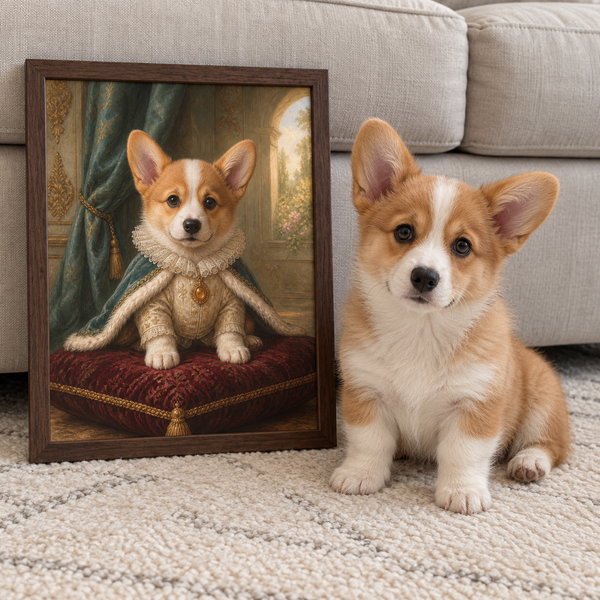
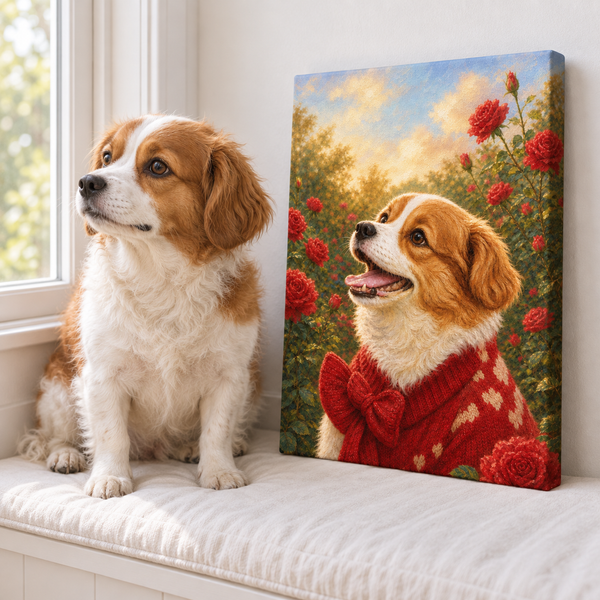
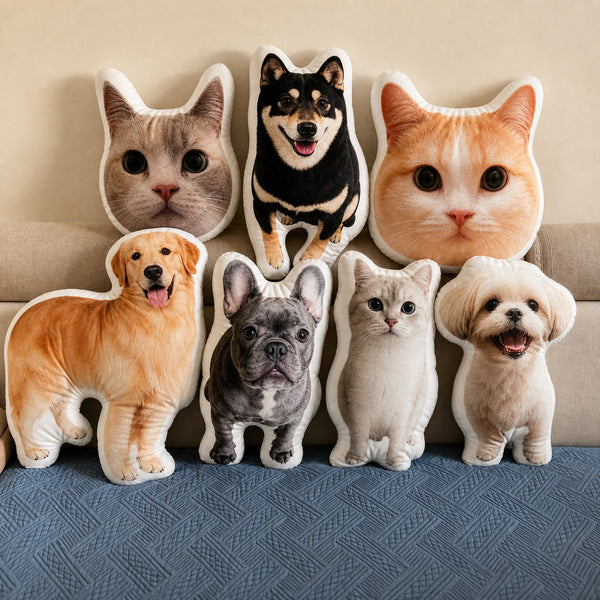

Dog wall art can be playful, formal, quiet, or wonderfully dramatic. The right choice depends on more than the breed or color of the dog. It depends on what the room needs, how the portrait will be viewed, and which part of your dog's personality you want the artwork to carry.
Instead of starting with a trend, begin with the wall. A portrait that looks beautiful on a product page still needs the right visual role in your home. This guide will help you choose custom dog portraits with the room, image, display format, and long-term placement in mind.
Start with the role of the portrait
Every successful wall arrangement has a visual hierarchy. Decide whether your dog's portrait will be the main focal point, part of a group, or a smaller personal detail.
A single statement piece
A standalone portrait works well above a console, dresser, reading chair, or other piece of furniture that gives it visual support. The image should be large enough to feel intentional from the main viewing position. Before choosing a size, mark the proposed outer dimensions on the wall with removable painter's tape. Then step back to where you normally enter or sit in the room.
Ask:
- Does the artwork feel connected to the furniture below it?
- Is there enough surrounding space for the portrait to breathe?
- Can you still read the dog's expression from across the room?
- Will a frame add meaningful width or visual weight?
Part of a gallery wall
In a gallery arrangement, the portrait does not need to dominate. It does need a clear relationship to the other pieces. Repeat one or two elements—such as frame color, background tone, or spacing—so the collection feels connected.
A pet portrait can sit naturally beside family photographs, travel prints, children's drawings, or simple typography. Lay the full arrangement on the floor first, or make paper templates for the wall. This lets you test balance without adding unnecessary holes.
A small, personal accent
Not every pet portrait needs to anchor a living room. A smaller piece can bring warmth to an entryway, home office, bookshelf area, or bedside wall. In these spaces, the viewer is usually closer, so subtle facial details and quieter backgrounds can be especially effective.
Choose a photo that works as wall art
A good wall portrait must remain readable after the surrounding room enters the picture. Photos with a clear face, visible eyes, and a recognizable silhouette are easier to translate into art than images where the pet disappears into a busy background.
The American Kennel Club recommends natural light, eye-level shooting, and focusing on the dog's eyes in its guide to taking better dog photos. It also notes that scenery can help create wall-worthy images. For custom artwork, however, the original setting does not have to remain. A strong expression can be paired with a new background that better suits the room.
Use Pawfolio's Pet Portrait Photo Tips to check focus, lighting, ear position, and markings before choosing the source image.
Match the composition to the room
The room can help you decide how much visual energy the portrait should have.
Living room: create a clear focal point
A living room often has several competing elements: windows, a television, shelves, rugs, and seating. Dog wall art works best when it has a defined place rather than filling leftover wall space. A centered statement portrait can add structure; a balanced gallery grouping can add a more collected, personal feel.
If the room is already colorful, consider a calmer background or a palette that repeats one existing accent color. If the room is neutral, a richer floral, historical, or scenic portrait can introduce personality without changing the furniture.
Entryway: make the first view welcoming
An entryway portrait is seen quickly and often from a distance. Choose a strong silhouette, direct gaze, or lively expression. Avoid very small facial details that disappear as someone walks past. A humorous or confident portrait can set the tone for the rest of the home.
Bedroom: favor a quieter mood
For a bedroom, softer color relationships and less visual clutter usually feel more restful. A close portrait with a simple background can make the piece personal without making the wall feel busy. Consider the sightline from the doorway and from the bed; the best position may not be the geometric center of the room.
Home office: bring character into the frame
In a work area, dog wall art can create a warm background for video calls or simply make the space feel less generic. Check how the artwork appears on camera as well as in person. Very reflective glazing, strong backlight, or a small image placed too far away may make the portrait hard to read on screen.
Use color to connect the portrait and the space
You do not need to match the dog's coat to the sofa. A more flexible approach is to repeat a small color relationship.
- Pull one background color from a rug, cushion, or nearby object.
- Use a contrasting background to keep the dog's face distinct.
- Let a neutral room support a more elaborate costume or setting.
- Choose a quieter background when the surrounding wall already contains several patterns.
- Consider how daylight and warm evening bulbs change the colors.
The pet should remain the visual center. If the background has the strongest contrast, brightest highlight, and busiest detail, it may overpower the face.
Decide between Art Print and Canvas
Format changes both the look of the portrait and how it relates to surrounding decor.
An Art Print has a flat presentation and can work well when you want framing flexibility or a traditional framed-art appearance. It is a useful choice when the room already includes framed photography or prints and you want the new portrait to join that visual language.
A Canvas has visible depth, wrapped edges, and a solid-wood inner frame. It can hold its own as a standalone wall piece and adds dimension without relying on the same flat profile as nearby prints.
Neither format is universally better. Compare the construction, display style, and edge treatment in Pawfolio's Art Print vs Canvas guide, then choose the one that fits the intended wall. For room-specific examples, continue with the room-by-room pet portrait display guide.
Protect the artwork from difficult conditions
Placement affects more than appearance. Light and environmental conditions can change artwork over time. The Library of Congress explains that light damage is cumulative and irreversible, and can cause fading, yellowing, and other color changes in light-sensitive materials.
Its guidance on matting and framing works on paper also recommends avoiding direct sunlight, intense light, fireplaces, radiators, vents, and exterior-wall temperature extremes. That page applies specifically to works on paper, such as conventional photographs or paper prints that may share the display. For a Pawfolio Art Print or Canvas, follow the care guidance for that product's actual material and construction.
For any wall art, use practical judgment:
- avoid a position that receives hours of direct sun;
- keep artwork away from strong heat sources and persistent dampness;
- use appropriate wall hardware for the finished weight;
- check that doors and furniture will not strike the piece;
- follow the care instructions for the chosen format and frame.
Five layouts to try before you hang
You can test these arrangements with paper templates before committing:
- One portrait above a low console: Simple and formal, with the artwork centered on the furniture rather than the entire wall.
- A three-piece row: One pet portrait with two related photographs or small prints, aligned by their centers or outer edges.
- A family-and-pet gallery: Mix the portrait with personal photographs while repeating frame colors or spacing.
- Two companion portraits: A balanced option for two pets, or for one current portrait beside a meaningful older image.
- A small reading-corner accent: Place a more intimate portrait near a chair, lamp, or shelf where it can be viewed up close.
Final dog wall art checklist
Before ordering or hanging the piece, confirm that:
- the source photo clearly shows the dog's expression and markings;
- the portrait has a defined role in the room;
- the proposed size feels right from the normal viewing distance;
- the style and background support the dog rather than overpowering it;
- the Art Print or Canvas format suits the surrounding decor;
- the location avoids direct sun, excessive heat, and physical obstacles;
- the placement feels balanced with nearby furniture and artwork.
The most effective dog wall art does more than fill an empty space. It brings a familiar face into the visual story of the room. Start with the dog's personality, decide how prominently the portrait should speak, and build the display around that choice.