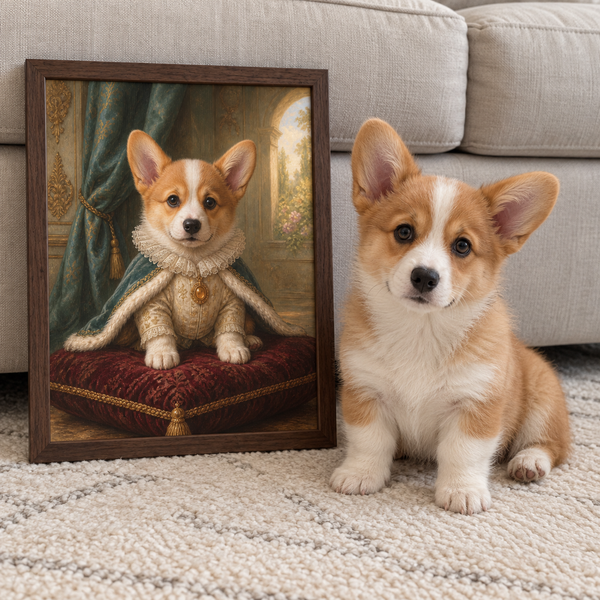
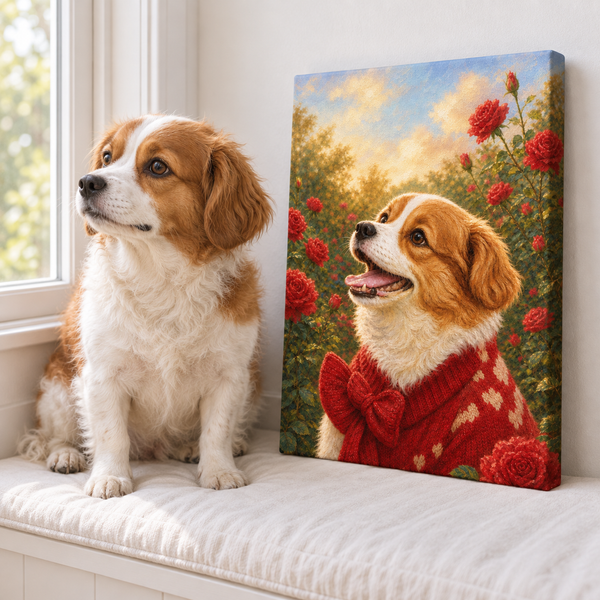

Taking a portrait off the wall is often a temporary decision. You are painting the room, making space for a seasonal display, or waiting to decide where it belongs. The problem is that “just for now” can become several months behind a closet door.
If you are wondering how to store canvas prints, start with the place and the particular object. An intact stretched canvas needs protection from pressure, accidental contact, and unsuitable environmental conditions. It also needs to remain easy to find and remove. Choose the storage space before you take the piece down, and use the maker's instructions to decide what may safely touch its surface.
Identify the canvas and record its condition
Check what you are storing: a print stretched around a wooden support, a canvas inside an outer frame, or a loose piece of printed fabric. This guide focuses on intact stretched canvas. Don't remove staples or take it off its support so it will fit into a smaller space. Loose canvas, damaged pieces, and original paintings may need different advice.
Keep the product's care instructions with your record. If the finish or coating is unknown, ask the maker before choosing wrapping material. “Canvas” describes part of the object, not a universal set of cleaning and packing instructions.
Take a few clear photographs before storage: the front, the back, and any existing mark or damaged corner. Note the dimensions, including the depth and any outer frame. These are practical reference details for choosing a space and checking the piece later; they don't establish that the artwork is free of damage.
If you are sorting several kinds of pet art, our Art Print versus Canvas guide can help you keep the formats distinct. Record each piece as it is rather than treating a flat paper print and a stretched canvas as interchangeable objects.
Choose the room before choosing the wrapping
Look for an indoor space with reasonably stable conditions that you already use and can inspect. Consider what happens there throughout the year, including when heating or cooling patterns change. A conveniently empty corner is not automatically a suitable storage location.
The Canadian Conservation Institute's storage guidance for paintings cautions against attics with temperature extremes and basements vulnerable to dampness or flooding. It also notes that outside walls can experience moisture and temperature changes. These are useful general risk checks for choosing a place, not a coating-specific prescription for your print.
Check the everyday use of the space, too. Will someone slide a vacuum beside the canvas? Are heavy boxes regularly moved above it? Does the closet need to hold wet umbrellas or cleaning supplies? A room can look quiet today while having a very different purpose tomorrow.
Write down the chosen location before you package the piece. For example, “Hall closet, dedicated left-hand compartment” is more useful than “spare closet.” If you can't describe a clear, protected place for it, finish that decision before putting the portrait away.
Give the piece its own supported space
Canvas storage should let you retrieve one piece without pulling it through a pile. Avoid making the artwork a shelf for other belongings, or using its face to support the weight of another picture. The protective arrangement should carry loads around the image rather than through it.
In its basic care guidance for paintings, CCI describes protected vertical storage in a central household closet and the use of rigid material to prevent contact with nearby objects. It also warns against pressure on canvas surfaces during handling. Apply those broad principles cautiously: the right support and enclosure still depend on the construction of your printed piece.
A dedicated, stable compartment can be easier to manage than several pictures leaning loosely together. It should accommodate the entire protected object, keep it from tipping, and allow you to remove it without scraping an edge. Keep it off a floor where an unnoticed spill could reach it.
Test the access route while the space is empty. Can you open the door fully? Can you lift the packaged canvas out without turning it against a shelf? If the answer requires an awkward balancing act, choose another arrangement before the artwork goes in.
Select protection for this printed surface
Ask the maker whether the original protective packaging is suitable for the length and conditions of storage you expect. Retain it only if it is clean, dry, intact, and appropriate for this use. A box that survived delivery is not necessarily ready for another job if its corners are crushed or the interior is dirty.
Print lab WHCC's care guidance explains that printed canvas can be affected by high humidity, temperature swings, and contact with its surface. Its own canvas products have particular finishes; that does not establish which coating another maker uses. Treat the page as evidence for general environmental care, not as a specification for Pawfolio products.
Don't improvise by pulling plastic tightly across an image or putting adhesive tape on the canvas. If you don't know which material can touch the printed surface, pause and ask. Tell the maker whether the piece is stretched, whether it has an outer frame, and where it will be stored. Include a photo of the existing package if that is the option you want to reuse.
Storage also isn't a reason to experiment with cleaning. Our guide to cleaning canvas prints explains how to check the instructions for the specific surface before doing anything beyond the maker's permitted care.
Make the package easy to identify and inspect
Put the identification on the outside of the protective container, away from the artwork. Include a short title, dimensions, storage date, and a note about which way the package should be handled. A small reference photo on your inventory can help distinguish similar boxes without opening all of them.
For a household collection, a simple record is enough:
- Piece: the pet's name and a brief description of the image.
- Format: stretched canvas, with outer-frame details if applicable.
- Location: the exact closet or dedicated compartment.
- Condition: existing marks noted, with the photographs saved together.
- Care information: maker's instructions and any specific advice received.
- Review reminder: check the location after a leak, building work, or a major change in room use.
Keep loose hanging hardware identified separately so it cannot move against the artwork inside the package. If several people use the storage space, make the arrangement understandable to them too. A clear “keep this compartment clear” note can prevent the empty-looking space in front from becoming a convenient shelf for shoes or supplies.
If the canvas is going to another home rather than staying in this location, use our guide to packing pet portraits for a move for the transport planning. Stationary storage and a moving vehicle create different practical problems.
Inspect before bringing the portrait back out
Prepare a clear place to unpack before opening the container. Look at its exterior first. If you find dampness, an unusual odor, or signs of damage, stop and ask the maker or a qualified conservation professional how to proceed. Don't rub, wet, or heat a questionable area to see whether it improves.
For an apparently sound package, remove the piece carefully and compare it with the photographs you made before storage. Look at the visible image, corners, frame, and back without pressing on the canvas. Note any change rather than trying to flatten, tighten, or repair it yourself.
Confirm the new wall location and hanging arrangement before the piece goes back on display. If you are adding to an existing group of pet portraits on Canvas, plan where the stored portrait fits before you fill the available wall space. Keep its care record after it returns to the room.
The most useful storage plan has a clear ending: you know which piece is inside, where it is, and how to bring it out without rummaging. Give a temporary pause that much structure, and “just for now” is easier to manage.