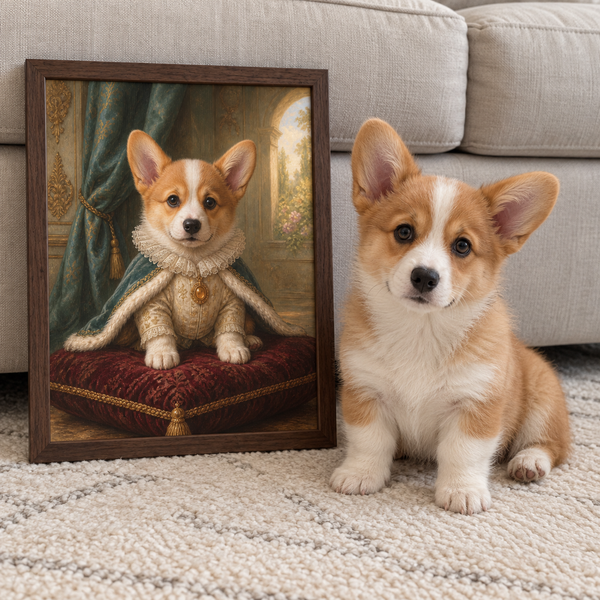
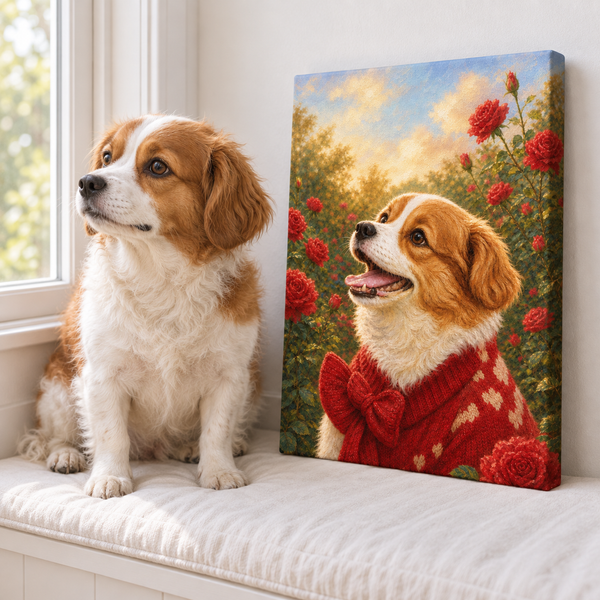

You notice a pale line on the top edge of your pet portrait while cleaning the room. It might be loose dust, a mark on the surface, or simply part of the image you have not looked at closely before. Reaching for the same spray used on the console underneath is an easy next move, but it should not be an automatic one.
The answer to how to clean canvas prints starts with the specific print's care instructions. If the maker permits gentle dry dusting and the surface is intact, follow that guidance. If the material is uncertain, the mark will not lift with the permitted method, or the surface has changed, stop and ask before trying something stronger.
Decide whether this is dusting or a different problem
Look at the print without rubbing the area. Note where the change appears, whether it follows an edge, and whether you remember a spill or contact with another object. Take a clear photograph of the whole piece and a closer picture of the area you are concerned about.
Avoid turning that first inspection into a test with a fingernail or damp finger. The goal is to decide what information you need, not to prove that a mark will come off. A stain, a scratch, and loose dust call for different responses, and a photograph alone may not settle which one you have.
Use three practical categories. A surface that appears unchanged apart from light dust can go to the product-instruction check. A known spill or persistent mark should go to the maker for specific advice. Visible lifting, flaking, cracking, tackiness, or other surface damage should end the home-cleaning attempt before it begins.
If you are not confident about the category, choose the advice step. You can still clean the surrounding room and gather the purchase details. There is no need to solve the uncertainty by experimenting on a pet portrait you want to keep.
Read the instructions for this particular canvas
Find the order record, packaging insert, or maker's current care page. Confirm that it applies to the same product type you own. A guide for a paper print behind glass does not automatically apply to an exposed printed canvas, and instructions for a painted original are a separate matter.
For example, Printful's official product-care page permits gentle dusting of its posters and canvas prints with a soft, dry cloth and recommends keeping them away from direct sunlight and outdoors. That is guidance for the products covered by that maker's page. It is not permission to use a cloth on every printed or painted surface.
For an item from Pawfolio's pet Canvas collection, use the care information supplied for your order or ask Pawfolio about the exact item. Do not infer the coating, water resistance, or permitted cleaning method from the photograph on a product page.
If you are unsure whether you bought a paper Art Print or a Canvas, the format comparison guide can help with that first distinction. It cannot identify the cleaning tolerance of an unknown image layer. The product's own instructions still need to answer that question.
Prepare only the method the maker permits
Suppose the correct instructions expressly permit a soft dry cloth on an intact printed surface. Prepare a clean cloth of the specified type, free from cleaner residue, and clear enough space to work without bumping the piece. A cloth recently used on furniture is not the right starting point.
Make sure you can reach the artwork safely. If it would require leaning over furniture or stretching from an unstable position, resolve the access problem before touching it. Do not pull on the image surface or hanging wire to make the print easier to reach.
Follow the maker's instructions for the contact and movement, using no more intervention than they allow. A recommendation to dust gently is not an invitation to scrub an area until its appearance changes. If the permitted action does not remove the mark, the next step is a question to the maker, not extra pressure.
Do not add water, a cleaning spray, polish, or a household stain remover to a dry-care instruction. Equally, do not replace the specified tool with a brush, vacuum nozzle, or canned air because it seems quicker. Ask whether an alternative is appropriate before using it.
When the instructions are missing or unclear, leave the surface alone. Send the maker the product details and ask for an explicit method. Waiting for an answer is a valid care decision, especially when the image has personal meaning.
Stop when the situation no longer matches the instructions
An intact print with light dust is one situation. A patch that feels sticky, an area with loose material, or color appearing on a cleaning cloth is another. Stop if you see a change, and keep a record of what you have already done. Do not try a second product to correct the first attempt.
The boundary is particularly important for original paintings. The Canadian Conservation Institute's cleaning precautions warn that even dusting can remove fragile paint and that water or solvents can affect multiple layers. Its advice concerns painted works; a print maker's dry-cloth instruction should never be transferred to a painting on that basis.
If an older pet portrait was inherited, bought secondhand, or made by an artist whose process you do not know, say that when seeking help. “Canvas” identifies a support, not the complete surface. An art conservator can assess an original or uncertain work when ordinary product support cannot.
Do not promise yourself that a small mark will be an easy repair. Size alone does not tell you what happened. A focused assessment may also prevent an unnecessary treatment if the apparent mark is part of the printed image or a reflection from the room.
Send a question that the maker can actually answer
Keep the message short and specific. Include an order number or product name if you have one, when you noticed the problem, and whether anything touched the area. Attach a full view and a close-up without filters so the recipient can understand the location.
An example message could read: “I have the Canvas from this order. There is a light deposit along the upper edge. I have not applied liquid or rubbed the area. Does the care guidance for this item allow dry dusting, and which tool should I use?” Adapt it to what actually happened; do not hide an attempted cleaning step.
If you already used a product, provide its name and the method. That information is more helpful than describing it only as “gentle.” Keep any response with the order record so you do not have to reconstruct the advice later.
If the artwork needs to be moved for assessment, discuss handling with the recipient first. The guide to packing pet portraits for a move covers planning and separating surfaces from packing materials, but it does not replace instructions for transporting a damaged or fragile piece.
Reduce the reasons you need to clean it
Look at the surroundings as well as the artwork. Is dust collecting nearby? Does a cleaning spray reach the wall? Is the portrait close to food preparation or a place where water is regularly splashed? Moving the routine or choosing a more suitable location may be more useful than repeatedly treating the image.
Check the maker's display guidance when considering a new position. Keep cleaning liquids directed away from the artwork, and avoid cleaning it merely because it is the same day you clean the furniture. A visual check can tell you whether anything needs attention before you plan another contact with the surface.
If you want to reconsider its placement, the pet wall-art ideas guide offers ways to think about the display. Apply the care requirements first, then choose the arrangement you enjoy within those limits.
Keep three things together: the purchase record, the care instructions, and any photographs documenting a concern. With those available, the next decision is straightforward: use the expressly permitted method on a suitable intact surface, or pause and ask. Caring for a canvas print does not require a collection of cleaning products. It requires knowing when an ordinary dusting instruction applies and when the situation has changed.