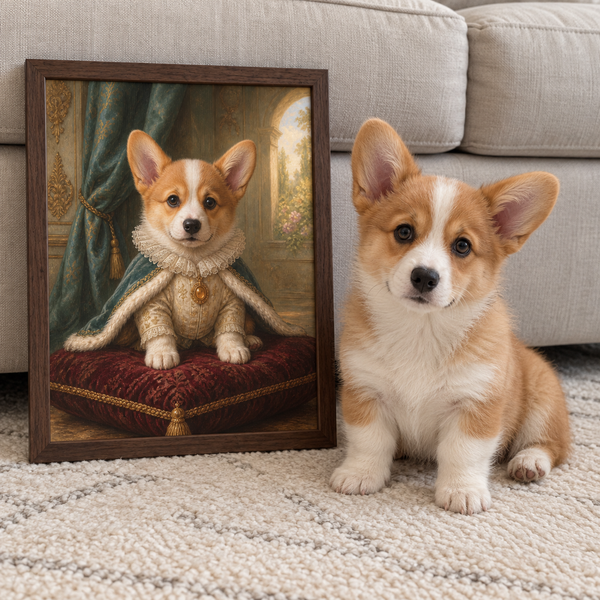
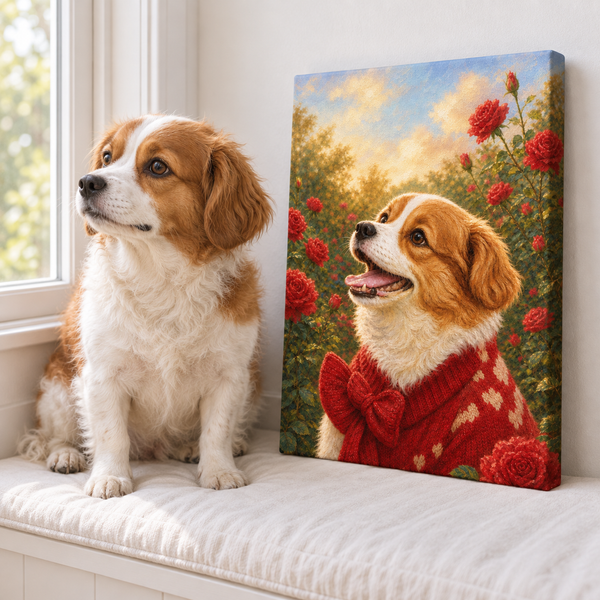
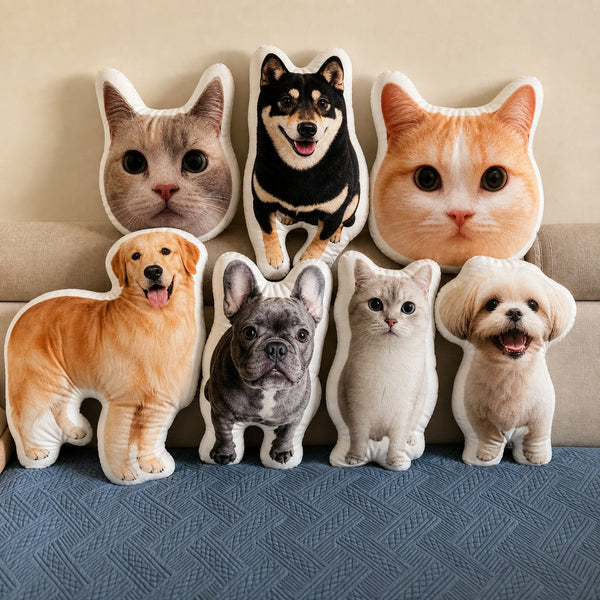

Two dogs can share a home, a couch, and a very enthusiastic greeting routine without ever looking at a camera together. One turns just as the other settles. The smaller dog disappears behind the larger one. Then you finally get two faces in the frame, but only one is sharp.
The answer to how to photograph two dogs together begins before you press the shutter. Give them a setup they can comfortably share, place their faces at a similar distance from the camera, and check each face separately. A short, uncomplicated attempt is more useful than a long session spent chasing a perfectly matched pose.
Decide what a successful group photo looks like
Choose a modest goal: both dogs recognizable, both comfortable, and enough space around them to show their individual shapes. They don't have to touch, sit identically, or look straight at the lens. A picture of one watching the yard while the other looks toward you can still describe their life together.
Begin with dogs who are already comfortable sharing the chosen space. A photography session is not the moment to test a new introduction or persuade reluctant dogs to sit closer. If one keeps leaving, end the shared attempt. Separate pictures are a practical alternative, not a failed version of the same assignment.
Work somewhere you can manage safely, such as a securely enclosed familiar yard or an uncluttered room. Keep any necessary leash attached and controlled by a responsible helper. Don't tie the dogs to each other to hold a composition in place.
Before bringing out the camera, decide who is taking pictures and who is helping. Two people calling from opposite sides of the room can create two very different directions of attention. One clear plan gives you fewer moving parts to manage.
Choose light that works for both faces
Find a patch of soft, even natural light large enough for both dogs. Indoors, that might be a bright room beside a window. Outdoors, it might be open shade where neither face is crossed by a strip of direct sun.
Canon's pet-photography advice from Jenn Cooper explains that harsh direct sunlight can create strong shadows and contrast. For a pair, look at both faces before choosing the spot. A location that lights the golden dog's face nicely may still leave the darker dog's eyes difficult to see.
Move your viewpoint before asking the dogs to move. Often, a small change in where you stand gives you a simpler background or a clearer view of a dark face. If one dog has black fur, our guide to photographing black pets explores that specific challenge.
Clear the frame of ordinary distractions you can safely move: a bright bag, an empty pot, or a chair leg crossing a face. Leave useful context if you like it. The aim is a readable picture of two dogs, not an empty scene that no longer resembles their home.
Put the faces at a similar camera distance
Imagine an invisible line running across the space in front of you. Ideally, both dogs' faces sit close to that line, rather than one dog being far behind the other. They can still have a comfortable gap between their bodies.
In her group-photography guide published by Rocky Nook, photographer Kaylee Greer explains the value of placing dogs on the same focal plane. For your setup, translate that into a simple visual check: is one face noticeably nearer to the camera?
If the dogs are different sizes, don't assume you need a stool or raised platform. Photographing both on level ground may be easier and safer. Lower yourself toward their eye level and see whether the smaller dog's face remains visible. You can choose a slightly different camera height without forcing their heads to match.
Avoid arranging one dog directly behind the other. Even if focus is adequate, an ear, muzzle, or chest can vanish into the foreground dog's outline. Take a test picture and look for those overlaps. A small sideways change in your position may solve the problem without interrupting either dog.
Check depth of field instead of trusting the first face
Autofocus finding one set of eyes does not guarantee that both dogs will look sharp. Review the result at a useful magnification, especially if one face is a little farther away. On a phone, try the ordinary photo mode first and inspect both faces rather than assuming a portrait effect has preserved every edge.
With a camera that allows aperture control, a very wide aperture can leave too little depth of field for the pair. Nikon's explanation of aperture and focus depth describes how a higher f-number increases the zone of acceptable focus, and recommends checking a test image. There is no single setting that works for every lens, distance, and arrangement.
After a test frame, ask whether the problem is focus or movement. A sharp collar with a blurred moving muzzle calls for a different adjustment than one consistently soft dog behind another. Our guide to photographing dogs in motion covers the movement side of that decision.
Change one thing at a time. Bring the face distances closer together, adjust the camera setting you understand, or choose better light. Then look again before taking dozens of nearly identical pictures.
Keep each attempt short and easy to leave
Once the light and framing are ready, let the helper concentrate on the dogs while you concentrate on the image. Ask only for familiar, comfortable behavior. If the dogs already know a simple sit cue, that can be useful; learning a new pose doesn't need to be part of today's project.
Take a few pictures, lower the camera, and check what you have. You may already have a frame with both expressions clear, even if they aren't identical. Repeating cues after you have a usable picture can turn a pleasant moment into unnecessary work.
Skip squeaky toys, food, or attention tricks that create competition between these particular dogs. There is no requirement to make both heads turn at exactly the same instant. You can photograph a pause, a glance toward the same person, or an ordinary side-by-side rest.
If either dog repeatedly moves away, stop. Don't hold a chin in place or pull the bodies together for one more frame. You can try another day with a different setup, or keep the separate photos you already have. The picture should come from a moment the dogs can comfortably share.
Review the pair, then review each dog
Make three quick passes through your favorite images. First, look at the whole group: does the picture feel balanced, and can you distinguish both dogs easily? Second, zoom in on one face. Third, repeat that check for the other face. This prevents one appealing expression from distracting you from a soft or partly hidden companion.
Check the ears, necks, and distinctive markings as well as the eyes. If the image is intended for custom artwork, Pawfolio's photo guidelines recommend clear, evenly lit photos that keep those identifying details visible. Keep the full-resolution original alongside any crop you make for sharing.
If your best shared photo captures their relationship but loses detail in one face, save it for context and choose clearer individual references too. Our guide to multiple-pet portraits from separate photos explains that different next step. A good group memory doesn't have to do every job on its own.
Choose the frame where both dogs remain themselves. A little space between them, two different expressions, and an ordinary background can tell the story more honestly than a pose you spent the afternoon trying to hold together.