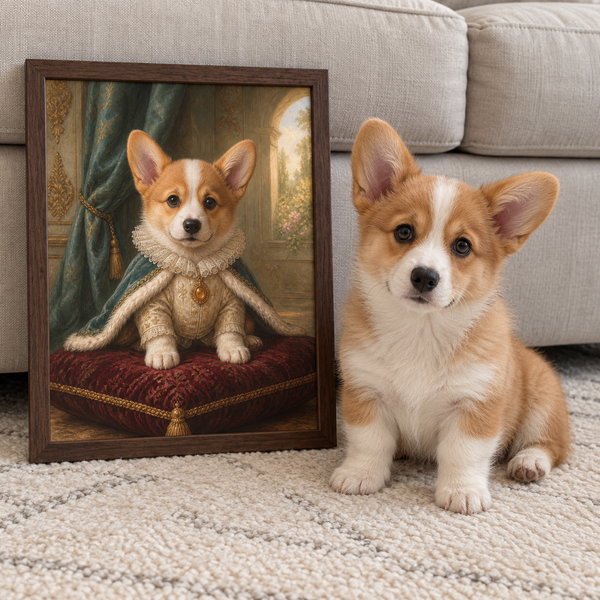
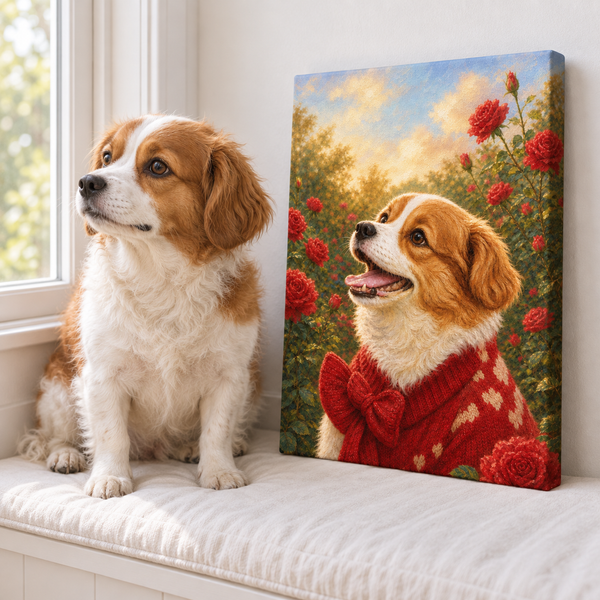
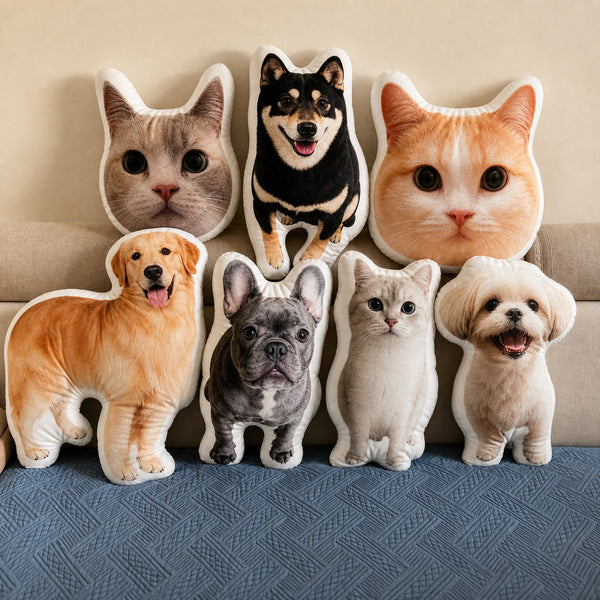

Getting every pet to look at the camera at the same time can feel like a small miracle. One dog turns away, the cat leaves, and the only sharp face in the frame belongs to the pet who was not supposed to be centered. Fortunately, a multiple pet portrait does not always need to begin with one perfect group photo.
Separate photos can often provide the building blocks for one shared composition. The useful question is not simply, “Can these pictures be combined?” It is, “Do these pictures give the artist enough clear, compatible information to make the pets feel as though they belong together?”
This guide explains what to look for before you order, what choices are worth communicating, and when separate portraits may be the better answer.
Yes, separate pet photos can work together
An artist can use one main reference for each pet, then arrange the subjects within a new composition. That makes a combined portrait possible even when the pets were photographed on different days—or never had a usable photo together.
The process is more thoughtful than placing cutout faces side by side. Each reference carries its own camera angle, lighting, distance, and expression. Those differences have to be reconciled so the final portrait has one visual rhythm.
Start by choosing one clear primary image per pet. If another photo shows an important marking, eye color, ear shape, or coat texture more accurately, include it as a supporting reference. Pawfolio's pet portrait photo guidelines explain the basics: a close view, natural light, an eye-level angle, and an uncropped face generally provide useful detail.
Choose photos that speak the same visual language
Your reference images do not have to match perfectly, but compatibility gives the artist more room to create a natural result.
Keep the camera angle reasonably consistent
Imagine one pet photographed straight on at eye level and another photographed from far above. Their head shapes and proportions will appear different because of perspective. If possible, choose images taken from a similar height, with each pet's face turned in a direction that could make sense in the same frame.
Eye level is a practical starting point. Both the American Kennel Club's dog photography guide and Adobe's phone photography guidance recommend getting down to the subject's level. For portrait references, that angle also helps the artist see the face without the foreshortening created by a steep top-down photo.
Look for clear, even light
One pet in soft window light and another under a strong yellow ceiling light may show very different coat colors. Similar lighting is helpful, but clarity matters more than making the original backgrounds identical. Choose photos where the eyes, muzzle, ears, and markings are easy to read.
Avoid heavy filters. A filter that changes warm fur to gray or deep brown eyes to black removes useful information. If the most expressive photo has unusual color, add a second image that shows the coat accurately.
Use a similar crop when you can
A head-and-chest photo pairs more naturally with another head-and-chest photo than with a tiny full-body subject in a distant landscape. The artist may be able to adjust the crop, but comparable framing makes relative size and spacing easier to plan.
Decide how the pets should relate in the portrait
Composition is not only about fitting everyone into the frame. It is also about representing how you remember the group.
Were the pets inseparable? A closer arrangement may feel right. Did they share a home but prefer their own space? A balanced composition with a little breathing room may be more honest. Did they live in different chapters of your life? You can still place them together, but it helps to explain the meaning behind that choice.
You do not need to write a long biography. A few details can guide the artwork:
- “Milo was the calm older dog; Poppy was always leaning toward him.”
- “The cat was much smaller, but I want both faces to be easy to see.”
- “They never met, yet I would love one quiet family portrait.”
- “Please keep their real size difference rather than making them equal.”
These notes describe the relationship and leave room for the artist to solve the visual arrangement.
Talk about scale before it becomes a surprise
Size differences are one of the most important choices in a two pet portrait. Exact real-world scale can make a small cat disappear beside a large dog. Making every head exactly equal can erase the difference that made the pair look like themselves.
A balanced approach usually keeps the relationship believable while giving every face enough visual presence. You can ask for realistic proportions, similar apparent size, or a middle ground. There is no universal correct answer; the best choice is the one that matches your memory and the place where the artwork will hang.
The final format matters too. More subjects mean each face occupies less space. Before choosing an Art Print or Canvas, check the current pet-count and size options on the product you like. A larger format may give a busy composition more room to breathe.
Pick one emotional direction
Separate reference photos may capture different moods: one pet looks alert, another sleepy, and a third mid-zoomie. The final portrait will feel more cohesive when you choose an overall direction.
Common directions include:
- calm and classic;
- bright and playful;
- formal and regal;
- soft and commemorative;
- simple and modern.
You can still preserve individual personalities within one mood. The dignified cat does not need to grin because the goofy dog does. Cohesion comes from the composition, color, and style—not from making every pet wear the same expression.
Send one imperfect group photo if you have it
Even a blurry snapshot of the pets together can contain useful context. It may show their true size difference, the way they sat near each other, or which pet naturally leaned forward. Treat that image as relationship reference rather than the main source for facial detail.
Then label your files clearly. A simple set might be:
- Luna-main.jpg — best face and expression
- Luna-markings.jpg — accurate chest patch
- Charlie-main.jpg — best face and ears
- Together-reference.jpg — relative size and closeness
Clear labels reduce ambiguity and make your notes easier to follow.
Review every pet during the proof stage
When your chosen product includes an artwork proof, examine the portrait in two passes. First look at each pet individually: eye color, ears, muzzle shape, markings, and familiar expression. Then step back and judge the group: scale, spacing, balance, and overall mood.
Specific revision notes are easier to act on than general ones. “Please use Luna's second photo for the white mark above her nose” gives a clear target. “She does not look right” describes the feeling, but not the feature that needs attention.
Pawfolio's How It Works page explains when previews are provided and how edits fit into the order process.
When separate portraits may be better
One shared artwork is not automatically the most meaningful option. Separate portraits may work better when:
- the photos have sharply conflicting angles or very limited detail;
- the pets need different styles or emotional tones;
- you want every subject to receive full visual emphasis;
- the animals are meant to represent distinct periods or memories;
- you plan to build a flexible gallery wall over time.
Matching individual portraits can still feel connected through a shared size, frame, palette, or background. The result is a family set without forcing every pet into one scene.
A simple submission checklist
Before placing an order, gather:
- one clear primary photo for each pet;
- optional detail references for color and markings;
- an imperfect group photo, if available;
- a note about relative size;
- a note about relationship and preferred arrangement;
- one overall mood or style direction;
- any feature that must not be missed.
The best multiple pet portraits do more than place several recognizable faces in one frame. They make the group feel connected while preserving the small differences that make each pet unmistakable. If your photos are clear and your notes explain what matters, the artist has a much stronger foundation for creating a portrait that feels like your whole family.