
How long is the memory of a dog? The honest answer is more interesting than a number: dogs have several kinds of memory, and each works on a different timescale. A dog may forget an unimportant detail quickly yet retain a trained response, recognize a familiar person, or navigate a known routine long after the original experience.
That is why claims such as “a dog remembers for only a few minutes” are misleading. Researchers do not test one all-purpose memory clock. They test specific tasks—remembering an action, finding a location, responding to a cue, or recognizing an individual—under controlled conditions. The result depends on what the dog learned, how meaningful it was, how often it was reinforced, and what cues are present when the dog tries to retrieve it.
The short answer: there is no single dog-memory limit
Memory is the ability to encode information, retain it, and use it later. For dogs, that can include:
- Working memory: holding information briefly while completing a task, such as remembering which cup hides a treat.
- Associative memory: connecting one event with another, such as a leash predicting a walk or a cue predicting a reward.
- Spatial memory: remembering routes, rooms, doors, feeding locations, or where an object was left.
- Recognition memory: distinguishing familiar people, animals, sounds, scents, or places from unfamiliar ones.
- Episodic-like memory: recalling aspects of a past event without being deliberately trained to memorize it.
These systems overlap, but they are not interchangeable. A laboratory delay in one task cannot tell you how long your dog remembers your face, your household routine, or every past experience. It is better to ask, “What kind of information is the dog remembering, and what cues help bring it back?”
What studies reveal about action recall
Two studies help show why the simple-number answer falls short. In a 2016 study indexed by PubMed, dogs watched a person perform an action and were later given an unexpected cue to imitate it. They could do so after delays of one minute and one hour, although performance declined as the delay increased. Because the dogs had not been told in advance that they would need to copy the action, the researchers described the result as evidence of episodic-like memory.
A later Scientific Reports study asked dogs to repeat actions they had performed themselves. The dogs showed some ability to recall those actions after delays ranging from seconds to an hour, again with performance decreasing over time.
These findings do not mean all dog memories last one hour. They show that dogs can retrieve information about particular recent actions under particular experimental conditions. “Episodic-like” is also a careful scientific term; it does not prove that a dog replays a richly detailed autobiographical scene in the same way a person might.
How dogs remember people and familiar animals
Recognition is rarely based on one cue. Dogs can use scent, voice, movement, context, and visual features together. A familiar person arriving at the usual door at the usual time creates a stronger bundle of retrieval cues than a distant photograph presented without scent or motion.
Researchers reviewing individual recognition and long-term memory in domestic species note that recognition can be tested through different sensory channels and behavioral responses. That matters in everyday life: a dog may recognize someone immediately by scent but take longer when the person looks, sounds, or moves differently.
Emotion and reinforcement may also affect what persists. Experiences connected to food, safety, fear, play, or social contact are more likely to influence later behavior than neutral background details. Still, a reaction alone does not tell us the exact content of a dog's memory. Excitement at the sound of a car, for example, may reflect an association with arrivals rather than a detailed recollection of one particular day.
Why routines seem to create especially strong memories
Dogs are excellent observers of patterns. They notice the sequence that comes before breakfast, a walk, a family member returning, or bedtime. Repetition strengthens associations, while context supplies prompts: the time of day, household sounds, a specific pair of shoes, the position of a treat jar, or your body movement toward the door.
This can look like a dog “telling time,” but several clues may be working together. Light changes, activity in the home, hunger, and learned schedules can all contribute. If the usual routine shifts, some dogs adapt quickly; others continue to anticipate the old sequence until a new pattern becomes reliable.
Routine memory is useful, but it can also preserve unwanted behavior. If jumping at the door has repeatedly led to attention, the dog has learned a successful pattern. Changing it requires more than saying “no.” Teach and reward a replacement—such as standing on a mat—under the same conditions where the old behavior normally occurs.
Do dogs remember bad experiences?
Dogs can form lasting associations after frightening or painful events. A dog who became scared during grooming may later react to the room, table, tool, posture, or handling sequence connected with that event. We cannot assume the dog is narrating the entire episode internally, but the learned emotional response can be real and behaviorally important.
Avoid forcing a fearful dog back into the situation to “get over it.” Instead, create distance, break the task into very small steps, and pair manageable exposure with something the dog values. If fear is intense, sudden, or creates a bite risk, ask a veterinarian or qualified reward-based behavior professional for help. Pain and medical changes should be ruled out when behavior shifts unexpectedly.
Positive memories also grow through association. A predictable voice, gentle play, a favorite resting place, and repeated safe interactions can become part of how a dog understands home. Our related guide on how to show your dog you love them focuses on the routines dogs can actually experience, rather than human-style gestures they may not interpret the same way.
How to help a dog remember what you teach
You do not need a perfect memory test at home. To make useful learning easier to retain:
- Keep the cue consistent. Use the same word or hand signal while the behavior is new.
- Reward promptly. The closer the reward follows the desired action, the clearer the association.
- Practice in more than one place. A dog who can “down” in the kitchen may need help understanding the cue in a park.
- Use short sessions. Stop before frustration or fatigue replaces learning.
- Refresh the behavior. Skills that are rarely used can become less reliable, especially around distractions.
- Make retrieval easy at first. Lower the distance, delay, or difficulty, then increase one variable at a time.
This is also why punishment after the fact is ineffective and confusing. If you discover a chewed cushion much later, the dog cannot reliably connect your current reaction to a past action in the way you intend. Manage the environment and reinforce the behavior you want when it happens.
Memory, photographs, and the way people keep a story
Dogs experience photographs differently from us, and a framed image should not be treated as a test of canine recognition. Its purpose is usually human: it helps us hold onto a familiar expression, relationship, and chapter of life.
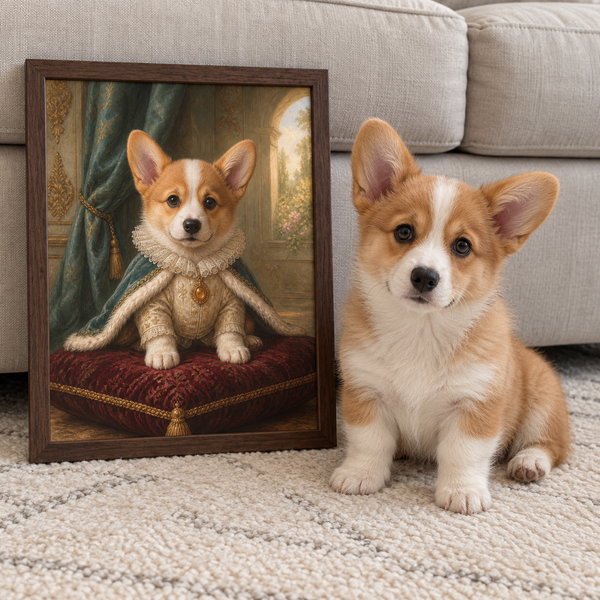
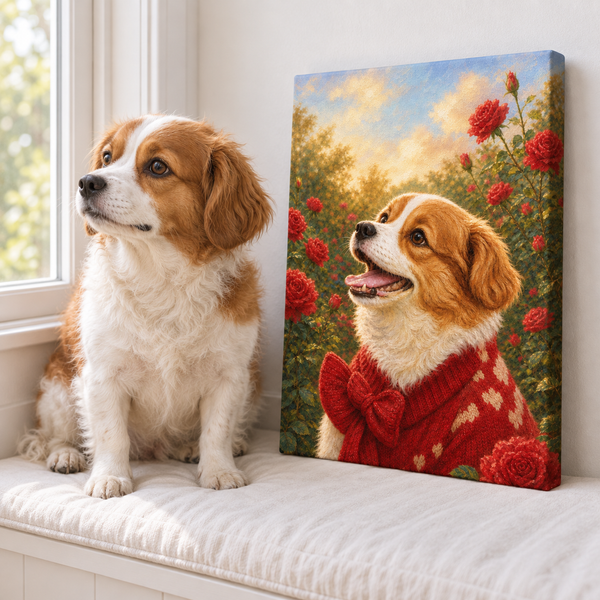
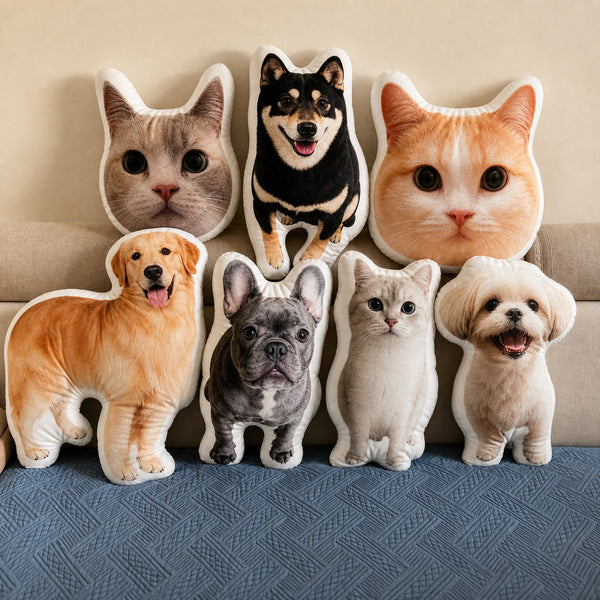
If you want to turn that kind of visual memory into art, choose a photo that clearly shows the dog's eyes, facial shape, coat markings, and ear position. Our pet portrait photo tips cover the practical source-image checks. Pawfolio Art's custom Art Prints are made from a submitted pet photo, so the source image matters more than recreating an elaborate background. A relaxed, recognizable expression often carries the most personal detail.
That distinction is worth keeping. Science can test whether a dog retrieves information after a delay; it cannot assign one number to every relationship, routine, or learned experience. Your dog's memory is not a stopwatch. It is a collection of systems shaped by attention, repetition, emotion, context, and the cues available in the moment.