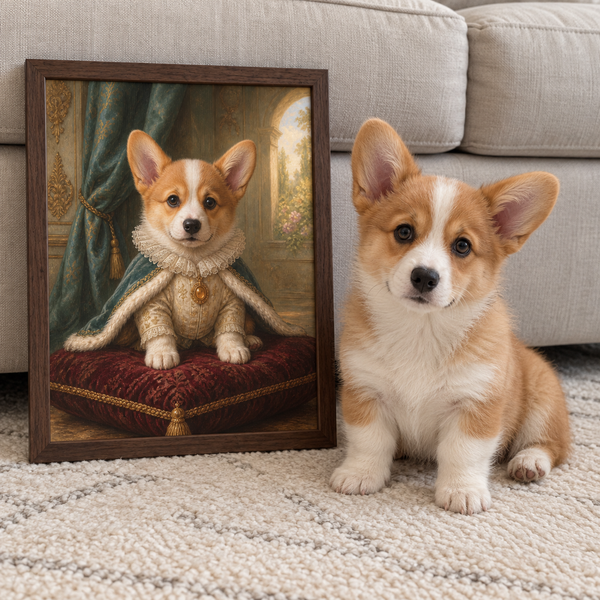
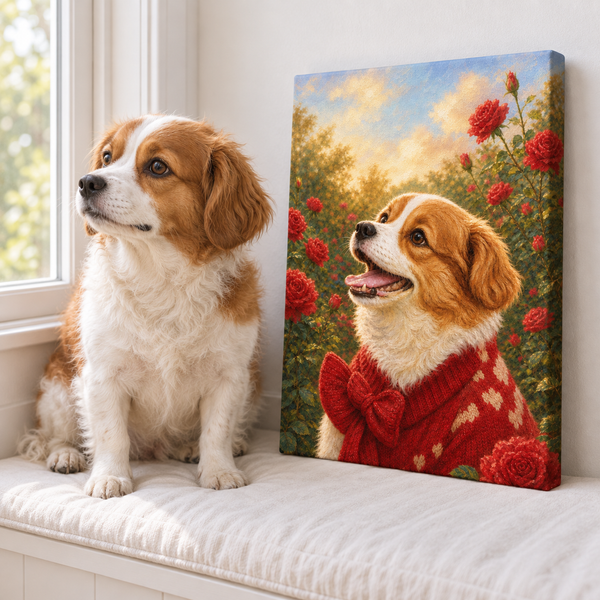

The dog in the painting may catch your attention before anything else: a familiar tilt of the head, a scruffy muzzle, or the watchful expression you recognize from your own pet. Then you read the listing. It mentions an artist, a period, an old frame, and perhaps a family story. Those details deserve separate questions before you buy.
Choosing an antique dog oil painting involves more than deciding whether you like its colors. You need to understand what the seller is claiming, what the available records support, and what condition the physical object is in. Use the following checks to organize that conversation, especially when you can only see the painting online.
Write down exactly what the listing claims
Start a short note with the artist's name as written, the proposed date, the medium, the support, and both framed and unframed dimensions. Copy any qualifying language too. Do not quietly turn an uncertain attribution into a confirmed artist name when comparing listings.
For example, the National Gallery of Art's catalog terminology explains that “attributed to” indicates uncertainty about authorship, while “style of” describes a stylistic relationship without necessarily implying a chronological connection. A particular seller may define terms differently, so ask for their definitions and read the applicable sale conditions.
Ask what evidence supports the date and attribution. A statement such as “believed to be nineteenth century” leaves a different question open from a documented date. Treat the frame's age and the painting's age as separate matters to clarify.
Also confirm that the listing describes a painted object rather than a reproduction. Our guide to oil paintings and printed pet portraits explains that material distinction. Once it is clear, keep your attention on this particular object's history and condition.
Request a photo packet that answers real questions
A single attractive room photograph tells you how a painting might look on a wall. It rarely gives you enough detail to assess the purchase. Request a consistent set of images rather than asking vaguely for “more photos.”
- A straight-on photograph showing the entire painted surface without a decorative filter.
- A photograph of the whole back, including the support and any visible labels or inscriptions.
- Close views of a signature or date, if the seller mentions one.
- Close views of disclosed damage, repairs, and any areas that look unclear in the main image.
- Photographs of the frame's front, corners, and back if it is included.
- A written confirmation of dimensions, including which measurements refer to the frame.
Ask the seller to explain any difference between the photographs and the description. Is the dark area part of the painted background, a shadow from the frame, or something requiring examination? You do not need to diagnose it from a screen; you need an answer you can evaluate.
Do not ask an inexperienced seller to dismantle a fragile object just to obtain a photograph. If important areas cannot be inspected safely, note that limitation and discuss professional examination before committing.
Connect the ownership story to actual records
Dog painting provenance is the ownership history attached to a specific work, not simply an appealing account of where it was found. The National Gallery of Art's provenance explanation describes a history that includes former owners, transfers, and the transactions through which an object changed hands.
Ask which records will accompany the painting. These might include a previous invoice, an auction entry, correspondence, or a conservation report. Compare the identifying details: subject, dimensions, medium, photographs, and any recorded inscriptions. A document is more useful when you can clearly connect it to the object being offered.
A family recollection can suggest a research lead. Keep it labeled as a recollection unless supporting material is available. Likewise, ask who issued any certificate, what exactly it states, and what examination or research it describes. A certificate's existence should begin a question, not end one.
Record gaps plainly. “Known ownership from a particular sale onward” is more useful than filling the earlier years with assumptions. If the purchase depends on a specific artist, date, or ownership claim, seek an independent specialist with relevant expertise before proceeding. This checklist helps you gather evidence; it cannot authenticate the painting.
Separate a pleasing image from a condition assessment
An antique dog painting condition report should help you understand the object you will receive. Ask when it was prepared, who examined the painting, and whether it covers the frame as well as the painted surface. Request plain explanations of unfamiliar terms instead of guessing from technical vocabulary.
Useful questions include whether there are tears, areas of paint loss, lifting paint, distortion, previous repairs, or known restoration. Ask what is documented and what remains uncertain. If the seller describes a repair as minor, ask for its location, dimensions, and a photograph rather than relying on the adjective alone.
Avoid planning a home cleaning session as part of the purchase. The Canadian Conservation Institute's cleaning precautions warn that untrained cleaning can damage paintings and that even dusting can remove vulnerable paint. An apparently dull area is not a reason to experiment with water, household cleaners, or a cloth.
Instead, ask a paintings conservator whether examination or treatment is appropriate and what information they need to advise you. If condition questions cannot be resolved remotely, an in-person assessment may be the sensible next step. You can still admire the dog's expression while deciding the object's care needs are more than you want to take on.
Include handling and delivery in the decision
Before buying an antique dog portrait, write down the complete purchase terms. Confirm whether the quoted amount includes the frame, packing, delivery, and any applicable selling fees or taxes. Ask for the total in writing rather than calculating from a headline price alone.
Find out who will pack the painting and how the seller handles damage discovered on arrival. Read the actual return or inspection terms, including deadlines and who pays return transport. Do not assume that a policy for an ordinary store purchase also applies to an auction or a private sale.
Think about the destination before arranging delivery. Measure the available wall space using the framed dimensions, and ask about suitable support and installation for the object's weight and condition. If you are still considering the visual arrangement, our dog wall art ideas can help with placement and grouping; they do not replace conservation advice for an older painting.
Keep copies of the listing, photographs, correspondence, invoice, and any accompanying reports together. This gives you a clear record of what was represented and what arrived, instead of leaving the useful details scattered across messages.
Choose the painting you can describe with confidence
Before making the decision, try summarizing the purchase in a few factual sentences: what the object is, what is known about its maker and history, what condition issues have been disclosed, and what the delivery arrangements are. Separate confirmed details from unresolved claims.
Then ask whether you would still want the painting if the uncertain details remained uncertain. You may love an unnamed dog portrait for its expression and composition. You may instead be looking for a documented work by a particular artist. Those goals call for different levels of specialist involvement, and neither needs to be disguised as the other.
If what you most want is your own pet's familiar face, a newly made portrait offers another route. Start with Pawfolio's reference-photo tips, then explore Pawfolio’s custom pet Art Prints. These are contemporary personalized prints, not antique oil paintings.
Keep the decision grounded in the object and the evidence available. Clear questions now can help you choose a piece whose story, appearance, and care requirements you understand.