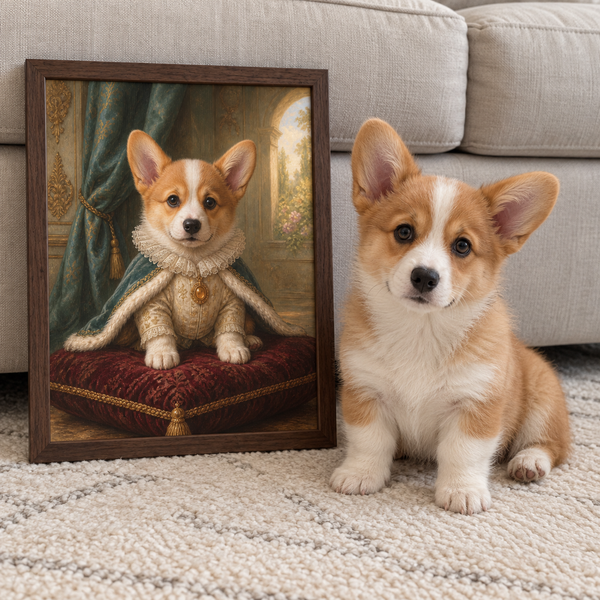
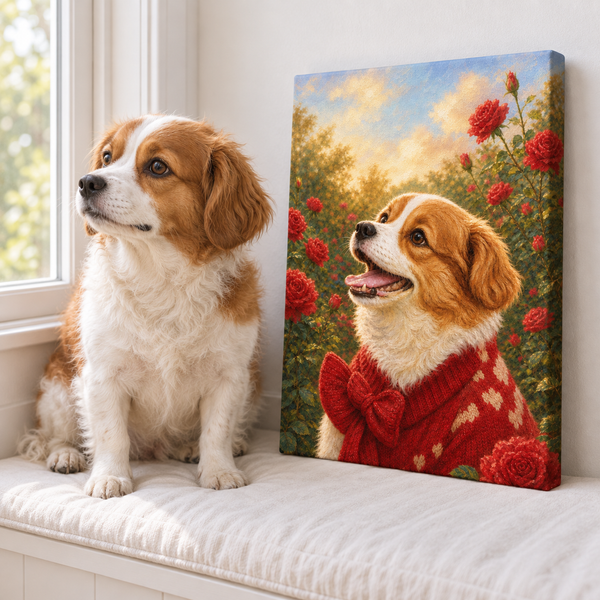

A favorite pet photo can feel very different once it becomes a physical object. You might picture a smooth panel with crisp edges, or a textured canvas that stands away from the wall. Both can be appealing, but a small product thumbnail rarely tells you how either will look beside your window or above your sofa.
The useful metal print vs canvas comparison starts with your image and the place it will live. Surface finish, crop, visible depth, mounting, and care all belong in that decision. Instead of picking a universal winner, work through the choices that will still matter after the package arrives.
Find out which version of each material you are comparing
“Metal print” is a category, not a complete specification. Ask the seller how the image is made, which metal supports it, and what finish you will receive. A familiar example is a dye-sublimation image transferred into a specially coated aluminum panel. Other metal products can use different printing methods, so confirm the exact construction.
Finish also changes the comparison. ChromaLuxe's indoor aluminum panels come in white-base and clear-base versions, with gloss, semi-gloss, and matte options. Its matte white finish is designed to reduce reflections. That gives you a better question to ask than simply whether metal is shiny: which coating and finish does this particular listing include?
Canvas prints use a textile surface. As one material example, Hahnemuehle's Photo Canvas data sheet describes a poly-cotton canvas with a matte inkjet coating and a fine structure. This is an example of how a canvas substrate is specified, not a claim about every supplier's fabric.
Write down the actual options before comparing prices: the print surface, the finish, the support, and any separate outer frame. If one listing does not explain those details, ask for them rather than filling in the gaps from another company's product.
Decide what you want to notice in the pet's image
Pull up the original photo and name the detail you care about most. It might be the bright spot in a black dog's eye, the soft sweep of a spaniel's ear, or the slightly uneven markings around a cat's nose. This keeps the choice connected to your pet instead of an abstract promise of better print quality.
A smooth surface may be your preference if you want the image itself to dominate without visible fabric texture. A woven canvas may appeal when you enjoy a tactile surface as part of the artwork. Those are visual preferences, not a ranking of how valuable the picture is.
If you can see samples, inspect the same image area from nearby and from the place where you will normally stand or sit. A detail that seems crucial on a close-up product video may matter much less across your living room. Conversely, a face that looks too small on your screen may remain too small on the wall.
Start with a suitable source image whichever surface you choose. Neither format is a reason to ignore a face that is already blurred or partly hidden. For a portrait made from a photograph, use our pet portrait Photo Tips to check lighting, focus, eye level, and visible facial details before thinking about display materials.
Visit the wall in daylight and after dark
Stand where you will usually see the artwork. Look toward the proposed wall in the morning, later in the day, and with your normal lamps on. Note which windows or light fixtures face it. This quick check gives a seller something concrete to respond to when you ask about finish options.
For example, a portrait opposite a bright window creates a different decision from one in a hallway with controlled lighting. If you dislike visible reflections, put lower-gloss samples on your shortlist and inspect them under comparable conditions. Do not assume that every metal surface behaves like the glossy example in an advertisement, or that every canvas has the same coating.
Think about the background around the artwork as well. Try a paper outline against a busy patterned wall, then against a quieter one. If the portrait is meant to be the room's focal point, make sure furniture and nearby objects do not conceal the lower part of the image.
Keep these observations in the same note as your measurements. “Next to a west-facing window, viewed from the sofa” is a much more usable brief than “needs to look premium.” It also makes it easier to compare two sellers without forgetting why a particular finish appealed to you.
Check the crop, depth, and hanging arrangement together
Choose the front-facing image area before deciding whether the finished object needs more presence. With a gallery-wrapped canvas, part of the composition or a separate edge treatment continues around the sides. Ask to see how that will be handled, especially when your dog's ears or paws sit close to the edge of the photograph.
A metal panel needs a crop check too. A square format can exclude part of a tall photo even when there is no wrapped edge. Keep the face where you want it, then confirm the finished proportions rather than judging from the original phone image alone.
The mounting arrangement is a separate specification. Ask what is included, what you must supply, and whether the product's weight and hardware suit your wall. A thin front panel does not tell you the depth of its rear mount. An outer frame can change the final dimensions of either format.
Our pet portrait size guide can help you plan the visible scale. Tape up a paper outline at that size, then check it from the doorway and your usual seat. Use the supplied hanging instructions and appropriate wall hardware; avoid guessing from a different print you already own.
Compare care instructions and the complete cost
Ask for the care instructions before ordering, particularly if the artwork will be near a kitchen, an entrance, or a place where pets can reach it. Find out how to remove dust, what cleaners are permitted, and where the maker says the print can be displayed. A claim about the front surface may not cover the backing, frame, adhesive, or mount.
ChromaLuxe's own FAQ distinguishes its standard indoor panels from products specifically made for outdoor use. That is a useful reminder to check the exact product, rather than treating the word “metal” as permission to hang it outside. Follow the directions for the item you buy, including its chosen finish.
For a fair cost comparison, configure the same visible image size and record the total with the frame or mount, delivery, and any optional services you actually want. Avoid comparing an unmounted panel with a fully finished canvas and assuming the difference is entirely about material.
Consider the practical questions too: can you get the package through the intended doorway, reach the hanging location, and care for the surface comfortably? The right choice should work within those everyday limits. You do not need a promised lifespan or a broad “best value” label to make a considered decision.
Choose the combination you want to live with
If you prefer a smooth panel and have checked the available finish, metal may fit your plan. If visible textile texture and the depth of a wrapped piece appeal to you, canvas may be the better visual match. Make the decision using the actual sample, specifications, and room observations, not a blanket rule that one format belongs in every modern or traditional home.
For pet artwork in that second format, browse Pawfolio's custom pet Canvas collection. If your main decision is between a flat Art Print and Canvas, the separate Art Print vs Canvas guide addresses those options directly.
Before you order, save a short brief: the photo you chose, the detail you want to preserve, the final crop, the intended wall, the finish, and the mounting plan. Check that the seller's description answers each point. A satisfying print is one whose surface and physical form suit both the picture and your daily view of it.