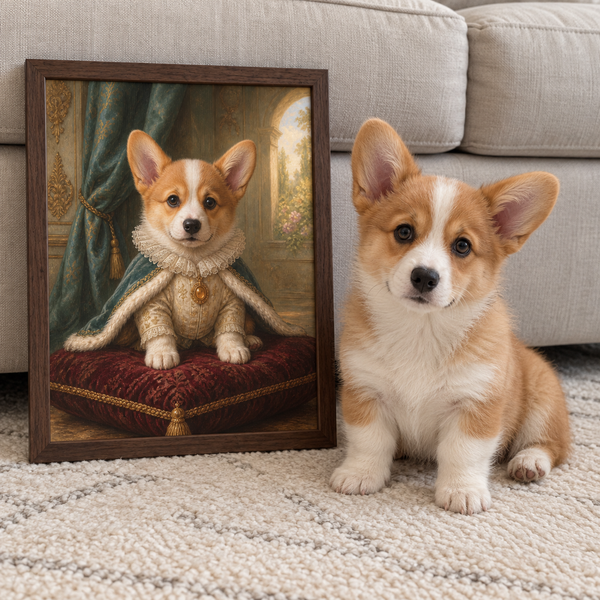
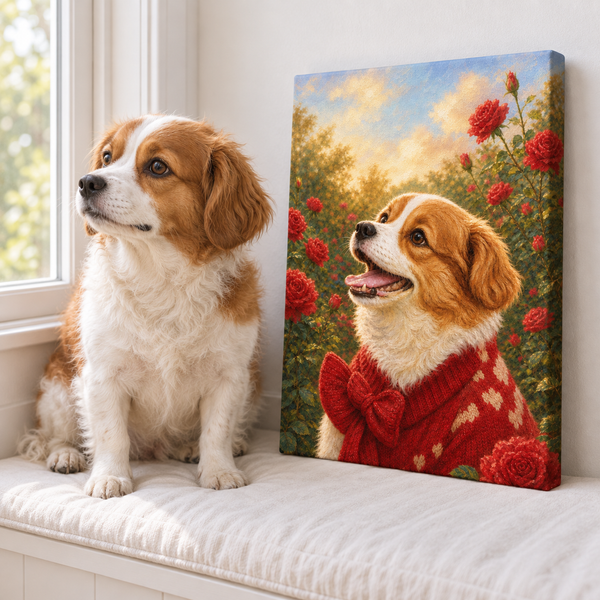

A pet portrait can be ready before its place on the wall is. You may be comparing frames, changing rooms, or setting aside a print to give someone later. The awkward part is deciding where it belongs until then: the dining table is busy, the closet is crowded, and the shipping package does not explain every storage choice.
Learning how to store unframed art prints starts with a small, practical plan. Identify what you have, give it a suitable enclosure, and make it easy to find without repeatedly handling the artwork. This guide focuses on paper pet portraits in ordinary home storage, with a separate path for prints that are curled, damaged, or made with an unfamiliar medium.
1. Make a record before choosing a container
Begin with the information you already have: the order details, any care instructions, and the dimensions of the whole sheet. The paper size and the image size may differ. A border that looks empty still belongs inside the enclosure; it is not spare paper to fold away so the print fits.
Write a short inventory entry on a separate card or in your phone. Include the pet's name, the print description, the full sheet size, and where you intend to keep it. If you own several similar portraits, a reference photo can help you identify the right one without opening every folder. Do not place the card on the image or attach it to the artwork.
Also confirm that the object is a paper print. A gallery-wrapped Canvas needs a different storage arrangement. Our Art Print vs Canvas guide can help you distinguish the formats before you buy supplies.
For example, your note might say, “Milo, green background, full sheet measurements recorded, folder A.” That is enough to start. An elaborate catalog is unnecessary when one clear description will prevent confusion later.
2. Give the print an enclosure that fits its surface
Think of the folder and the storage box as separate decisions. The folder holds the individual sheet; the box houses the folder. The Canadian Conservation Institute's guide to storing works on paper explains that individual enclosures provide support during handling, while boxes add protection from dust, light, and accidental damage. It also describes acid-free interleaving for suitable works.
Ask an archival supplier or framer about acid-free folders and a box sized for your print. Tell them what the artwork is, rather than choosing solely by the word “archival” on a listing. A clear plastic sleeve is not universally appropriate: static from polyester can disturb certain delicate or powdery media. An original pastel drawing and a reproduction of that drawing are different objects.
For a stable paper print, discuss a flat storage arrangement that supports the entire sheet. If the image surface is raised, loose, or otherwise uncertain, ask about a suitable mat or enclosure before placing anything against it.
You can bring a written shopping brief: full sheet dimensions, medium if known, number of prints, and how often you want access. Request the enclosure's usable interior measurements, not just its advertised outside size.
3. Choose the storage spot before filling the box
Look at the actual place the box will live. The Library of Congress's paper-care guidance recommends a clean, stable, cool and relatively dry environment, limited light exposure, and distance from radiators and vents. It advises avoiding attics, basements, and places vulnerable to leaks or environmental extremes.
In a home, that means evaluating a specific shelf rather than assuming every closet is suitable. Does a pipe run above it? Does direct sunlight reach it? Can the box sit fully supported? Will you have to tilt it or remove a pile of household items every time you want the portrait?
Choose a place you can remember and describe to someone else. “Top shelf of the study cabinet, left side” is more useful than “somewhere safe.” Keep the storage area separate from pet supplies that are used daily, and choose access that does not require balancing the box on a chair or squeezing it through a narrow opening.
If the only available space is unsuitable, ask a framer about an interim arrangement. Buying a better box does not resolve every problem with its location.
4. Plan how you will take one print out
A collection is easier to manage when retrieval is planned from the beginning. The Northeast Document Conservation Center's storage and handling guidance advises grouping paper items by size and type, avoiding overcrowding, and keeping bulky or heavy objects separate from flat sheets. Properly fitted folders and boxes also reduce unwanted movement.
Apply that principle to pet keepsakes: a portrait does not need to share its enclosure with a collar, a thick scrapbook, or a handful of frame hardware. Keep those objects elsewhere and connect them through your inventory if they belong to the same memory.
Before opening the box, prepare a clean, clear table and wash and dry your hands. Move the folder with support instead of carrying a loose sheet across the room. Return everything to its recorded place afterward.
For two pets, you might use folders A and B and keep a simple contents list outside the box. If you want to compare their portraits for a wall arrangement, use reference images to narrow the layout first. Bring out the physical prints only when that comparison will help you make the next decision.
5. Separate storage questions from condition problems
Routine storage advice assumes the print can be handled normally. A sheet that resists opening, a surface stuck to its wrapper, or an unfamiliar mark needs a different response. Do not make flattening or cleaning part of the storage project just to get everything into the same box.
If a print arrived rolled, keep the maker's instructions and ask about its paper and surface before changing its arrangement. Describe what you see: whether it unrolls easily, where the curl is, and whether anything appears attached. A photograph and the order information give the maker or framer a clearer starting point than “Can I put books on it?”
For damaged, fragile, or valuable works, consult a paper conservator before attempting treatment. Avoid improvising with heat, moisture, adhesive, or pressure. There is no single home flattening method that this guide can responsibly prescribe for every printed surface.
Likewise, a storage setup does not automatically prepare artwork for transport. If the portrait is leaving the house as part of a move, use our separate guide to packing pet portraits for moving to plan that next task.
6. Leave yourself a clear route back to display
Storage can remain a deliberate choice while you decide what to do next. You do not need to invent a framing deadline. Instead, give the project a next action: measure the intended wall, request a framing estimate, or choose between two mat samples.
When you are ready, take the dimensions, care information, and a reference image to the framer. Explain how you want the portrait to look and ask which materials and mounting approach suit the actual print. Our pet portrait mat-color guide can help with the visual choices after the practical requirements are understood.
If you are still selecting the artwork, browse Pawfolio pet Art Prints with both the display space and the interim storage space in mind. Keep the instructions supplied with the specific item; a general article cannot identify its materials for you.
Before putting the box away, check three things: the portrait has its own recorded place, you know how to retrieve it, and the next decision is written down. That small amount of organization makes it easier to enjoy the artwork again when the right frame or room is ready.