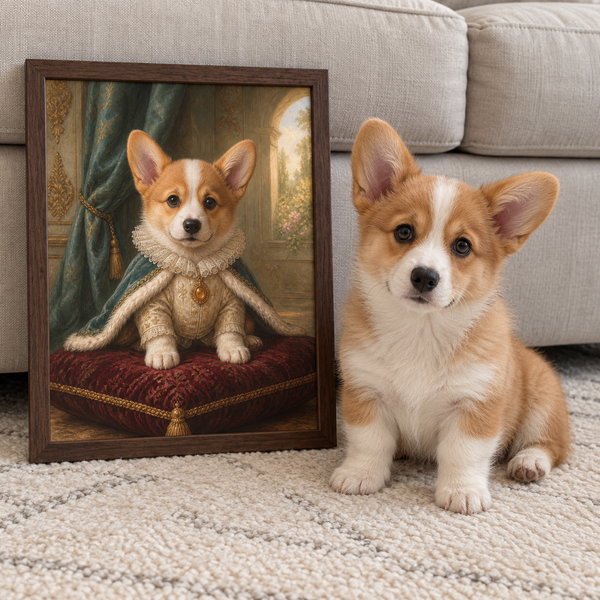
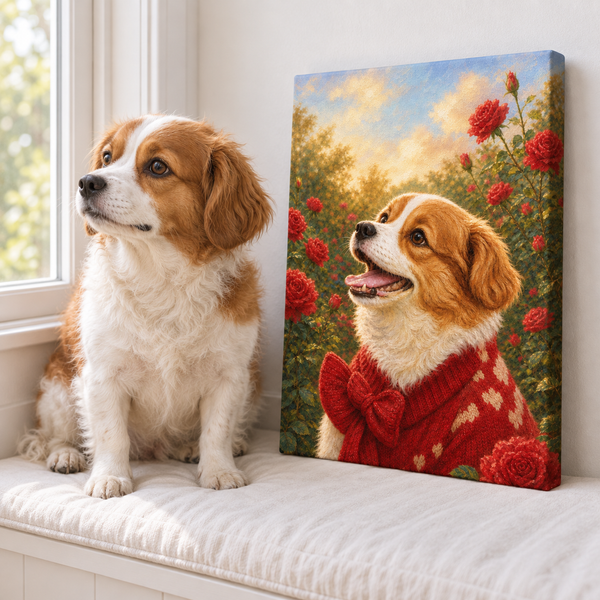
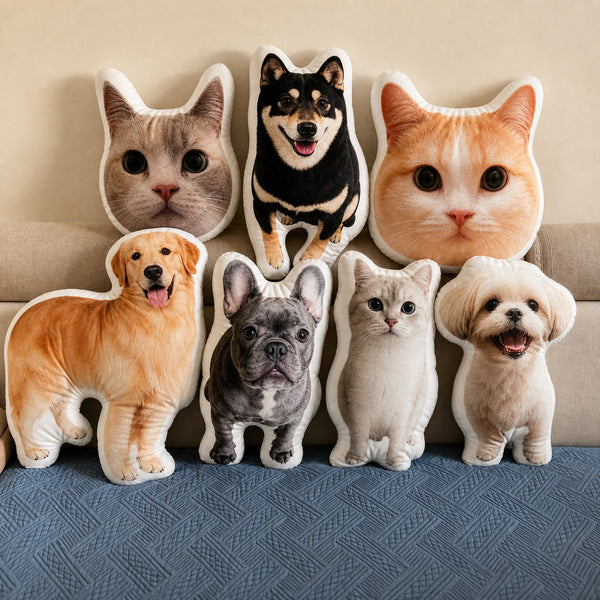

The best dog photo display ideas do more than fill an empty wall. They make a favorite expression easy to notice, connect the picture to the room around it, and leave enough visual space for the image to feel personal rather than crowded.
If you have been searching for photo frame decoration ideas for dogs, begin with two questions: What memory do you want the display to hold, and where will you naturally see it? A joyful action shot may belong in a busy hallway. A formal portrait can anchor a living room. A quiet photograph of a pet who has passed may feel more at home on a bedroom shelf than in a large mixed gallery.
There is no single correct layout. The most convincing display is the one that fits your photographs, your wall, and the way you use the room.
Before choosing frames, choose the story
A frame is a design object, but the photograph inside it is still the reason the display exists. Sort your images before shopping. Put them into small groups such as everyday expressions, outdoor adventures, puppy years, family photographs, or remembrance.
Then write a simple purpose for the display. It might be “one clear portrait of each dog,” “a playful record of Milo growing up,” or “a calm corner for the photographs I return to most.” That sentence helps you remove images that are lovely on their own but do not belong in this particular group.
Also check the files themselves. A small phone image may look soft when enlarged, while a tightly cropped face may need more breathing room inside a mat. Choose the final print size by looking at image quality and viewing distance, not merely by filling the largest available frame.
1. Let one framed portrait stand alone
One strong image often has more impact than a wall of near-duplicates.
Choose a photograph or portrait with a clear silhouette and an expression you recognize immediately. Let the frame relate to something already in the room: warm wood can echo a table, black can connect to lighting hardware, and a pale mat can give a detailed coat room to breathe.
Treat the frame and mat as part of the final dimensions. A modest print with a generous mat can have a larger, quieter presence than an oversized image pushed against the frame edges.
2. Build an equal grid for several dogs
A grid gives different pets equal visual weight. It is especially useful when you have four or six images with similar crops, such as head-and-shoulder portraits against coordinated backgrounds.
Keep the outer frame dimensions identical and the gaps consistent. The photographs do not have to match perfectly, but repeating the frame, mat color, or background palette will make the set read as one composition.
Before hanging, place the frames on the floor and measure the full outside rectangle, including every gap. On the wall, position that rectangle as if it were one large artwork. A level matters here because small errors become obvious when straight edges repeat.
3. Use an anchor portrait with smaller moments around it
An anchor cluster is more relaxed than a grid. Start with one larger portrait, then place two to five smaller photographs around it. The smaller pieces can show details that would feel too casual as the main image: muddy paws, a favorite sleeping position, a collar tag, or a photograph from a familiar walk.
The anchor should carry the visual weight. Put it near the center, slightly off-center, or low enough to relate to the furniture below. Then balance the smaller frames by their apparent weight, not only their measurements. A dark photograph can feel heavier than a pale image of the same size.
4. Turn a picture ledge into a changing timeline
A ledge is helpful when you want the display to evolve. Frames can lean, overlap slightly, and change as new photographs arrive. It is also easier to test combinations without making a new hole for every frame.
Place the tallest piece toward the back and keep important facial features clear of overlapping corners. A small object—a tag, a favorite toy that is safe to display, or a ceramic paw impression—can add depth, but leave open space so the shelf does not become a storage row.
Always install the ledge for the actual wall material and expected load. Keep fragile or sentimental objects away from edges, active pets, and places where a door or curtain can knock them down.
5. Make a desk or bedside display feel intentional
Not every meaningful photograph needs to be wall art. One tabletop frame can be the right scale for an office, nightstand, or bookcase. Angle it toward the normal viewing position and keep it away from glare. A small, private format can also suit a remembrance that does not need to become a public centerpiece.
6. Give a hallway a simple visual rhythm
A hallway invites a sequence because people experience it while moving. Try three to five frames in a horizontal row, with their centers aligned. Choose images that remain readable at a glance. Because hallways are often narrow, use secure low-profile hardware and frames that do not project farther than necessary.
7. Follow the stairs with a family chronology
A stair wall can show time in order: puppy at the bottom, recent portrait at the top, or one image for every pet your family has known. Follow a line that rises with the stairs. Test paper templates from the bottom, landing, and top before installing hardware.
8. Mix a dog portrait with ordinary family photographs
A pet display does not need to announce a theme. A dog portrait can sit comfortably among travel photographs, children’s artwork, landscapes, or family snapshots when one visual feature repeats.
Choose one unifying device: the same frame finish, a limited color palette, consistent mats, or similar crops. If every detail matches, the wall may feel rigid; if nothing relates, the eye has nowhere to rest.
Try positioning photographs so gazes and movement point inward. A dog looking to the right often feels more connected on the left side of a group, while a left-facing profile can close the opposite edge. This is a compositional choice, not a rule, but it can stop a gallery from feeling as if every subject is leaving the frame.
9. Create a memorial arrangement without overfilling it
A memorial display can combine a portrait with one or two objects that carry real meaning: a collar tag, a handwritten name, a paw impression, or a photograph of a familiar place. Resist adding every keepsake at once. Negative space can give each object room and make the arrangement calmer.
Consider light exposure before placing irreplaceable paper or photographs. The McMaster Museum of Art's home-hanging guidance warns that works on paper and family photographs can change and fade in bright light. Use copies for sunny locations and keep originals stored appropriately.
How high should dog photos hang?
“Eye level” is a useful starting point, not a command. A standing viewer in a hallway sees art differently from someone sitting on a sofa. McMaster's preparator recommends relating art to the furniture and the way a room is viewed, while Framebridge's height guide uses a center point around 57 inches as a practical baseline and treats a multi-frame group as one piece.
For a frame above furniture, test the relationship visually. The artwork should feel connected to the console, sofa, or bed rather than floating near the ceiling. Large art may need to sit lower; a close-viewed hallway arrangement may sit a little higher. Use the room, not the ceiling height alone, as your reference.
Test the entire arrangement at full size
The cheapest correction happens before the first hole. Trace each frame onto paper, label it, and attach the templates with a wall-safe removable tape. Include the outer frame edge, not just the print size.
Stand back where you enter and sit. Check whether one dark image dominates, a face is hidden by glare, or the group crowds a switch, lamp, or doorway.
When you are satisfied, follow the frame maker's hardware instructions and choose fasteners rated for the frame weight and wall construction. Two attachment points can help a frame remain level. If a piece is heavy, fragile, or positioned above a bed or seating area, professional installation is a sensible choice.
Make the image belong to both the dog and the room
Sometimes the photograph you love has a distracting background or does not coordinate with the space where you want to hang it. That does not make it unusable. A carefully cropped photograph, a quieter mat, or a portrait interpretation can preserve the recognizable face while simplifying everything around it.
For a display designed around the colors and proportions of your home, custom pet Art Prints from Pawfolio Art can serve as a single focal piece or the anchor of a larger group. The goal is not to make the dog match the sofa. It is to choose a presentation that respects the image and feels settled in the room.
Start with the photograph you would miss most if it stayed hidden on your phone. Give it a clear purpose, test the scale, and leave enough space around it. A thoughtful dog display does not need dozens of frames. It needs one visual decision that helps a familiar face feel at home.